Audi e-tron Q7 Electric Cars Dakar
This is the incredible electric traction of the Audi RS Q e-tron for its third Dakar
 Óscar Sanz
4 January 2024
3 min.
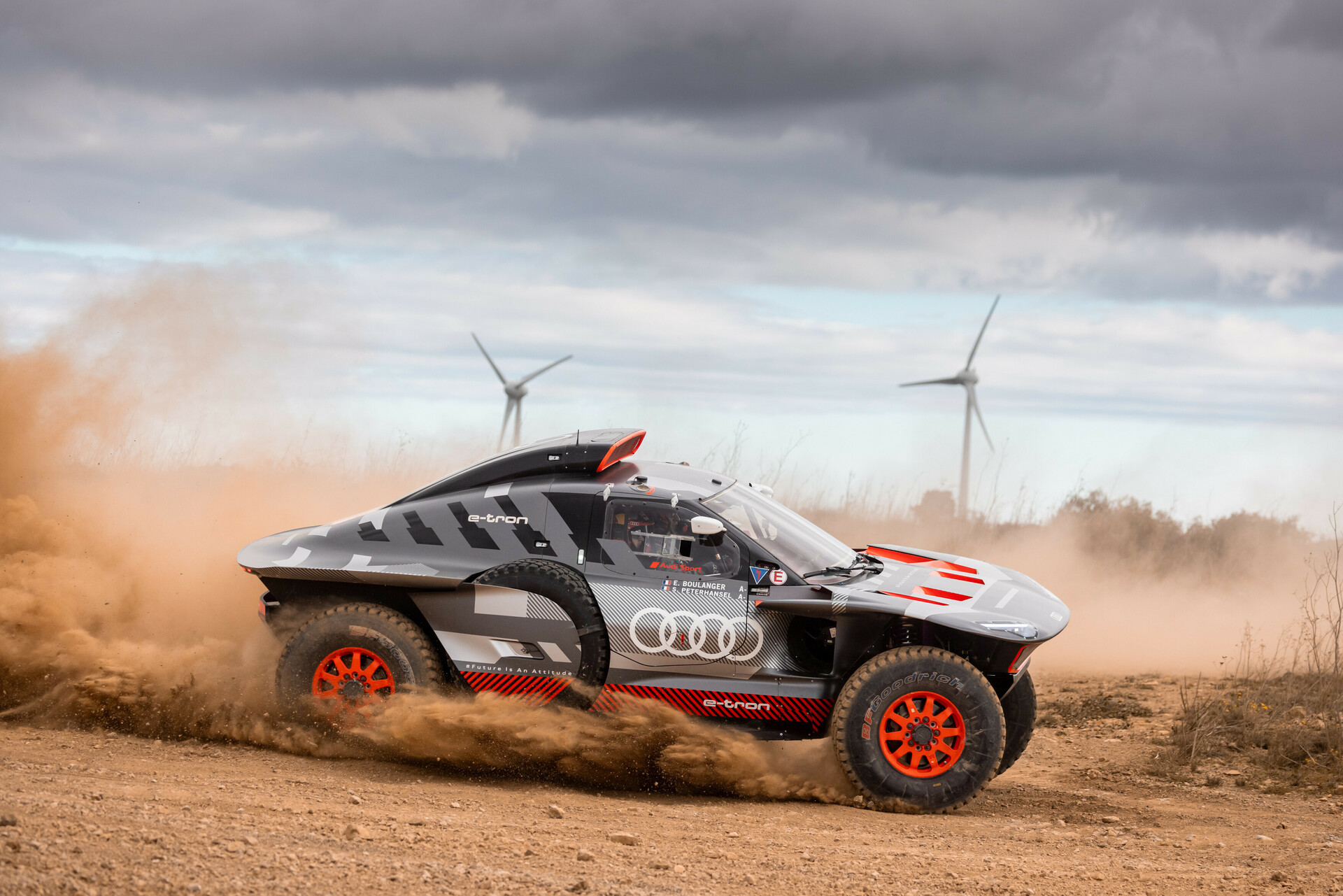
The Audi electric machine is fully prepared to return to the Dakar with cutting-edge technology and substantial improvements such as a new differential and the intelligent braking system
The Rally Dakar 2024 is about to get underway, and all eyes are on the return of the Audi RS Q e-tron, a vehicle that set the benchmark for innovation and efficiency in the two previous editions and which we were able to attend at its presentation last December. This prototype, powered by the revolutionary quattro traction technology, is preparing to take on its third challenge on the unforgiving terrain of the Dakar.
Carlos Sainz, a legend in the world of rallying, has confidently stated that the Audi RS Q e-tron is “the best car since this challenging project began.” What makes this vehicle so special? The answer lies in its electric powertrain and its advanced traction system, two elements that have received improvements over last year and promise to stand out in the Dakar dunes.
15 kW more powerful than last year
The heart of the Audi RS Q e-tron beats with two electric motors strategically placed on each axle, supported by a high-voltage battery and a power converter. This year’s novelty is a power increase of around 15 kW, in compliance with the new Dakar regulations. This prototype drives like a pure electric car, with no need for a gearbox or transfer case, reaching 100 km/h on dirt in an impressive 4.5 seconds.
Virtual central differential by Audi
The secret behind the perfect coordination of the traction system lies in a virtual central differential developed by Audi. This differential, free from mechanical limitations, distributes torque between the front and rear axles, ensuring precise delivery of power to each wheel at all times. In addition, this system provides a flexible and agile configuration, without the constraints of traditional mechanical components.
Energy recovery with intelligent braking
During deceleration, the Audi RS Q e-tron makes the most of its energy recovery system. The motor-generator units (MGU) on the front and rear axles convert the rotational movement of the wheels into electrical energy through a sophisticated intelligent braking system (IBS). This process not only helps recharge the batteries but also improves the vehicle’s overall efficiency.
New and redesigned tyres
On the Dakar terrain, tyres are crucial, and Audi Sport has left nothing to chance. For the 2024 edition, the RS Q e-tron will use an evolution of the BF Goodrich tyres, designed to resist punctures and handle the challenges of rough terrain. In addition, the team has fitted more resilient rims and new anchoring elements that allow stones to be expelled efficiently, avoiding considerable damage and loss of time.
The Audi RS Q e-tron is ready to make its presence felt once again at the Dakar, not only as a competitor but as a benchmark in technology and performance. Its combination of electric innovation and intelligent design places it at the forefront of off-road competition, ready to face the most extreme challenges that the Dakar 2024 may offer.
Technical specifications of this car


 Peugeot E-208 GTi: a battery-powered toy that revives the spirit of the 1980s sports cars
 New Lexus ES: luxury grows and goes electric
 First contact with the Dacia Sandero Hybrid 155: power and efficiency from €19,890
Deja un comentario