This is the Škoda 1100 OHC that the brand has restored for the 120th anniversary of Škoda Motorsport
 David Lopez @espacionblanco
14 February 2022
4 min.
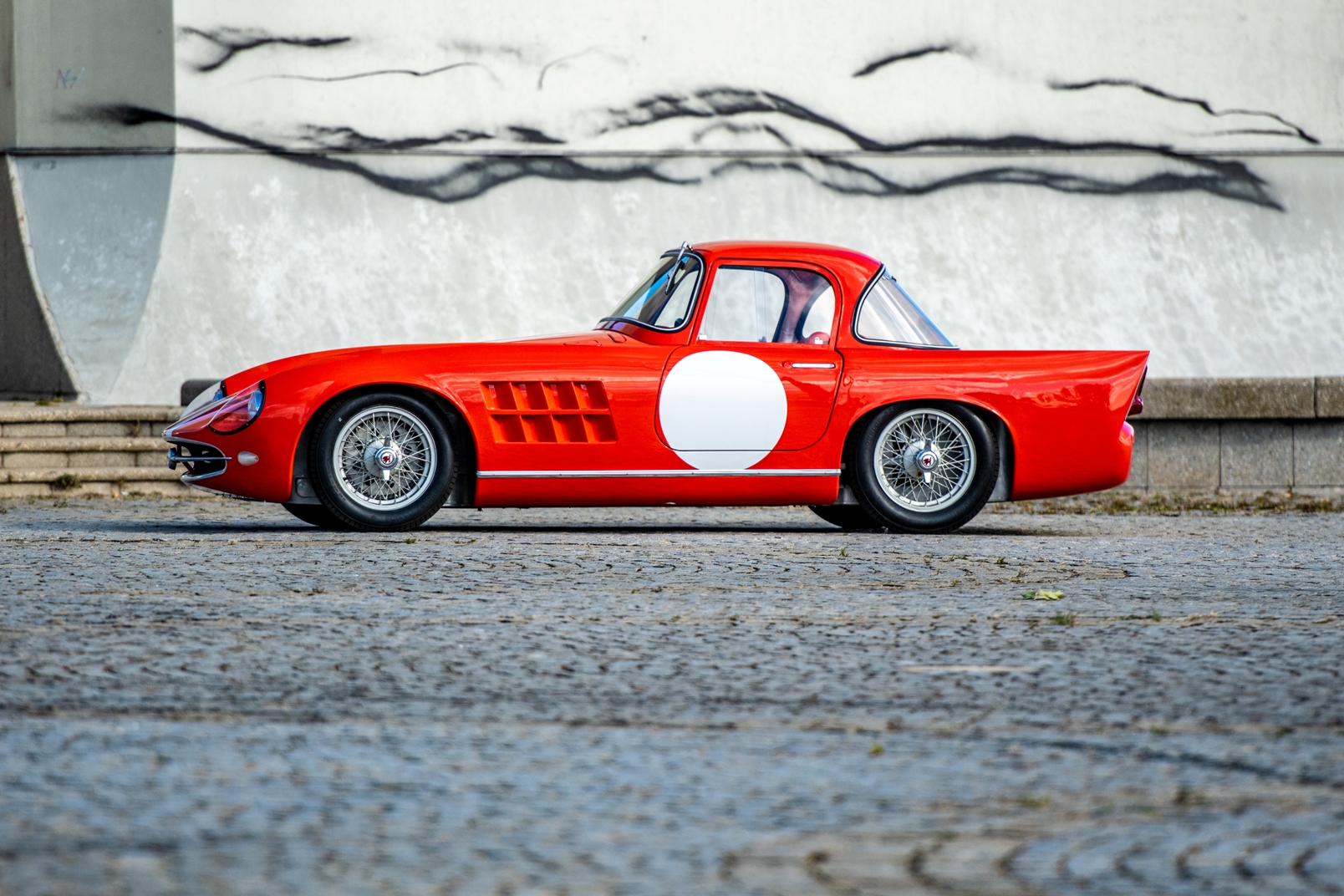
After several years of meticulous work, Škoda managed to restore the only 1100 OHC Coupé left in the world, which survived an accident
It was the spring of 1956 when Škoda began the design process for one of its most iconic vehicles, the 1100 OHC, which was completed in 1957 with the creation of the first two convertible examples made of glass-fibre-reinforced plastic. About two years later, between 1959 and 1960, Škoda created the first two 1100 OHC coupés with a closed body, which used spare components already proven in the brand’s production models.
These Škoda 1100 OHC cars had a peculiarity compared to the Škoda Sport and Supersport built at the end of the 1940s. The latter were based on a central tube with forks to mount an OHV engine at the front, whereas in the 1100 OHC thin-walled tubes were welded together to create a rigid yet lightweight chassis. It also featured a trapezoidal suspension on the front axle and a coupling axle with trailing arms on the rear axle.
In this way, Škoda was able to place the 1100 OHC’s engine behind the rear axle and, together with the five-speed gearbox and differential, achieved an almost perfect weight distribution. The engine used was an in-line four-cylinder naturally aspirated unit with cylinders and crankcase made of aluminium, based on that of the Škoda 440 “Spartak” but far surpassing it, as the 1100 OHC was capable of delivering 92 CV which, together with a featherweight 555 kg, allowed it to reach 200 km/h. For braking it relied on dual-circuit brakes, and to reduce unsprung mass it used rear drum brakes mounted on the differential’s own gear assembly.
The competition career of the two Škoda 1100 OHC coupés was short, lasting only from 1960 to 1962, until in 1966 they were sold to private buyers who unfortunately destroyed them in road accidents later on. The first of them was involved in an accident with no personal injuries, which ended in a fire that completely destroyed it, although some parts were salvaged and housed in the National Technical Museum in Prague and later donated to the brand’s museum. The second, the one that has been restored, had an engine donated by a Felicia fitted, while the original was kept at the brand’s vocational training school, and many of the parts that were saved were used in the restoration.
The only Škoda 1100 OHC rises from its ashes
Thanks to the experts at the Škoda Museum and to the fact that the original technical documentation was still kept in good condition, the brand’s experts were able to embark on the project to restore the Škoda 1100 OHC as a fully functional vehicle, not without encountering difficulties. The most difficult part was the restoration of the bodywork, where the technicians from the Škoda Museum and from Škoda’s prototype construction centre had to work side by side.
In this part of the restoration process, both teams relied on scans of the 2D drawings at 1:1 scale to create a three-dimensional grid, which was then used to visualise and correct the various aspects, especially at the front and around the lights. Miniature models and other full-scale 1:1 models of the front and rear edges of the bodywork were then created, so that once this part had passed approval by the technicians, work could proceed on the bulkheads, wheel arches and other body elements.
Once the restoration process began on the original vehicle, the bodywork was formed from 0.8 mm and 1 mm thick aluminium sheets, which were welded by hand and shaped as the restoration project progressed, and finally painted red. Furthermore, for the project to succeed, many minor elements were similar to those of other vehicles of the period: for example, the door handles are those of a Škoda 1200 Sedan, some switches and the ignition key were the same as in a Škoda 440 “Spartak” and the Octavia, while the three-spoke plastic steering wheel was that of a Škoda Popular.


 Kia offers an electric range of 10 models, 50 versions and 400 possible combinations
 The seven finalists for the 2027 European Car of the Year (COTY) are exclusively electric
 Peugeot E-208 GTi: a battery-powered toy that revives the spirit of the 1980s sports cars
Deja un comentario