Toyota Hybrid Cars Eventos Photos Tests Urban
Toyota Yaris Hybrid, presentation and test drive in Amsterdam
 Diego G. Moreira
11 June 2012
4 min.
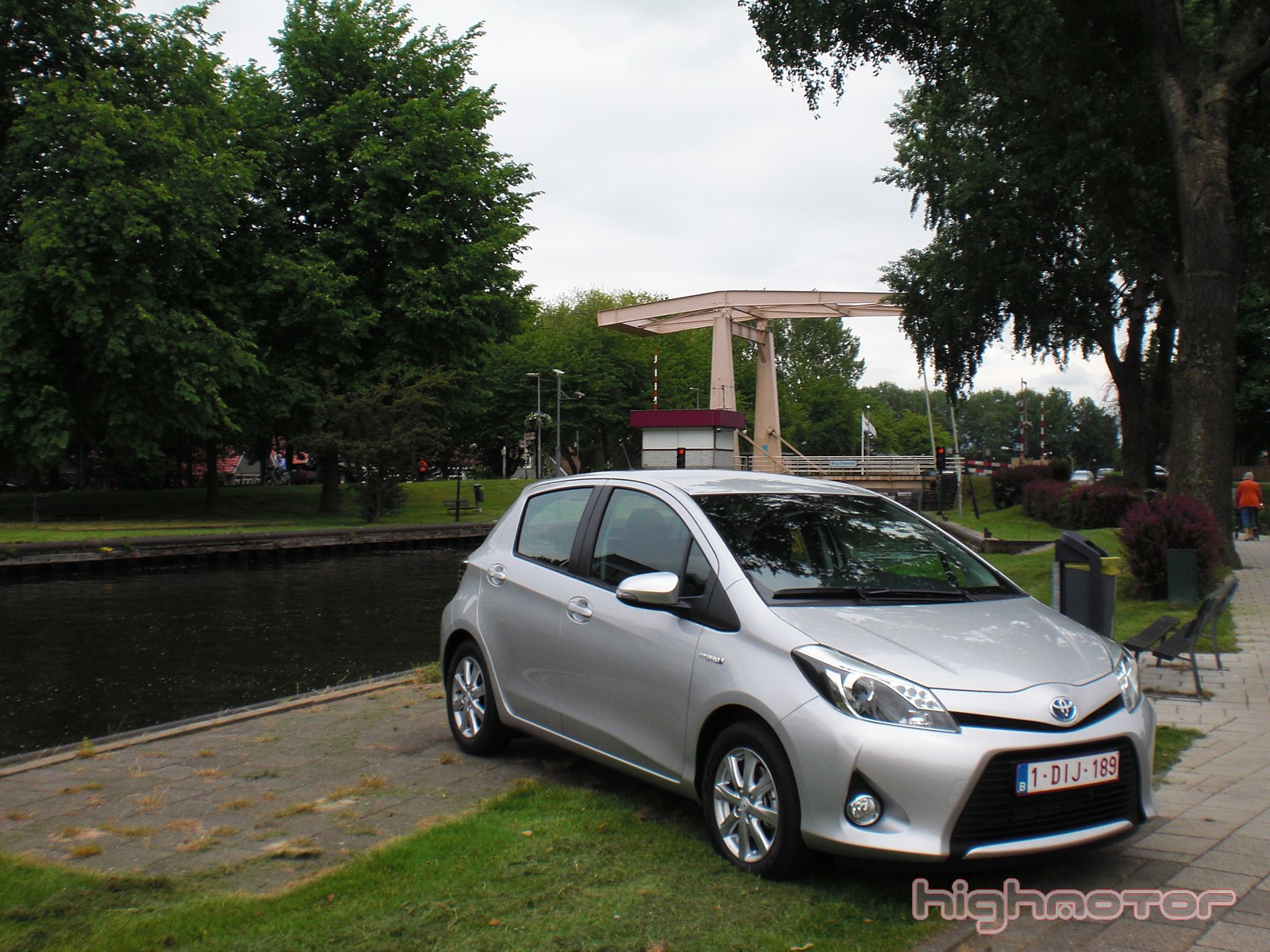
A hybrid for 15,900 euros: that is what Toyota offers with the new Yaris Hybrid, a model that completes the eco-friendly range of the Japanese manufacturer and comes with plenty of arguments to carve out a place in the market at a competitive starting price.
We travelled to Holland for the international presentation of the Toyota Yaris Hybrid, which not only introduces a new hybrid system but also changes the exterior design and some interior details, making the Yaris an interesting product for city dwellers. But does it really consume so little? Is it worth it? What changes compared to the conventional Yaris? Stay with us, and we will discuss all these questions.
New exterior design and minor changes inside
The Yaris HSD debuts the new design language of the Japanese brand, changing slightly from the conventional city car. The first thing that catches the eye is the new front end, more sculpted with new light clusters and grille.
This translates into better aerodynamics. In addition, LED daytime running lights are fitted as standard, and the grille is smaller, giving the front a more aggressive and dynamic look. At the rear, new light clusters also feature LED technology.
Inside, the interior features the blue tones typical of Toyota hybrid models, both on the instrument cluster and in the seat and steering wheel stitching, as well as on the gear lever.
The soft-touch panels on the dashboard and doors have a greyish tone that is characteristic of hybrid units. As standard, it also comes with the Toyota Touch multifunction touchscreen.
Mechanical updates
The engine chosen to power the Yaris Hybrid is a 1.5 petrol with 77 CV, complemented by an electric motor, together delivering up to 100 CV. The hybrid system weighs 42 kg less than the Auris Hybrid, and a more compact battery has also been fitted, which fits perfectly under the rear seats, preserving the full boot capacity without losing load space.
The centre of gravity is also lower, and it has better aerodynamics than the conventional Yaris, so the car has clearly been tuned to be as efficient as possible.
It features an improved transmission, more efficient thanks to a change in cooling, which is now oil-based. In short, there are considerable changes to the hybrid system compared with other models from the Japanese firm.
First contact with a Toyota Yaris Hybrid in Amsterdam
Having covered all this in theory, it is time to put it into practice and check whether the Yaris HSD is as good an option for the city as we have been told. On paper, the official figures point to an average urban consumption of 3.1 litres per 100 km.
A rather utopian figure, at least according to what we could verify during a brief first drive of just under 100 km mixing urban traffic and open road. But let’s start at the beginning: before talking about consumption, let’s see how it behaves.
The first thing we noticed is the absence of the POWER (or Sport) mode found in other hybrids from the brand, that overboost function which squeezed a little more out of the hybrid setup. The Yaris HSD is an urban vehicle with a calm character, offering only Normal, ECO and EV modes (electric).
We left from one of the central areas of Amsterdam, near the station, and the car’s smoothness is surprising. Calm, very light and smooth steering, and soft suspension, all geared towards comfort.
During the first kilometres in the city it feels more than adequate in power, and even agile, thanks to the instant torque of the electric motor and its compact dimensions. That said, city consumption hovers around 5 litres, dropping slightly to 4.9 l/100 km, but far from the 3.1 litres it is homologated for.
In its defence, it must be added that the units had barely 800 km on the odometer, which is very little for checking real-world consumption.
We continued our route to near the airport and got onto the open road, where it becomes somewhat lazier and calmer, giving the feeling of not having 100 CV, but rather being a typical city car with 70-80 petrol CV. Overtaking needs careful planning and foresight, but, well, it is not a car that seeks sportiness, and its consumption of 4.5 litres per 100 km on the road offsets the previous points.
Equipment and prices
Two trim levels will be available: ACTIVE and ADVANCE. The base trim includes seven airbags, dual-zone climate control, a touchscreen for multimedia control, a rear-view camera, among other features, and starts from 15,900 euros.
For 17,900 euros you can get the ADVANCE trim, which improves the package with alloy wheels, front fog lights, a premium sound system, tinted rear glass, among other features.
Photos | Diego G. Moreira


 The seven finalists for the 2027 European Car of the Year (COTY) are exclusively electric
 Peugeot E-208 GTi: a battery-powered toy that revives the spirit of the 1980s sports cars
 New Lexus ES: luxury grows and goes electric
Deja un comentario