XBUS EV, the modular vehicle that can be a van, a pick-up or a minibus, now has a release date
 Victor Alós Yus @sepelaci
30 September 2023
3 min.
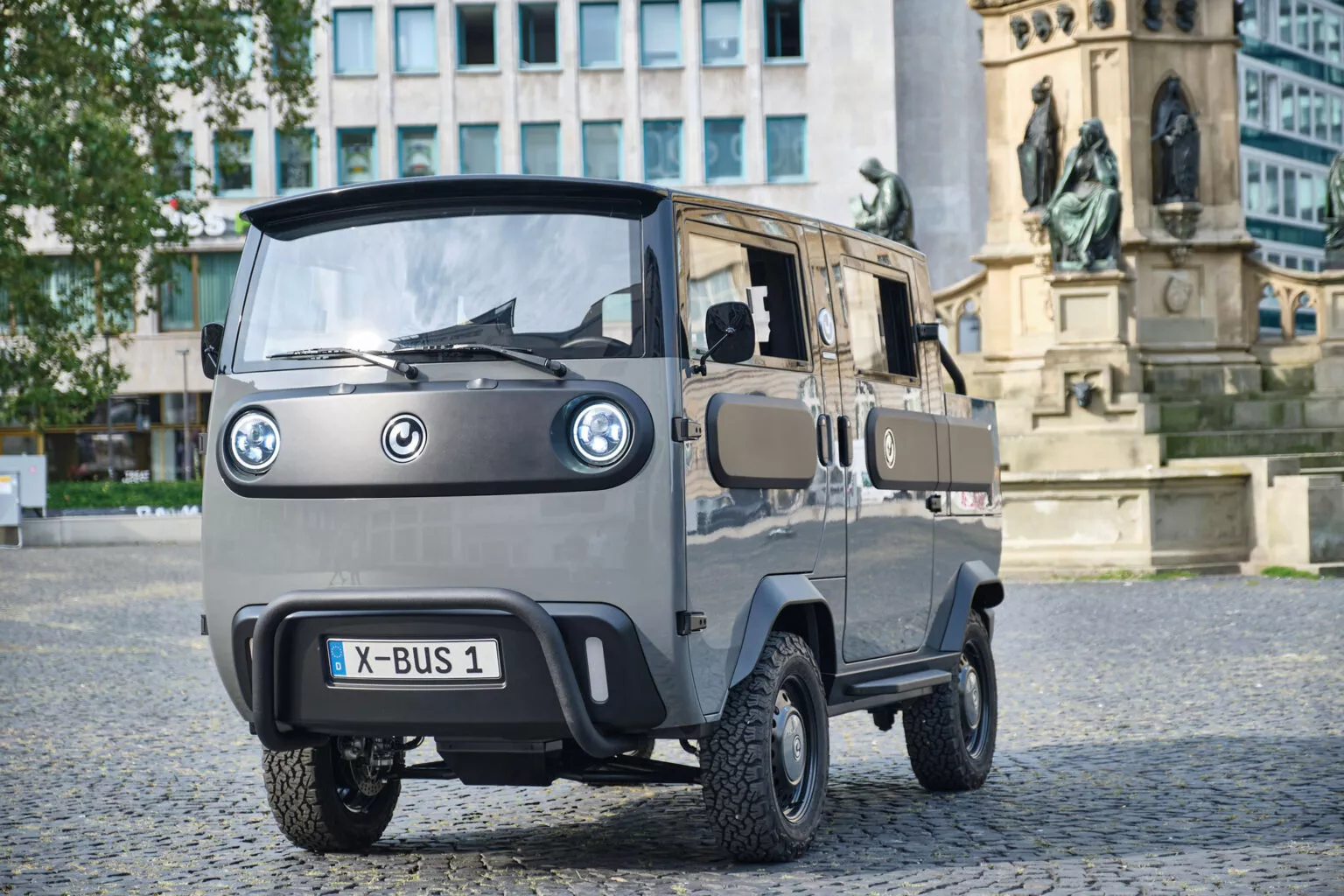
The XBUS EV is a modular vehicle that, on the same platform, can become whatever you need, thanks to the 10 different modules it can be fitted with.
It was unveiled almost three years ago, in 2020, and since then it has suffered several delays. It is the XBUS EV, a vehicle that caught attention at the time because it is a platform with a modular body. In other words, the same vehicle can become a van, a pick-up or a minibus, depending on the body module chosen for each use.
It is expected to reach the market in 2025, since ElectricBrands, the company that designed it, says everything is ready to start giving it physical form. After the first announcement, several images were presented so people could see how this vehicle was created. But since then, small changes have been introduced, aimed at making the body modules easier to use.
According to the manufacturer, the delays do not indicate that something is wrong with the vehicle’s development; they are due to market circumstances, with the shortage of supplies and the consequences of the war, the pandemic and everything we have lived through in recent years. The planned launch date for the modular model is late 2024 or early 2025.
Galería de fotos -
XBUS EV
Features of the XBUS EV
This modular vehicle is 3,640 millimetres long. It has 10 body modules. Each one turns this van into something completely different. Among the body modules, there is the option of becoming a delivery van, a pick-up, a double-cab pick-up and even a camper van. All of this just by choosing the module you need.
As standard, the XBUS EV has off-road capabilities and is fitted with suitable tyres for them. It has all-wheel drive and a very suitable ground clearance to avoid unpleasant surprises while driving. It will have a 10 kWh battery, which gives it a maximum range of up to 200 kilometres. Those who want more range can choose a 30 kWh battery pack, which increases the range up to 600 kilometres.
This range is achieved because the kerb weight of this vehicle is 600 kg. Its power is also fairly limited, as it only offers 56 kW, a power output equivalent to 75 CV. That said, the maximum torque reaches 1,000 Nm, so it is quite capable of tackling the most demanding terrain.
The changes were also necessary to keep this model’s price as close as possible to what was announced at the time or, even if it has increased, as similar as possible to those figures. The most basic model was announced at a price of 18,070 euros, and the most expensive, with the camper module, is 32,370 euros. These prices are for Germany, the market where it will launch, at least in a first phase.


 Peugeot E-208 GTi: a battery-powered toy that revives the spirit of the 1980s sports cars
 New Lexus ES: luxury grows and goes electric
 First contact with the Dacia Sandero Hybrid 155: power and efficiency from €19,890
Deja un comentario