Audi BMW Hyundai Kodiaq Q7 Santa Fe Skoda Touareg Volkswagen X5 Tests Rankings SUV
2026 ranking: the 5 large diesel SUVs with the lowest real-world motorway consumption on the Spanish market
 Iván Navarro
20 November 2026
7 min.
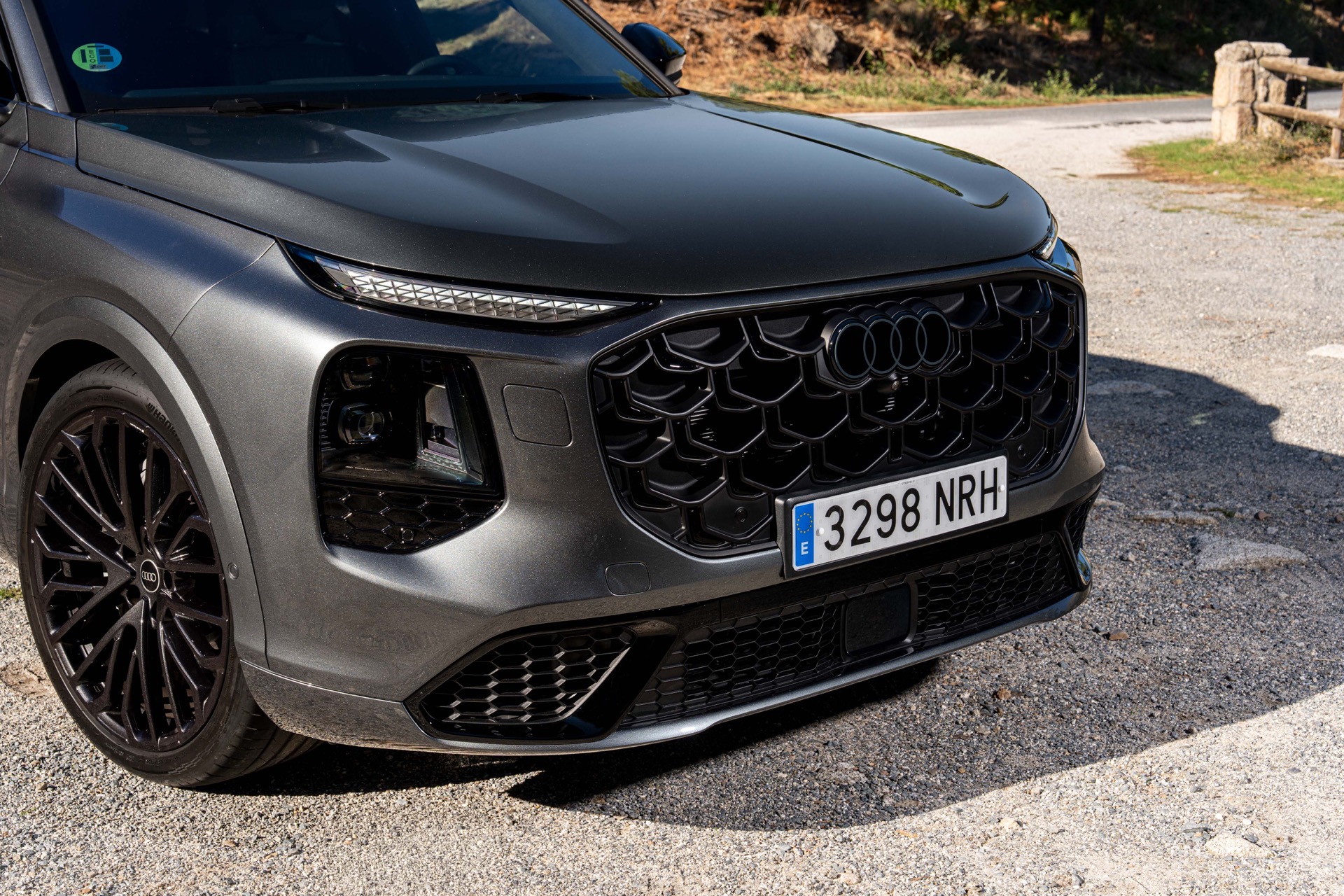
We analysed the real consumption at 120 km/h of the best-selling large diesel SUVs in Spain, with the exact gap against the WLTP figure. A ranking designed for those who really cover the kilometres.
Every week, Highmotor gets asked essentially the same question: which large diesel SUV uses the least fuel on a long journey? Not on the brochure, but on the real motorway, with air conditioning, luggage and 120 km/h cruise control. The answer isn’t on the WLTP datasheet. It’s on the road, and that’s where we have put five of the most relevant large diesel SUVs currently sold in Spain to the test.
Why motorway consumption is the litmus test for a large diesel SUV
A large diesel SUV is almost always bought with long journeys in mind. Families heading to the coast in August, self-employed people who cover half the peninsula, companies with fleets that count every litre. In that scenario, the WLTP cycle falls short: it is designed to represent mixed use, with urban stretches and stops, which artificially favours modern diesel engines fitted with energy-recovery systems under braking. At a sustained 120 km/h, aerodynamics and gear ratios matter far more than any laboratory optimisation.
That is why this ranking doesn’t simply look at the datasheet figure. It looks at real diesel SUV consumption in Spain, measured under motorway conditions, which is where these cars either earn or lose their reputation for efficiency.
Methodology: how we measure real consumption at 120 km/h at Highmotor
Our team repeats the same reference route, roughly 220 kilometres of motorway with free-flowing traffic, climate control set to 22 degrees and two extra occupants plus average luggage. We record instantaneous consumption and compare it with the manufacturer’s homologated figure. The difference between the two numbers, which is almost never published, is what truly matters when calculating what your next trip to Portugal or the Costa Brava will cost.
2026 ranking: the 5 large diesel SUVs with the lowest real motorway consumption
These are the five models that performed best in our motorway measurements, ordered from lowest to highest real consumption.
1. Škoda Kodiaq TDI, from €47,400
In our view, the Kodiaq TDI is the most complete of the group. Its 150 CV 2.0 TDI doesn’t impress on paper, but that discretion is precisely its best asset: less moving mass, less internal friction, less consumption at constant speed. In our motorway test it recorded 6.9 l/100 km against the 5.4 l/100 km of its WLTP homologation, a 1.5-litre gap that nonetheless earns it the best absolute result in the ranking.
| Model | Power (CV) | Power (kW) | WLTP consumption | Real motorway consumption | Label | Fuel |
|---|---|---|---|---|---|---|
| Škoda Kodiaq TDI | 150 | 110 | 5.4 l/100 km | 6.9 l/100 km | C | Diesel |
2. Mazda CX-80 e-Skyactiv D, from €60,400
The CX-80, already the protagonist of our duel with the Hyundai Santa Fe, surprises with a six-cylinder 3.3 with 48V mild hybridisation which, on paper, should penalise its consumption. It doesn’t entirely: its large displacement working at very low revs and careful aerodynamics let it settle at 7.1 l/100 km in real driving. That said, the difference from the official figure (5.8 l/100 km) is 1.3 litres.
| Model | Power (CV) | Power (kW) | WLTP consumption | Real motorway consumption | Label | Fuel |
|---|---|---|---|---|---|---|
| Mazda CX-80 e-Skyactiv D | 254 | 187 | 5.8 l/100 km | 7.1 l/100 km | ECO | Diesel (MHEV) |
3. BMW X5 xDrive30d, from €92,300
The X5 shows that a premium SUV weighing over two tonnes can behave better than expected at cruising speed, thanks to a long eighth gear and a 298 CV six-cylinder mild hybrid that barely works at 120 km/h. Its real consumption sits at 7.8 l/100 km, just six tenths above its official homologation.
| Model | Power (CV) | Power (kW) | WLTP consumption | Real motorway consumption | Label | Fuel |
|---|---|---|---|---|---|---|
| BMW X5 xDrive30d | 298 | 219 | 7.2 l/100 km | 7.8 l/100 km | ECO | Diesel (MHEV) |
4. Volkswagen Touareg TDI, from €77,500
The Touareg carries more weight and a 231 CV V6 without hybridisation that prioritises comfort over restraint. Even so, it keeps consumption very close to its official datasheet: 8.2 l/100 km in real driving, against the 8.0 l/100 km homologated. It is one of the bulkiest SUVs of the five, and that shows on the litre scale.
| Model | Power (CV) | Power (kW) | WLTP consumption | Real motorway consumption | Label | Fuel |
|---|---|---|---|---|---|---|
| Volkswagen Touareg TDI | 231 | 170 | 8.0 l/100 km | 8.2 l/100 km | C | Diesel |
5. Audi Q7 50 TDI, from €85,000
The Q7 closes the ranking, not because it is a bad car (it is probably the most refined of the five), but because its 286 CV mild-hybrid V6 and permanent quattro four-wheel drive take their toll on the motorway: 8.6 l/100 km real against the 7.9 l/100 km on paper. Anyone buying it will do so for comfort, ECO label and performance, not for savings.
| Model | Power (CV) | Power (kW) | WLTP consumption | Real motorway consumption | Label | Fuel |
|---|---|---|---|---|---|---|
| Audi Q7 50 TDI | 286 | 210 | 7.9 l/100 km | 8.6 l/100 km | ECO | Diesel (MHEV) |
Summary table: comparison of consumption, power and price
| Model | Price from | Real motorway consumption | Power (CV) | Label | Efficiency score (1-10) |
|---|---|---|---|---|---|
| Škoda Kodiaq TDI | €47,400 | 6.9 l/100 km | 150 | C | 9.2 |
| Mazda CX-80 e-Skyactiv D | €60,400 | 7.1 l/100 km | 254 | ECO | 8.7 |
| BMW X5 xDrive30d | €92,300 | 7.8 l/100 km | 298 | ECO | 7.9 |
| Volkswagen Touareg TDI | €77,500 | 8.2 l/100 km | 231 | C | 7.3 |
| Audi Q7 50 TDI | €85,000 | 8.6 l/100 km | 286 | ECO | 6.8 |
WLTP versus reality: the gap no brochure admits to
If this comparison makes one thing clear, it is that the homologation cycle does not always help when planning a journey. The difference between the official figure and motorway-measured consumption can exceed 20% in the lightest models optimised in the laboratory, going beyond one litre per hundred kilometres. For a 75-litre tank, that can mean more than 100 kilometres less real range than the datasheet promises. It is not a deception; it is the nature of the WLTP cycle itself, designed to compare cars with one another, not to predict your next trip.
Which diesel SUV to choose depending on how many motorway kilometres you drive a year
If your use is mostly motorway and you are looking for the best diesel SUV for long journeys in Spain in 2026, the Kodiaq and the CX-80 are the most sensible bets: both combine family space with consumption that doesn’t inflate the bill, and the Japanese model adds the advantage of the ECO label. If what you want is a premium feel and you don’t mind paying a little more at each refuel, the X5 offers the best balance of refinement, performance and consumption in the luxury segment. Whoever values towing capacity and ride comfort above running costs will find strong arguments in the Touareg and the Q7, although they are not the cheapest to maintain. For those considering other types of propulsion, our guide to choosing a premium family SUV in 2026 looks in more depth at other comfort factors that also weigh on the final decision.
Frequently asked questions
Which large diesel SUV uses the least fuel on the motorway in 2026?
According to our measurements at 120 km/h, the Škoda Kodiaq TDI uses the least on the motorway, with 6.9 l/100 km in real driving, followed very closely by the Mazda CX-80 e-Skyactiv D.
Why is real consumption higher than the WLTP figure?
The WLTP cycle combines urban, interurban and motorway stretches, which smooths out the final average. At sustained cruising speed, without stops or braking, aerodynamic drag weighs more heavily and typically raises consumption by between 10% and 25% above the homologated figure in the most efficient models.
Is a large diesel SUV worth it compared with a hybrid for long journeys?
On motorway trips with heavy loads and long distances, diesel still offers better range per tank and quicker refuelling than a plug-in hybrid, although the purchase and maintenance costs tend to be higher.
Which large diesel SUV offers the best price-to-consumption ratio in Spain?
The Škoda Kodiaq TDI combines the lowest entry price in the ranking with the most restrained real consumption, making it the most balanced option for anyone who prioritises the total cost of ownership.
Technical specifications of the cars in this article
 Kia offers an electric range of 10 models, 50 versions and 400 possible combinations
 The seven finalists for the 2027 European Car of the Year (COTY) are exclusively electric
 Peugeot E-208 GTi: a battery-powered toy that revives the spirit of the 1980s sports cars
Deja un comentario