A BMW iX equipped with a Gemini battery pack covers nearly 1,000 km
 Javier Cantagalli
5 December 2023
2 min.
Once its feasibility has been demonstrated, the manufacturer of the Gemini battery packs expects to be able to bring nearly 200,000 of them to market per year from 2027 onwards
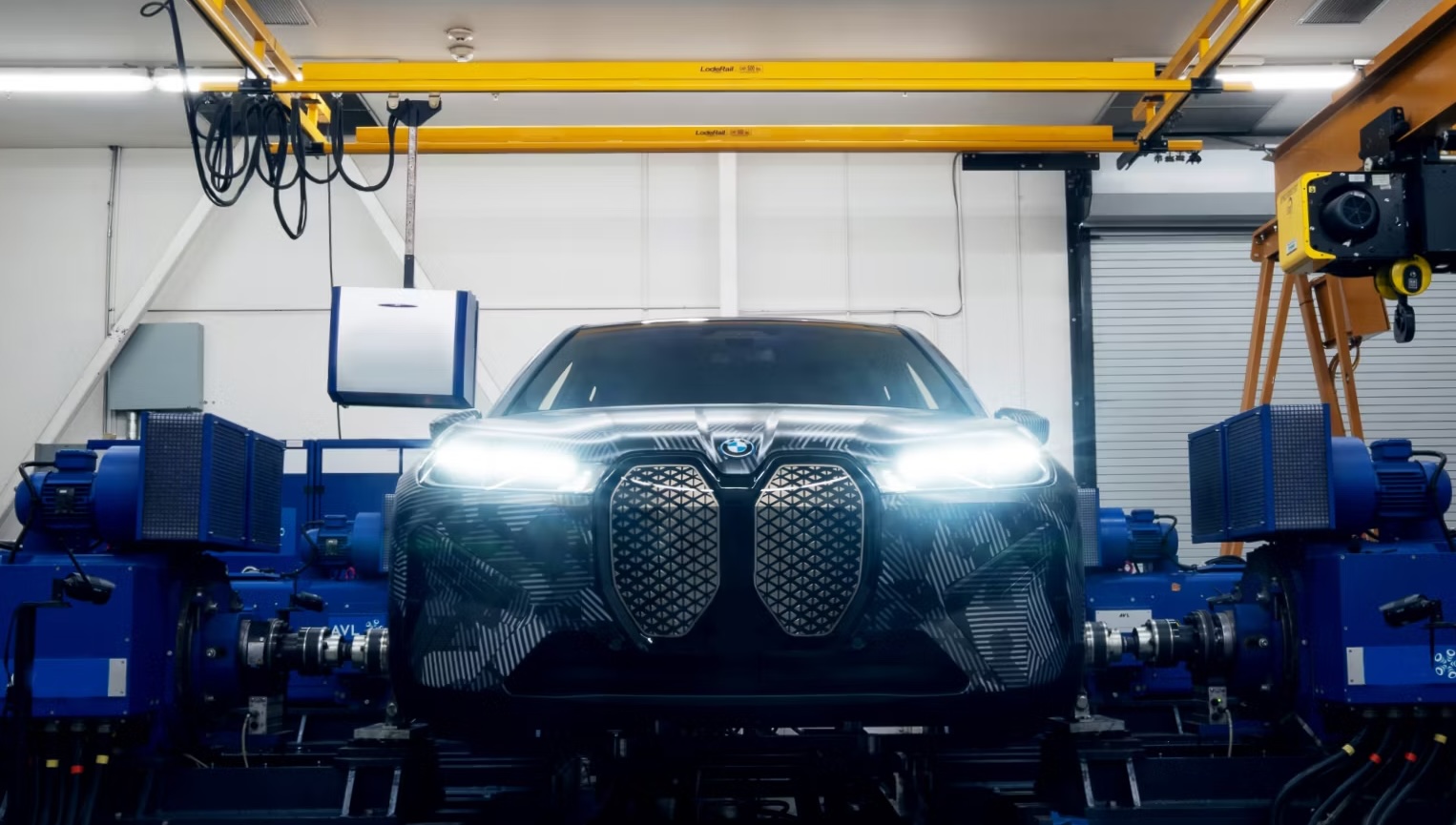
The Bavarian car manufacturer has achieved a major feat with a unit of its most up-to-date electric SUV, the iX. Equipped with a Gemini battery pack developed by the company Our Next Energy (ONE), the BMW iX has been able to cover almost 1,000 km on a single charge. The test was carried out following the WLTP homologation cycle, and resulted in a total of 978.4 kilometres.
The Gemini battery pack developed by ONE combines two different battery technologies. On the one hand, it integrates lithium iron phosphate (LFP) cells, which are responsible for directly meeting the vehicle’s energy demand, offering a range of around 240 km for this purpose.
Additionally, the Gemini battery pack complements the aforementioned LFP cells with others that lack an anode and offer a higher energy density. These latter cells increase the range by just over 700 km, but are used solely to transfer energy to the former, acting to a certain extent as a range extender.
In addition to offering unmatched range, the Gemini battery pack also stands out for reducing the lithium used by 20 percent and the graphite by 60 percent. It also minimises the use of nickel and cobalt. In this way, this technology developed by ONE represents an alternative to conventional battery packs, one that not only allows vehicles to go further but also reduces environmental impact.
One step closer to the start of commercialisation of Gemini battery packs
Last year, ONE and the BMW Group signed a collaboration agreement aimed at analysing the performance of the Bavarian manufacturer’s electric SUV equipped with a Gemini pack. An agreement that has now made it possible to demonstrate the viability of this technology in a series-production model.
ONE says that from now on it intends to focus its efforts on improving the efficiency of the DC converter integrated within the pack, as well as improving control algorithms to optimise the use of the support cells that act as the vehicle’s range extender.
Technical specifications of this car


 Peugeot E-208 GTi: a battery-powered toy that revives the spirit of the 1980s sports cars
 New Lexus ES: luxury grows and goes electric
 First contact with the Dacia Sandero Hybrid 155: power and efficiency from €19,890
Deja un comentario