BYD buys two ships to bring its cars to Europe: China's bet grows
 Victor Alós Yus @sepelaci
29 January 2023
2 min.
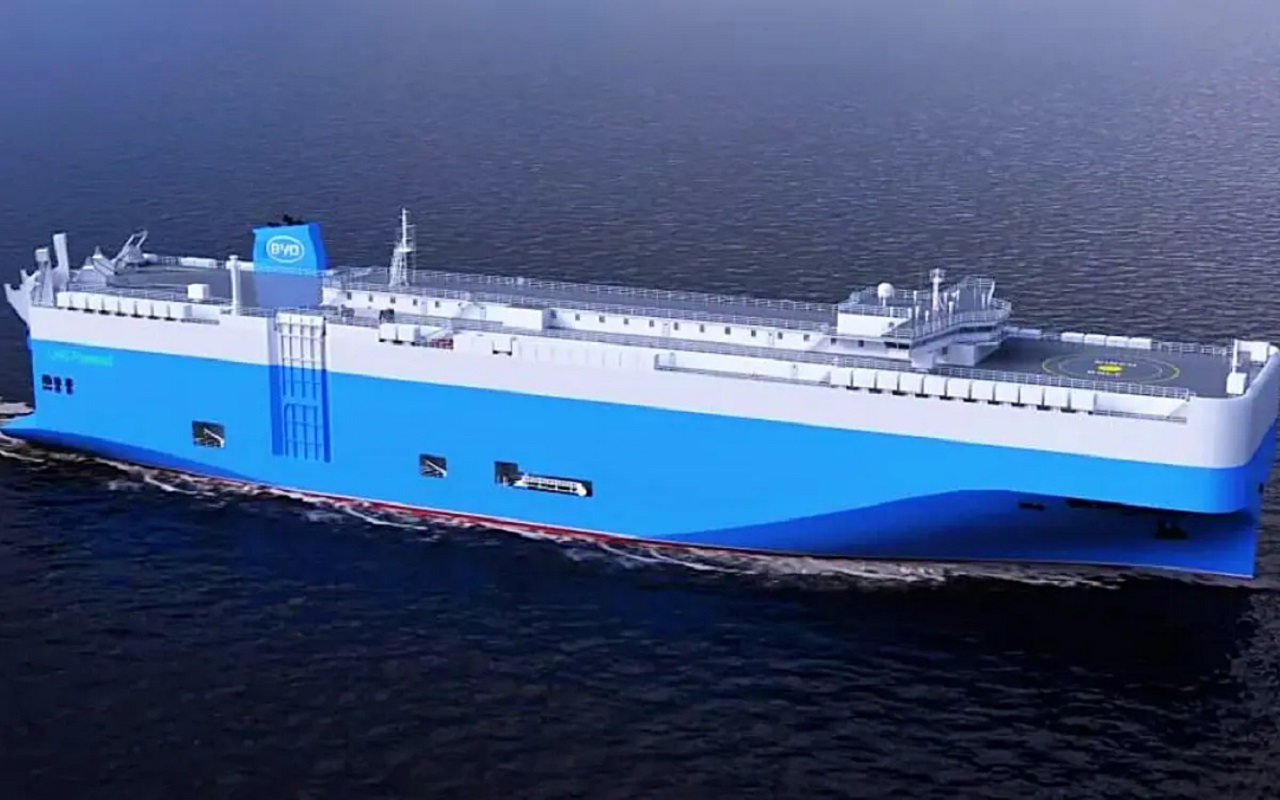
The Chinese multinational has bought two ships to transport vehicles to the European market, an activity for which it will no longer depend on third parties.
China’s brands’ bet on the European market is growing month by month. In fact, more and more brands from that country are reaching out to Europe to capture a significant share of the market. And it seems that this push to attract European buyers is increasing, because the company BYD, one of the most powerful in the Asian country, has just ordered two car carrier ships to bring its models to Europe.
The order has been placed with the Chinese shipyard Guangzhou Shipyard International Company Limited (GSI), which will build these two vessels. They are PCTC (Pure Car and Truck Carrier) car carriers and will each have a capacity to carry 7,000 vehicles.
The dimensions of these two ships are considerable: they are 200 metres long, with a 38-metre beam and a maximum speed of 18.5 knots, which on land equates to 34.3 km/h. They have been designed to reduce their carbon footprint thanks to their design.
Their engine can run on both LNG and diesel, so it can considerably reduce polluting emissions. In addition, it has batteries and energy recovery systems. The hull is painted with a product that reduces water resistance, allowing it to consume less energy.
By owning these two ships, it will be able to export its models to Europe without relying on third-party companies. Its intention is to increase those exports and to do so plans to order six to eight more ships. For now, this remains a future plan, and only these two ships have been ordered so far.
Their commissioning will still take some time, although their capacity will allow the Chinese multinational to transport up to 14,000 vehicles per voyage across both ships. A statement of intent that leaves no doubt: BYD wants to succeed in European markets.


 Peugeot E-208 GTi: a battery-powered toy that revives the spirit of the 1980s sports cars
 New Lexus ES: luxury grows and goes electric
 First contact with the Dacia Sandero Hybrid 155: power and efficiency from €19,890
Deja un comentario