Do you want to convert your petrol car to LPG? Here is how to do it
 Jaime Gomez
25 October 2018
4 min.
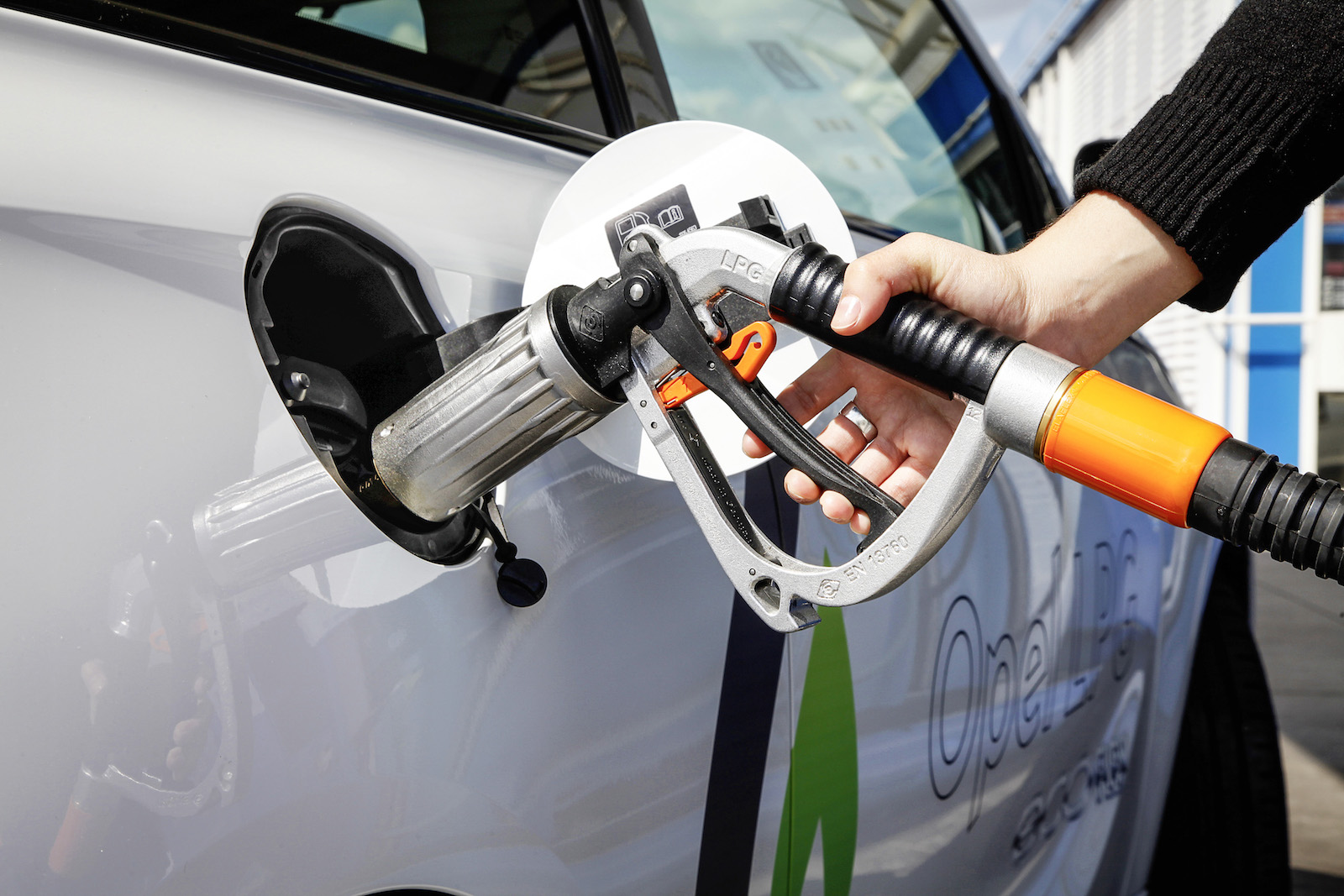
Are you thinking of converting your petrol car to LPG? You should keep in mind a series of tips and recommendations, as well as whether you will recover the investment
Current legislation allows you to convert a petrol car to LPG (liquefied petroleum gas). The main condition is that vehicles must comply with the Euro 3 standard, which affects cars manufactured from 2001 onwards. Some vehicles manufactured earlier can also be adapted to LPG if they have ECE/UN R-115 approval.
Can I convert my car to LPG?
Diesel vehicles cannot be fully converted to LPG due to their technical characteristics, although they can run on a mixture of diesel and gas (70% diesel and 30% gas), which considerably reduces polluting emissions thanks to improved combustion.
Some very powerful petrol vehicles may have problems with conversion because the gas injectors cannot introduce the fuel into the cylinders properly. In other cases, the manufacturer itself advises against converting to LPG because the valves may fail with the new system. In petrol cars with direct injection, converting them to LPG requires replacing the injectors so that they can withstand higher temperatures than those they were designed for when running on petrol.
With the proliferation of hybrid vehicles from Toyota, although the manufacturer does not approve it, we know of LPG systems being installed on these vehicles, especially on taxis, which reduces the cost per kilometre in euros. In any case, it should be noted that if the manufacturer does not approve it, the warranty is lost from that very moment.
How much does it cost to convert my car to LPG?
In Spain, not all garages can convert a petrol car to LPG. They must be duly approved and authorised to carry out the conversion, since they must sign a certificate taking responsibility for the installation in case of any problem. This certificate is submitted at the ITV inspection station, and if the garage is not approved, the user will not be able to pass the inspection. This regulation is used to prevent the proliferation of unauthorised workshops that carry out LPG conversions at prices lower than usual and then do not take responsibility for any faults that may arise after installation.
The price of converting a petrol car to LPG depends on the vehicle model and its characteristics, but, in general, it usually ranges between 1,500 and 2,500 euros. Engine displacement and horsepower are determining factors when offering a conversion quote. For example, the more cylinders there are, the more gas valves will be needed for installation and the more expensive it will be.
When will I recover the investment?
Today, the average price of LPG in Spain is 0.728 euros per kg, that of unleaded 95 petrol is 1.357 euros per litre and that of unleaded 98 petrol is 1.485 euros/l. Therefore, LPG is currently between 40% and 50% cheaper than petrol. The capacity of the gas tank depends on the vehicle model and on the space available for installation (it is usually fitted beside the exhaust pipe, where the spare wheel is housed). The tank ranges from 35 litres to 160 litres in capacity.
The more kilometres the user drives, the more profitable the LPG conversion will be. To give an idea, if we take as a reference a car with an average consumption of about 7 litres per 100 kilometres, the saving per 100 km will be about 3.5 euros, that is, 21 euros per 600 km. Therefore, if you are someone who does not change cars every few years and does a lot of kilometres, LPG will undoubtedly be profitable for you, since in a year or a year and a half you will have recovered the cost of the installation. Depending on the vehicle, in just 30,000 km you could recover the investment.
Additional advantage: ECO label
The ECO label is a badge granted by the DGT (Directorate-General for Traffic) to the cleanest vehicles, that is, those that emit fewer polluting agents into the atmosphere. This label can be carried by the following vehicles:
- Plug-in hybrids with an electric range below 40 km
- Non-plug-in hybrids (HEV)
- Vehicles running on CNG or LPG
- Vehicles with more than 8 seats, light vans and goods vehicles with the characteristics above
The main advantages that drivers who display the ECO label on their vehicle will obtain are the following:
- They have no restrictions on driving in cities with high levels of pollution, such as Madrid
- Discounts on regulated municipal parking rates
- Up to an 80% discount on the Municipal Vehicle Tax for the first 6 years after the LPG conversion
- Discounts on toll motorways
- Access to the BUS/HOV lane with no occupancy limit when signposted


 Peugeot E-208 GTi: a battery-powered toy that revives the spirit of the 1980s sports cars
 New Lexus ES: luxury grows and goes electric
 First contact with the Dacia Sandero Hybrid 155: power and efficiency from €19,890
Deja un comentario