Tesla's FSD (Supervised) gets the green light on Lithuanian roads
 Javier Cantagalli
21 May 2026
2 min.
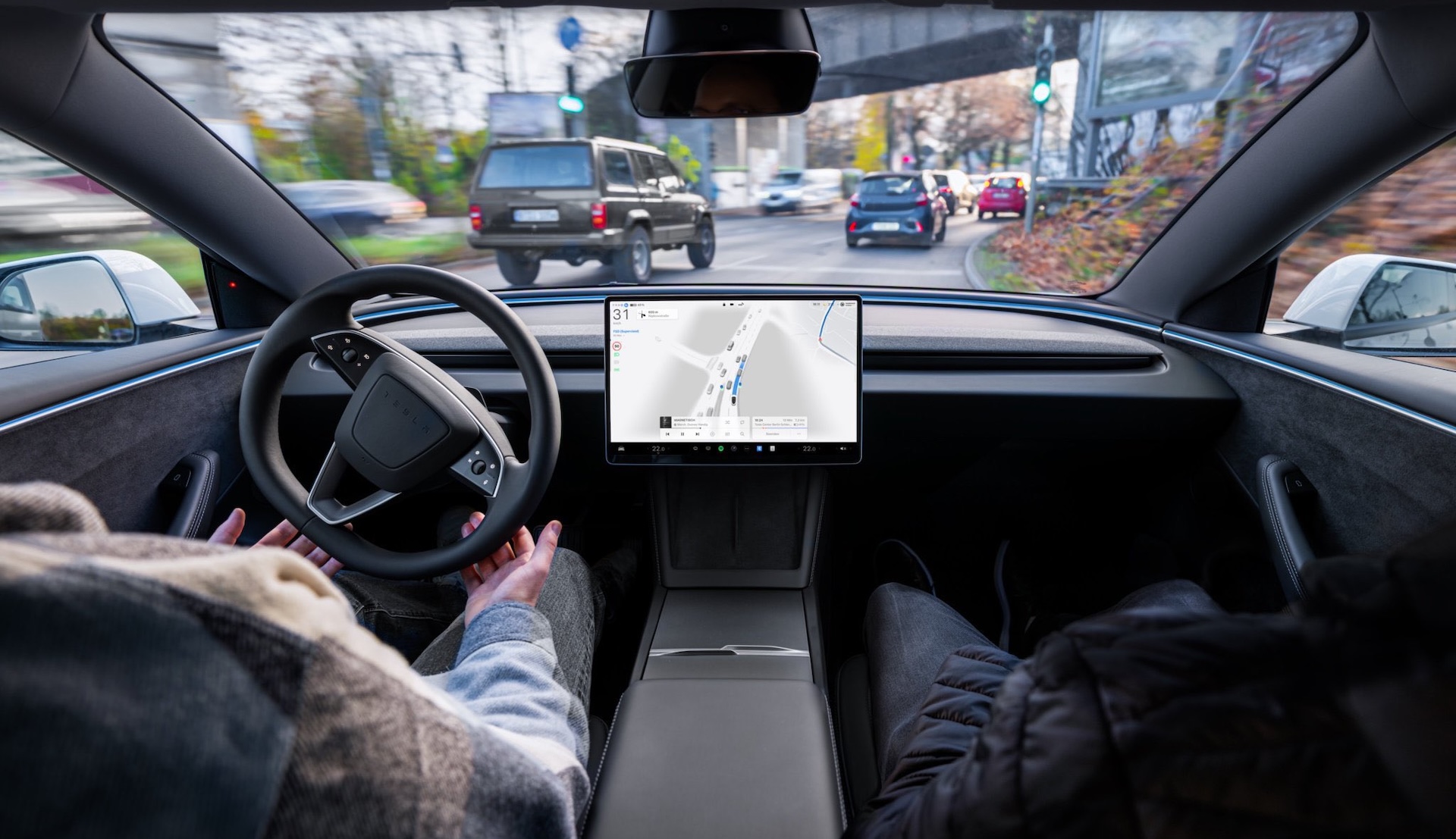
With this decision, Lithuania positions itself as one of the European Union’s most open countries to innovation in mobility, while always upholding the fundamental premise that ultimate responsibility rests with the driver.
Lithuania has become the second European Union country, after the Netherlands, to officially recognise the autonomous driving system of Tesla Tesla Full Self-Driving (Supervised), popularly known here in Spain as FSD Supervised. The decision was taken by the Lithuanian Ministry of Transport and Communications together with the Road Traffic Safety Authority (LTSA), after accepting the provisional approval issued by the Dutch authority RDW.
Lithuanian authorities have stressed, however, that this system is not fully autonomous. It is a SAE Level 2 system, which means the driver remains fully responsible for the vehicle at all times: they must stay alert to traffic and be ready to intervene immediately if necessary.
“Lithuania is among the first countries in Europe where cars equipped with these technologies can be driven. These advances can already contribute in a real way to safer and more comfortable driving, especially on long journeys or in monotonous traffic conditions.”
This approval is based on Regulation (EU) 2018/858, which allows Member States to recognise technical assessments carried out by other Union countries without having to repeat the entire process. In this way, Lithuania adopts the assessment already carried out in the Netherlands.
Tesla Tesla still has a long way to go in Europe
This decision by the Lithuanian authorities is an important achievement for Tesla Tesla. Just a few weeks after its approval in the Netherlands, FSD Supervised can now be legally used in a second European Union country, and it would not be surprising if others soon follow. Tesla Tesla is thus one step closer to achieving its ultimate goal, which is none other than obtaining approval at European level that is valid in all Member States. In this regard, it is important to note, however, that after a first meeting of the European Commission’s Technical Committee on Motor Vehicles held in early May, several countries, especially the Nordic ones, expressed their reluctance to grant this approval.
If the disagreement of some European countries is confirmed, Tesla Tesla could opt for a dual strategy: seek more pioneering countries to join the Netherlands and Lithuania, while continuing to press for broader EU-wide approval. This strategy could, however, lead to a final situation in which FSD Supervised is permitted in a large group of European countries and prohibited in just as many others. This would make long-distance journeys between countries more difficult.


 Peugeot E-208 GTi: a battery-powered toy that revives the spirit of the 1980s sports cars
 New Lexus ES: luxury grows and goes electric
 First contact with the Dacia Sandero Hybrid 155: power and efficiency from €19,890
Deja un comentario