Geely Starray EM-i: Power, range and technology in an accessible plug-in hybrid
 Iván Navarro
4 May 2026
7 min.
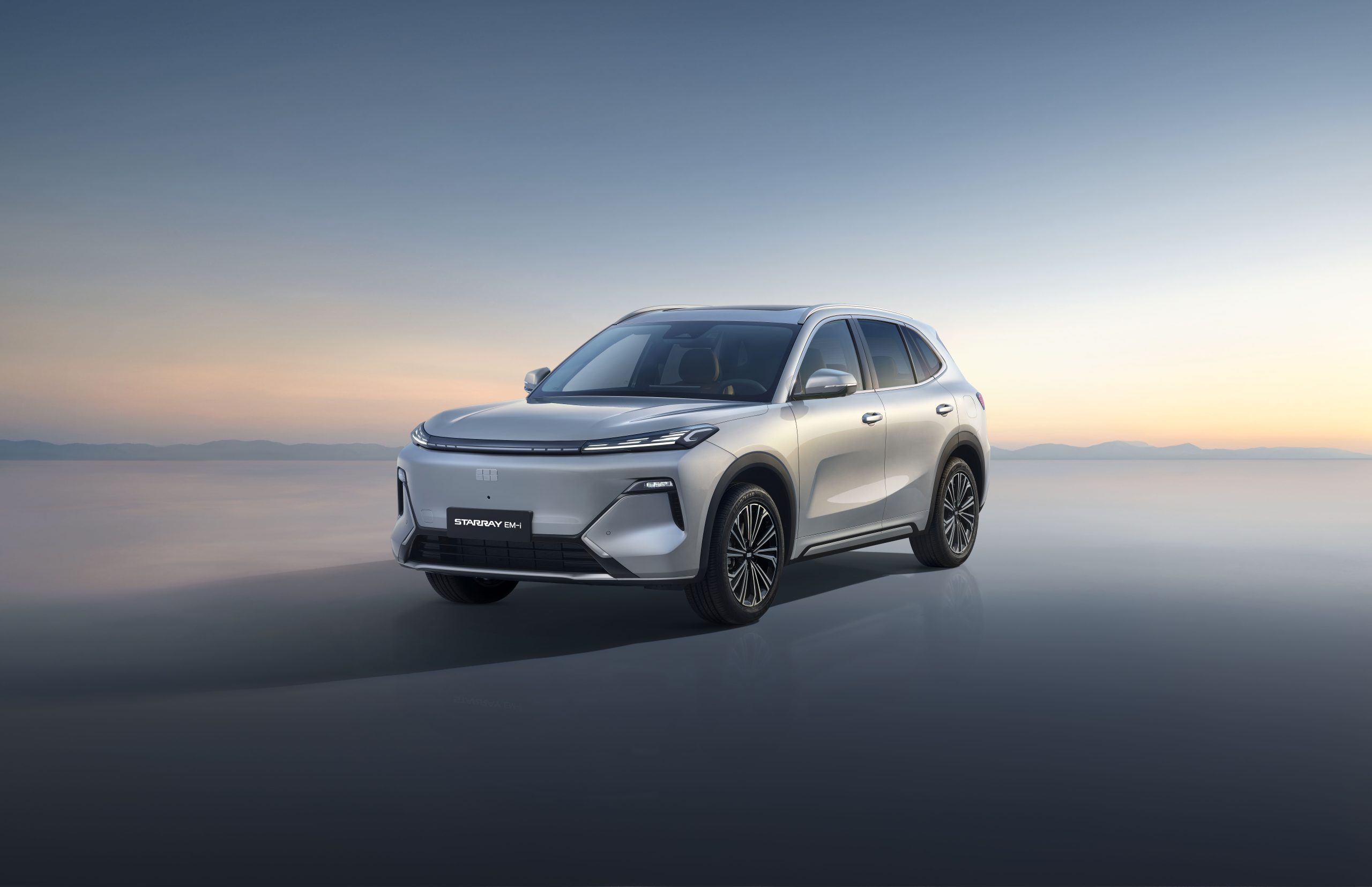
The Geely Starray EM-i enters the competitive compact SUV market as a firm bet on accessible, cutting-edge mobility.
The Geely Starray EM-i is a compact plug-in hybrid arriving to compete in a segment increasingly crowded with affordable PHEV solutions. It stands out for its combined power output, sufficient electric range for daily use, and a level of technology equipment that comes close to premium models without pushing the price up too much. In this analysis we review the engine range, homologated and real-world consumption, dynamic behaviour, interior ergonomics and load capacity, and we offer a clear recommendation on which version to choose based on typical use.
What kind of car the Geely Starray EM-i is and where it sits
The Geely Starray EM-i sits in the compact PHEV SUV segment, aimed at buyers who want to reduce consumption and emissions without giving up range and performance. Compared with rivals such as the Hyundai Tucson or the KIA Niro, its proposition is that of a product with an ambitious equipment-to-price ratio and a practical approach: good space for families, on-board technology and a battery that covers most daily journeys in electric mode. Its price from €34,900 places it below some mainstream alternatives, making it an attractive option for those who value total cost and standard equipment.
Geely Starray EM-i in detail: complete technical analysis
The Starray EM-i’s mechanical offering is built around a plug-in hybrid architecture with a petrol combustion engine supported by one or two electric motors depending on the version. The combination delivers a combined maximum output of 272 CV in the top version, which translates into reasonably brisk acceleration for the segment and relaxed motorway cruising. The battery has a usable capacity of close to 19 kWh, which gives it a WLTP electric range of around 70 km; in electric mode the homologated consumption is around 16.0 kWh/100 km.
As for consumption, the homologated combined figure is very low—around 1.4 l/100 km—but in real use, with intermittent charging and mixed journeys, consumption tends to approach 5.5–6.0 l/100 km when the battery is depleted and most of the distance is covered in hybrid mode. The Starray EM-i relies on a platform specific to hybrids that prioritises comfort and a relatively low centre of gravity, which provides stability but slightly penalises agility on twisty roads compared with compacts more focused on dynamism.
The interior stands out for well-finished materials at touchpoints and a large central screen integrating the main infotainment functions; ergonomics are correct, with logical controls and a clear digital instrument cluster. The ADAS package includes lane-keeping assistance, adaptive cruise control and automatic emergency braking with pedestrian detection, suitable for daily driving and long trips.
Space is well balanced: the rear seats offer room for two adults in comfort, and the boot, with 448 litres, is sufficient for everyday use and family getaways. The recommended version is the mid-range one with the full battery and the driver-assistance package, which balances price and equipment without resorting to expensive options.
The good
- Efficiency in mixed use and competitive electric range
- Technology and equipment on a par with higher segments
- Attractive value for money within the PHEV segment
The room for improvement
- Less agile dynamics than some rivals more focused on driving feel
- Boot space and battery pack slightly reduce modularity compared with pure combustion models
Who is this model for?
It is an ideal proposition for families and professionals who make daily urban or peri-urban journeys and need enough electric range for those trips, but who occasionally take long journeys. It is also suitable for those looking for technology and ergonomics without paying the price premiums of premium brands.
Main technical data
| Feature | Figure | Score |
|---|---|---|
| Power | 272 CV | 8.6 |
| Consumption | 1.4 l/100 km (homologated) — real: ~5.8 l/100 km | 9.0 |
| Top speed | 200 km/h | 7.5 |
| Electric range | 70 km (WLTP) | 8.8 |
| Battery | 19.1 kWh (usable) | 8.0 |
| Boot | 448 litres | 8.2 |
| Length | 4,540 mm | 8.0 |
| Price from | €34,900 | 8.4 |
score out of 10 based on the criteria analysed in this article
Alternatives to the Geely Starray EM-i
Hyundai Tucson PHEV
The Tucson PHEV offers a similar architecture with combined output close to 265 CV and a WLTP electric range of around 60–65 km. Its strong points are the after-sales network and a well-crafted interior; however, its starting price is usually higher and its boot slightly smaller due to the battery layout. It is an alternative for those who prioritise brand and technical coverage.
Kia Niro PHEV
The Niro PHEV is a lighter option in power—around 141 CV combined—with a realistic electric range of around 50–60 km on the WLTP cycle. It stands out for its low consumption in urban use and its compact dimensions, which make parking easier. Its price starts in a competitive bracket that makes it a logical alternative for urban users who do not need high performance.
Mitsubishi Outlander PHEV
The Outlander PHEV is larger and geared towards crossover practicality, with outputs around 220–230 CV and WLTP ranges that vary with the battery, usually in a range of 55–65 km in recent models. Its advantage is space and towing capacity in specific versions; its drawback is generally a higher price and less agile handling on the road.
Quick technical comparison against its rivals
| Model | Power | Consumption / range | Top speed | Price | Score |
|---|---|---|---|---|---|
| Geely Starray EM-i | 272 CV | 70 km (WLTP) | 200 km/h | €34,900 | 8.6 |
| Hyundai Tucson PHEV | 265 CV | 65 km (WLTP) | 193 km/h | ~€40,000 | 8.2 |
| Kia Niro PHEV | 141 CV | 58 km (WLTP) | 170 km/h | ~€34,000 | 7.8 |
| Mitsubishi Outlander PHEV | 230 CV | 60 km (WLTP) | 180 km/h | ~€42,000 | 7.9 |
score out of 10 based on the criteria analysed in this article
In this comparison the most balanced model is the Geely E5, as it combines competitive electric range, power and an entry price below several rivals; the best buy depends on the profile: if brand and network matter, the Tucson; if urban running cost is the priority, the Niro.
Frequently asked questions
What is the real-world electric range of the Geely Starray EM-i?
On WLTP figures the Starray EM-i claims around 70 km; in real use that translates to 50–70 km depending on driving style and weather, enough for most daily urban journeys.
What real-world consumption can I expect from the Geely Starray EM-i?
The homologated combined consumption is very low (approx. 1.4 l/100 km) if you make use of electric charging. In real use, with mixed routes and a depleted battery, you should typically expect between 5.5 and 6.5 l/100 km.
Which version of the Geely Starray EM-i is the most recommended?
The mid-range version that keeps the full battery and offers the ADAS package is the most balanced in terms of price/equipment for most buyers.
How does the space and boot compare with its rivals?
With 448 litres of boot, it offers adequate capacity for the segment; it is similar to or slightly larger than the Tucson’s in some configurations, and clearly above compact hybrid saloons.
Is it expensive to maintain a PHEV like the Geely Starray EM-i?
Maintenance costs are comparable to those of a modern combustion car; the economic advantage appears if you charge frequently and reduce petrol use. Specific battery maintenance is covered by the manufacturer’s official warranties.
Final verdict: why choose the Geely Starray EM-i?
Reasons to choose it:
- Technical: a powerful and efficient combination with a battery that covers daily journeys in electric mode.
- Practical: good interior and boot space, careful ergonomics and a complete ADAS package.
- Economic: contained entry price compared with alternatives and reduced running cost if used with frequent electric charging.
The Geely Starray EM-i is convincing as a well-balanced PHEV option: it is not the sportiest in its segment nor the cheapest in all its versions, but its electric range, equipment level and value for money make it a solid alternative for families and professionals who want to reduce consumption without giving up performance and technology. Against rivals such as the Hyundai Tucson or the KIA Niro, it offers a practical proposition that makes everyday life easier while keeping enough technical arguments to be a well-reasoned purchase.

 Peugeot E-208 GTi: a battery-powered toy that revives the spirit of the 1980s sports cars
 New Lexus ES: luxury grows and goes electric
 First contact with the Dacia Sandero Hybrid 155: power and efficiency from €19,890
Deja un comentario