C-HR Dacia Duster Hyundai KIA Kona MG Niro Toyota ZS Compact Buying Guides SUV
How to Choose a Compact SUV for Under €28,000 in 2026: Engine, Standard Equipment and Maintenance Costs
 Iván Navarro
21 November 2026
7 min.
We compare seven compact SUVs on sale in Spain for under €28,000 based on engine, standard equipment under the GSR2 regulation and the real three-year maintenance cost. A practical guide to choosing without surprises at the 36-month service.
Buying a compact SUV for under €28,000 in 2026 is no longer just a matter of looking at the list price. The Spanish market has filled up with options featuring very different powertrains, huge screens and equipment lists that, at heart, are more regulated than they seem. Choosing well means weighing three variables: which engine suits your actual use, what comes as standard by law, and what it will cost to keep running once the three-year basic warranty expires.
What to check before you sign: engine, equipment and maintenance
The typical mistake is looking only at the monthly finance payment. A cheap compact SUV at the entry point can end up expensive at the workshop if the engine doesn’t match your annual mileage, or if the standard equipment falls short and you end up paying for extras that should have been included. The good news is that, with the GSR2 regulation now fully applied, the safety and assistance baseline is the same for everyone. The bad news is that everything else (consumption, servicing, parts) still depends entirely on the brand.
Engine: which powertrain to choose under €28,000
In this price range there are three clear families: petrol naturally aspirated or turbo, light mild hybrid and full hybrid without a plug. Pure electric still pushes the budget above €28,000 in most configurations, so we leave it out of this guide.
Petrol and mild hybrid versus full hybrid
If you do more motorway than city driving, a well-driven turbo petrol is not a bad idea: less electronics to maintain, a well-known mechanical layout and more predictable repair costs. But if your day-to-day is urban, with traffic jams and constant stop-start, the full hybrid wins by a mile on real-world consumption. The difference is not cosmetic: we are talking about dropping from 7 l/100 km to around 4.5–5 l/100 km in town, something you feel in your wallet every month.
Mandatory standard equipment: the GSR2 regulation is no longer optional
Since the full entry into force of the General Safety Regulation (GSR2), every new car sold in Spain must include as standard intelligent speed assistance, driver drowsiness warning, autonomous emergency braking and lane keeping assist. This levels the playing field: there is no longer any excuse for a cheap compact SUV to come “stripped” in terms of safety. The real difference between brands now lies in what they add above the legal minimum: a 360º camera, ventilated seats, wireless charging or a genuine digital instrument cluster rather than a screen mock-up.
Seven compact SUVs under €28,000 in 2026
Dacia Duster, from €18,350
The Duster remains the benchmark for the cheap compact SUV in Spain. With the entry-level TCe 130 engine and the Hybrid 140 variant for those who prefer to save at the petrol station, it is the only one on this list that leaves real room in the budget for extras.
| Version | Power kW | Power CV | Fuel | Label |
|---|---|---|---|---|
| TCe 130 | 96 kW | 130 CV | Petrol | C |
| Hybrid 140 | 103 kW | 140 CV | Hybrid | ECO |
Hyundai Kona Hybrid, from €27,900
The Kona sits right at the edge of the budget, but makes up for it with an interior that feels a step above its price. We already analysed it in depth against the Toyota C-HR on real-world consumption, and the result was close.
| Power kW | Power CV | Fuel | Label |
|---|---|---|---|
| 104 kW | 141 CV | Hybrid | ECO |
Kia Niro HEV, from €28,750
The Niro slightly exceeds the budget in its catalogue configuration, although with the usual dealer campaign offers it drops below the threshold without difficulty. Its strong point is driving calm, more typical of a higher-segment hybrid.
| Power kW | Power CV | Fuel | Label |
|---|---|---|---|
| 104 kW | 141 CV | Hybrid | ECO |
Toyota C-HR, from €27,700
The C-HR sells design ahead of space, and that shows in the boot, which is a little tighter than its rivals’. In return, Toyota offers one of the most solid reliability records in the segment and urban consumption of around 4.8 l/100 km in our tests.
| Power kW | Power CV | Fuel | Label |
|---|---|---|---|
| 103 kW | 140 CV | Hybrid | ECO |
Renault Symbioz E-Tech, from €27,900
The Symbioz is Renault’s most recent bet in this segment and arrives with the E-Tech full hybrid system now mature, the same one that has performed well in the Captur. Generous standard equipment, certainly, though with a somewhat high driving position that not everyone will like.
| Power kW | Power CV | Fuel | Label |
|---|---|---|---|
| 107 kW | 145 CV | Hybrid | ECO |
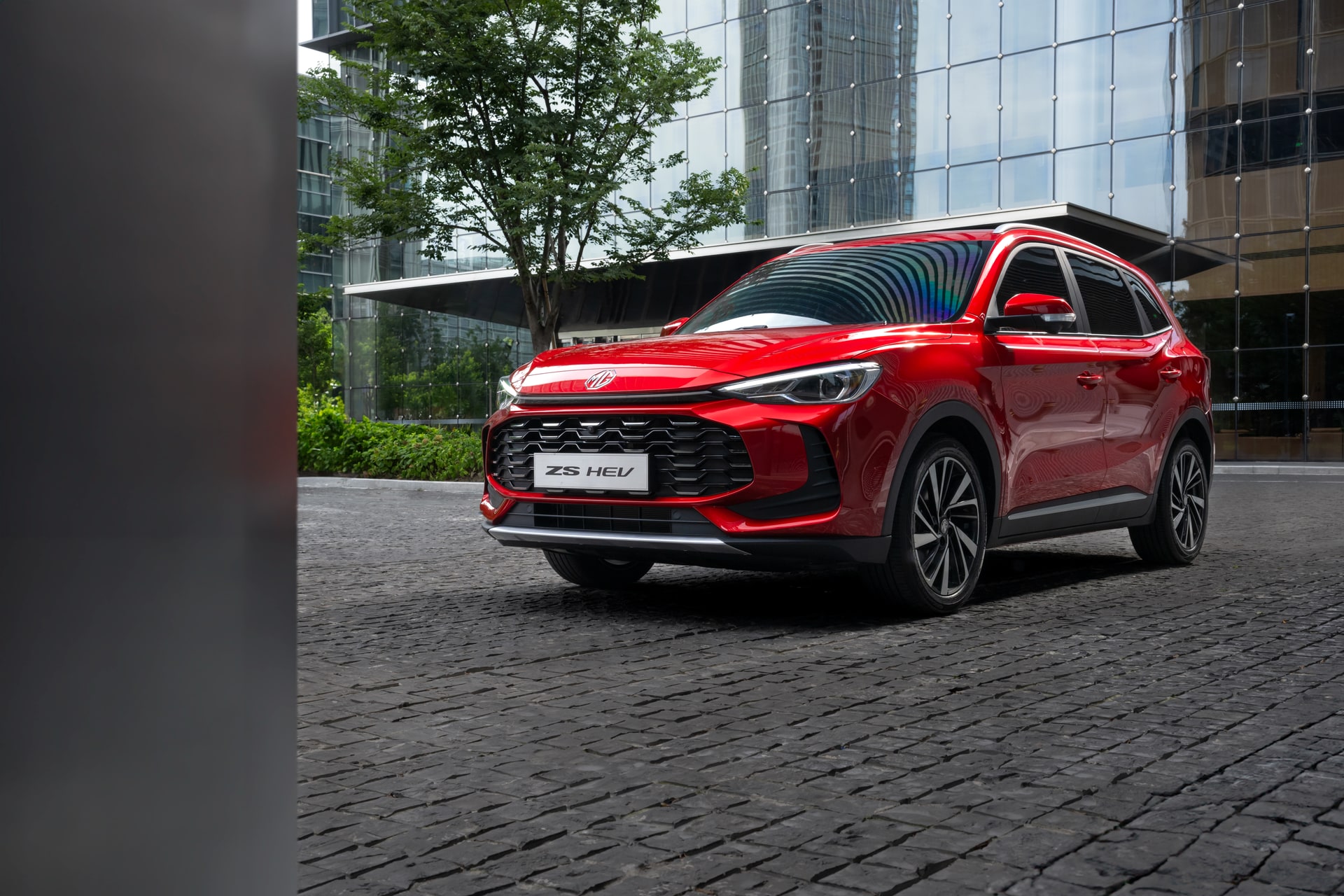
MG ZS Hybrid+, from €23,990
This is probably the best compact SUV of 2026 in pure price-to-equipment value. MG packs a 360º camera, electric seats and wireless charging into versions that other brands struggle to match even at the top of their range.
| Combined power kW | Combined power CV | Fuel | Label |
|---|---|---|---|
| 139 kW | 189 CV | Hybrid | ECO |
Omoda 5, from €24,400
The Omoda 5 plays a different card: eye-catching design and a turbo petrol with considerably more power than its hybrid rivals. It is not the most efficient on the list, but if you want response on the open road over city savings, it more than delivers.
| Power kW | Power CV | Fuel | Label |
|---|---|---|---|
| 145 kW | 197 CV | Petrol | C |
Three-year maintenance cost: where the small print is
This is the point least examined when signing and the one that costs the most from the third year onwards, when the basic warranty ends. Non-plug-in hybrids (Kona, Niro, C-HR, Symbioz, ZS Hybrid+) tend to be cheaper to maintain than buyers expect: regenerative braking extends the life of pads and discs, and there are fewer parts subjected to thermal stress than in a pure turbo petrol. The Duster and the Omoda, with conventional mechanicals, compensate with cheaper spare parts and a workshop network with lower hourly labour rates. We already detailed this logic in our guide to low-maintenance compact hybrid SUVs, and the figures have not changed much since then.
If you plan to finance or to take advantage of any public purchase aid, check the current conditions of the Plan Auto+ on the official website before placing your order: the amounts change frequently and nothing should be taken for granted.
Summary table and verdict
| Model | Price from | Fuel | Label | Engine score | Equipment score | Maintenance score |
|---|---|---|---|---|---|---|
| Dacia Duster | €18,350 | Petrol/Hybrid | C/ECO | 7 | 9 | |
| Hyundai Kona | €27,900 | Hybrid | ECO | 8 | 8 | 8 |
| Kia Niro | €28,750 | Hybrid | ECO | 8 | 8 | 8 |
| Toyota C-HR | €27,700 | Hybrid | ECO | 7 | 7 | 9 |
| Renault Symbioz | €27,900 | Hybrid | ECO | 8 | 8 | 7 |
| MG ZS Hybrid+ | €23,990 | Hybrid | ECO | 7 | 9 | 7 |
| §6MGh393§ | €24,400 | Petrol | C | 7 | 8 |
If you can only choose one, the MG ZS Hybrid+ offers the best balance between price and standard equipment, and the Duster remains unbeatable on pure cost. For those who prioritise long-term reliability, the C-HR and the Kona remain the safest bets.
Frequently asked questions
What is the best compact SUV under €28,000 in 2026?
There is no single winner: the MG ZS Hybrid+ stands out for equipment per euro, the Dacia Duster for total cost and the Toyota C-HR for long-term reliability. The choice depends on which variable weighs most in your case.
Is it worth paying more for a hybrid over a petrol in this segment?
If your use is mostly urban, yes: the consumption saving offsets the initial price difference within two or three years. On motorway use the advantage is considerably diluted.
What comes as standard on a compact SUV under regulation in 2026?
Under the GSR2 regulation, all of them include emergency braking, intelligent speed assistance, drowsiness warning and lane keeping assist, regardless of price or brand.
How much does it cost to maintain a compact hybrid SUV compared with a petrol one?
In general, the hybrid reduces brake wear and saves fuel, although some specific battery checks can occasionally raise maintenance costs from the fourth or fifth year onwards.
Technical specifications of the cars in this article


 Kia offers an electric range of 10 models, 50 versions and 400 possible combinations
 The seven finalists for the 2027 European Car of the Year (COTY) are exclusively electric
 Peugeot E-208 GTi: a battery-powered toy that revives the spirit of the 1980s sports cars
Deja un comentario