Hyundai KIA Kodiaq SEAT Skoda Sorento Staria Tarraco Tayron Volkswagen Family Buying Guides Minivans SUV
How to choose a large MPV or SUV for carrying passengers on long trips: seats, rear climate control and noise level
 Iván Navarro
7 November 2026
7 min.
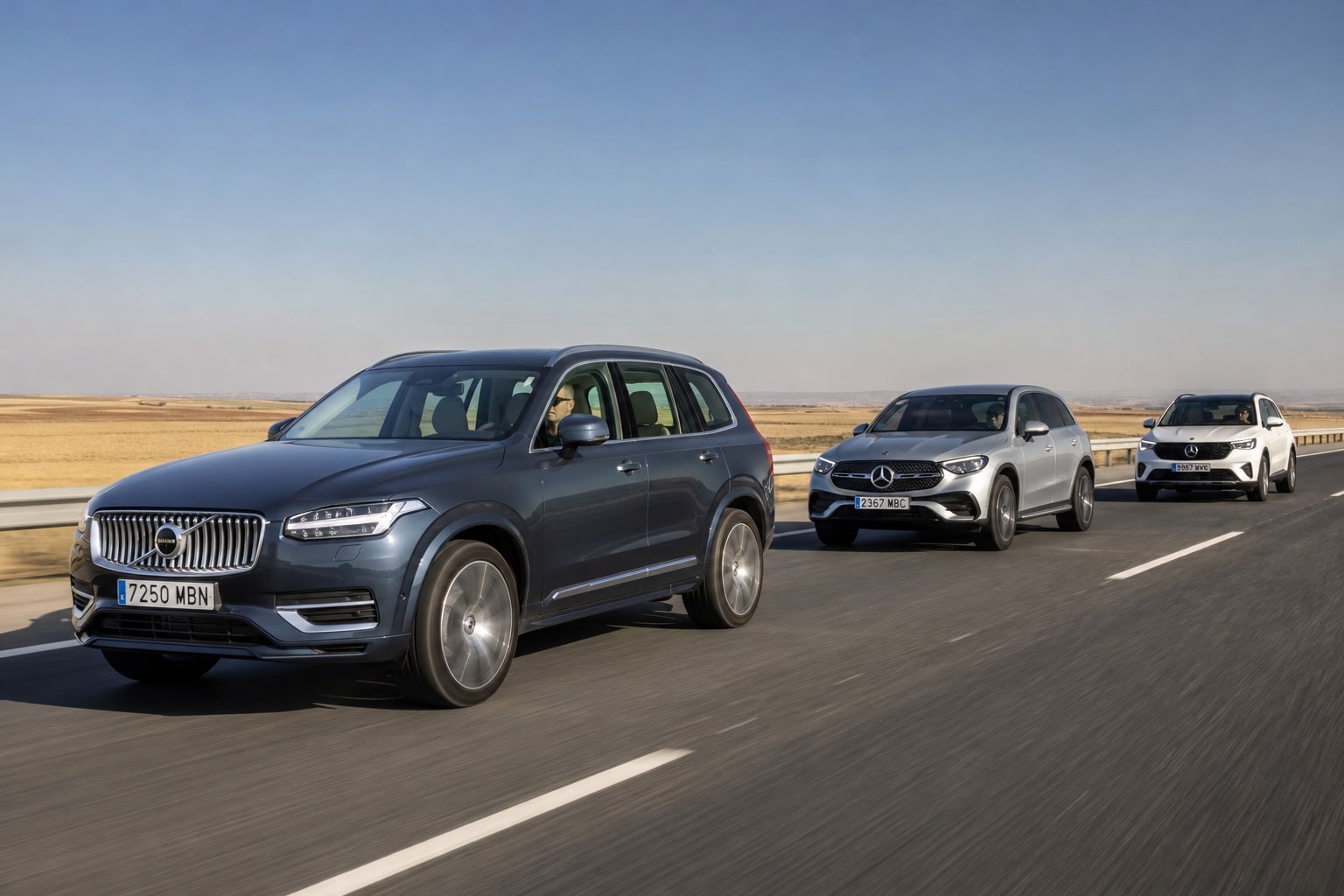
Eight hours on the motorway with five or seven occupants on board is a test that very few cars pass with flying colours. We are not talking about power or infotainment — we are talking about something more basic: that the third passenger in the second row doesn’t end up with a numb hip, that the kid in the back doesn’t arrive at Despeñaperros sweating, and that the driver doesn’t finish with a headache from the constant hum at 120 km/h. Choosing a large MPV or SUV for long trips means looking beyond the power figures and focusing on three variables that almost never appear in commercial brochures: seat ergonomics, rear climate control and in-cabin noise at cruising speed.
Three criteria that really matter on a 500 km journey
In our view, the usual mistake when buying a 7-seat SUV for long trips is to focus only on boot space or the price per seat. These are relevant data, yes, but they don’t determine whether the journey is enjoyed or endured. What really conditions comfort over long distances is how a rear seat supports your spine, whether air is regulated independently for each row, and how many decibels seep into the cabin at cruising speed. These are measurable variables, not subjective impressions — which is why we have used them as the backbone of this guide.
Seat ergonomics: the first hour is fine, the fifth is painful
A mediocre seat doesn’t bother you in the first stretch. It bothers you when you’ve already spent three hours on the road and the headrest is still in the same stiff position it was in when you left home. What distinguishes a comfortable family MPV from a forgettable one is independent backrest adjustment in the second row, generous fore-aft travel to stretch your legs and — a detail almost nobody appreciates until they miss it — a slightly reclined seat angle that distributes body weight without concentrating it on the ischial bones.
In practice, the models with the best rear seats tend to share a pattern: medium-high density foam in the cushion (not too soft, which sinks after 200 km) and a backrest with its own lumbar support in the second row, not just in the front seats. The third row, in 7-seat SUVs, is usually the weak link: there, ergonomics almost always give way to the space available. It is worth testing it before signing, without rushing, with the boot loaded as it would be on a real trip.
Multi-zone rear climate control: the detail that separates budget from premium
A large SUV with rear climate control and independent settings is not a high-end whim — in our view, it is almost a requirement for any car that will cover 800 km with small children in the back. The difference between a two-zone system and a three- or four-zone one is most noticeable in summer, when the sun hits one of the rear windows directly and the other passengers start complaining. Systems with ceiling air outlets, adjustable from the seat itself, usually mark the line between an acceptable SUV and one genuinely designed for family travel.
Having four zones is no panacea either if the airflow is weak: we have tested models with three-zone climate control whose real-world performance in the rear seats left quite a lot to be desired on long summer journeys.
Road noise: the decibels that make a real difference
This is perhaps the most underrated criterion. Among today’s quiet motorway cars, the difference between a cabin at 68 dB and one at 72 dB at 120 km/h doesn’t sound like much on paper, but on a logarithmic scale like that of sound it equates to a noticeably different sensation of noise after several hours of driving. Acoustic insulation depends on unglamorous factors: double glazing, the thickness of the door seals, low-resonance tyres and, above all, careful soundproofing beneath the wheel arches. Large SUVs built on platforms derived from premium models usually have the advantage here, although this does not always translate into the price you would expect.
Recommended 7-seat SUVs and MPVs for long trips (2024-2025)
Hyundai Staria Electric — from €57,450
The Hyundai Staria electric is by far the most radical proposal on this list: up to nine seats, a classic MPV design and a homologated range of 430 km, which makes it viable for long trips without constant charging anxiety.
| Power | Range | Label | Fuel |
|---|---|---|---|
| 160 kW (218 CV) | 430 km | Electric |
Peugeot 5008 — from €36,400
The new generation of the French SUV features front and rear seats with a more enveloping design than its predecessor, and offers a 7-seat configuration with two-zone climate control as standard, three-zone on the higher trims.
| Power | Consumption | Label | Fuel |
|---|---|---|---|
| 107 kW (145 CV) | 5.6-5.9 l/100 km | ECO | Hybrid (mild hybrid) |
Skoda Kodiaq — from €42,100
The Kodiaq has been a benchmark for real space for seven occupants across several generations, with a third row that, while not perfect, is more liveable than that of many of its direct rivals.
| Power | Consumption | Label | Fuel |
|---|---|---|---|
| 110 kW (150 CV) | 5.3-5.4 l/100 km | C | Diesel |
Seat Tarraco — from €38,600
It shares its platform with the Kodiaq, but with a slightly firmer suspension setting which, in our view, doesn’t always benefit comfort on long trips with a loaded boot.
| Power | Consumption | Label | Fuel |
|---|---|---|---|
| 110 kW (150 CV) | 5.3-5.6 l/100 km | C | Diesel |
Volkswagen Tayron — from €41,300
The successor to the Tiguan Allspace, the Tayron offers up to seven seats and soundproofing that, in our impressions, is among the most accomplished in the segment thanks to notable work on the wheel arches.
| Power | Consumption | Label | Fuel |
|---|---|---|---|
| 110 kW (150 CV) | 5.5 l/100 km | C | Diesel |
Kia Sorento — from €48,950
The self-charging hybrid Kia is, for many families, the ideal middle ground between low consumption and long range without relying on a plug, something we already analysed when discussing premium hybrid SUVs for travelling.
| Power | Consumption | Label | Fuel |
|---|---|---|---|
| 176 kW (239 CV) | 6.4 l/100 km | ECO | Hybrid |
Comparison table: seats, climate and noise at a glance
| Model | Seats (ergonomics) | Rear climate | Noise level | Score |
|---|---|---|---|---|
| Hyundai Staria Electric | 8 | Three-zone | Very low | 8.5 |
| Peugeot 5008 | 7.5 | Two/three-zone | Medium-low | 8 |
| Skoda Kodiaq | 8 | Three-zone | Low | 8.5 |
| Seat Tarraco | 7 | Two-zone | Medium | 7.5 |
| Volkswagen Tayron | 8 | Three-zone | Very low | 8.7 |
| Kia Sorento | 7.5 | Three-zone | Low | 8.3 |
Plan Auto+ and the real cost of a large family SUV
Buying a 7-seat SUV or a family MPV is a considerable investment, and the Plan Auto+ can ease part of the outlay on electrified models such as the Hyundai Staria or hybrids such as the Kia Sorento. Amounts and requirements change fairly often, so it is sensible to check the current figure on the plan’s official website before closing the purchase — avoiding last-minute surprises is, in this kind of transaction, just as important as choosing the right seats.
Frequently asked questions
What is better for long trips: an MPV or a 7-seat large SUV?
It depends on use. The MPV usually wins on accessibility and real space for seven adult occupants; the large SUV makes up for it with better dynamic behaviour and a more versatile image for everyday use outside long trips.
What noise level is considered good in a car at 120 km/h?
Below 70 dB in the cabin is considered an outstanding result for this category; between 70 and 74 dB, a correct level; above that, it starts to be noticeable on trips of several hours.
Is it worth paying more for three-zone or four-zone rear climate control?
On long trips with children, yes: it avoids complaints about uneven heat or cold in the second and third rows, and reduces unnecessary stops to adjust the temperature manually.
Are large electric SUVs viable for long trips in 2026?
Models such as the Hyundai Staria Electric, with a homologated range of 430 km, already allow long journeys with reasonable charging stops, provided the route is planned around the available fast-charging network.
Technical specifications of the cars in this article

 Kia offers an electric range of 10 models, 50 versions and 400 possible combinations
 The seven finalists for the 2027 European Car of the Year (COTY) are exclusively electric
 Peugeot E-208 GTi: a battery-powered toy that revives the spirit of the 1980s sports cars
Deja un comentario