Born Cupra E-308 ID.3 Megane Model 3 Peugeot Renault Tesla Volkswagen Electric Cars Compact Comparisons
How to Choose an Electric Compact with a CERO Label in 2026: Real-World Range, Charging Cost and Resale Value
 Dani Montesinos
16 September 2026
6 min.
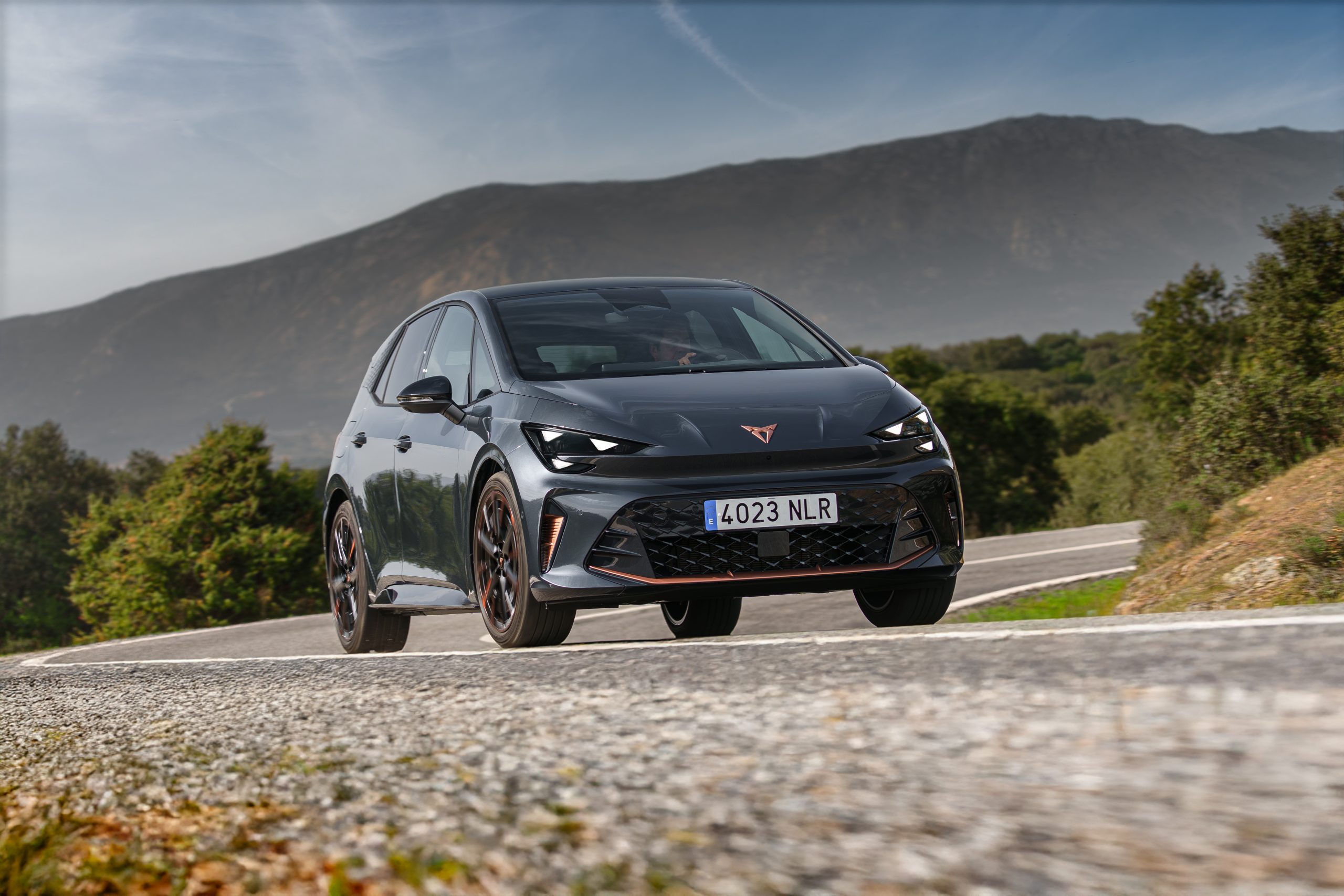
Editorial guide to choosing an electric compact with a CERO label in 2026, weighing real-world range, charging cost and resale value
The electric compact is no longer a promise. For many Spanish drivers, it is the rational choice when they walk into a dealership in 2026. But choosing well means looking beyond the brochure: the real kWh per 100 km matters, what it costs to plug the car in at home versus a motorway fast charger and, above all, how much the vehicle will be worth in three or five years. This guide focuses on the electric compact CERO label 2026 and works with a limited selection of models actually available in Spain.
From the initial list of candidates we have dropped two names. The BYD is out because, in our view, this guide is not looking to crown a single winner but to cross usage profiles with objective criteria, and its editorial fit was weaker than that of the five chosen. The Nissan Leaf, the undisputed pioneer in popularising the electric car, does not make the cut either: we believe the new generation — in range, charging curve, software and digital experience — has raised the bar to a level its current offering no longer reaches with the authority its legend would demand.
What the CERO DGT label means in 2026
The CERO DGT 2026 label remains the sticker that opens doors: access to ZBE low-emission zones, subsidised regulated parking in several capitals and local tax advantages. Any pure electric car carries it as standard. The interesting point is not having it — all the candidates do — but understanding that its real value depends on where the driver lives. In Madrid or Barcelona, it is gold. In a city without an active ZBE, it is peace of mind for the future.
Real-world range: why WLTP is not enough
WLTP is a starting point, not a promise. The real-world range of an electric car depends on the consumption measured in kWh/100 km, and here today’s compacts range between 14 and 19 kWh depending on how they are driven. A car homologated at 450 km may drop to 320 real km on the motorway at 120 km/h in winter. Is that a drama? No, provided the driver knows it in advance.
Charging cost: home versus public network
Here lies the great hidden variable. The cost of charging an electric car at home on an off-peak tariff is around €0.10–0.15/kWh; at a motorway ultra-fast charger it can triple. A driver who charges 90% at home amortises the car very quickly; one who relies on the public network, much less so.
Resale value at 3 and 5 years
The resale value of an electric car is the serious unknown. Brands with a consolidated network and well-guaranteed batteries hold up better. Tesla, despite price adjustments on new cars, maintains solid second-hand demand. Renault and Volkswagen retain value thanks to their commercial presence. Newcomers still lack sufficient history.
Renault Mégane E-Tech — from €34,574
The Mégane E-Tech is probably the best-resolved electric compact from Renault in years. A carefully finished interior, the OpenR Link system with Google built in, and a homologated consumption that in practice stays around 16 kWh/100 km if you don’t abuse it. Its 60 kWh battery delivers real trips of 350–380 km. That said, charging at 130 kW is not the fastest in the group.
| Power kW | Power CV | Top speed | WLTP range | Consumption | Label | Fuel |
|---|---|---|---|---|---|---|
| 160 | 220 | 160 km/h | 470 km | 15.0 kWh/100 km | CERO | Electric |
Volkswagen ID.3 Neo — from €36,575
The ID.3 has smoothed out its early rough edges. The software is no longer the drama it was in 2020, the interior materials have improved and the Pro S version offers a healthy range. In my view it still lacks dynamic spark compared with the Cupra Born, with which it shares its platform, but as a sensible family car it more than delivers.
| Power kW | Power CV | Top speed | WLTP range | Consumption | Label | Fuel |
|---|---|---|---|---|---|---|
| 140 | 190 | 160 km/h | 492 km | 13.9 kWh/100 km | CERO | Electric |
Peugeot e-308 — from €37,040
The e-308 bets on styling and on an i-Cockpit that still divides opinion. Its 54 kWh usable battery and tuned consumption give it a competitive real-world range, though it doesn’t lead. It is the French premium compact for those who value design and interior over the raw spec sheet.
| Power kW | Power CV | Top speed | WLTP range | Consumption | Label | Fuel |
|---|---|---|---|---|---|---|
| 115 | 156 | 170 km/h | 450 km | 14.9 kWh/100 km | CERO | Electric |
Cupra Born — from €42,000
The Born is the ID.3 with attitude. Same MEB platform, but dynamically tuned with more finesse. The 77 kWh version is the interesting one for those who travel: it approaches 600 km WLTP with contained consumption. On a real journey it behaves with a composure its German siblings don’t always match.
| Power kW | Power CV | Top speed | WLTP range | Consumption | Label | Fuel |
|---|---|---|---|---|---|---|
| 170 | 231 | 160 km/h | 625 km | 14.5 kWh/100 km | CERO | Electric |
Tesla Model 3 — from €33,365
It remains the gold standard for efficiency. The Model 3 delivers around 14 kWh/100 km in real mixed use, has its own Supercharger network and a charging curve that makes the difference on the motorway. Its minimalist interior doesn’t please everyone — nor entirely me — but as a travel tool it has no direct rival at its price. A head-to-head with the Hyundai IONIQ 6 makes its efficiency credentials clear.
| Power kW | Power CV | Top speed | WLTP range | Consumption | Label | Fuel |
|---|---|---|---|---|---|---|
| 208 | 283 | 201 km/h | 572 km | 12.2 kWh/100 km | CERO | Electric |
Comparison and editorial score
| Model | Real-world range | Consumption | Charging cost | Resale | Score /10 |
|---|---|---|---|---|---|
| Tesla Model 3 | 9 | 10 | 9 | 9 | 9.2 |
| Cupra Born | 8 | 8 | 7.5 | ||
| Volkswagen ID.3 | 8 | 8 | 8 | 7.7 | |
| Renault Mégane E-Tech | 8 | 8 | 7.5 | ||
| Peugeot e-308 | 8 | 7.0 |
Recommendation by user profile
For the driver who covers many motorway kilometres and wants the best best electric compact car 2026 in pure efficiency, the Tesla Model 3 is unbeatable. For urban and suburban use with home charging, the Mégane E-Tech offers the most balanced cost-value equation. For those seeking dynamism, the Cupra Born. And for design with a French accent, the e-308.
Before signing, it is worth checking the current framework of the Plan Auto+ on the official website: the amounts and deadlines have changed several times and the fine print affects the final cost. Complement this reading with the specific guide for compacts under €35,000 if the budget is tight.
Frequently asked questions
What real-world range can I expect from an electric compact on the motorway?
Between 25% and 35% less than the homologated WLTP figure at speeds of 120 km/h. A car rated at 500 km WLTP usually drops to 340–380 real km in summer, and less in winter.
How much does it cost to charge an electric compact at home per month?
For 15,000 km/year at 16 kWh/100 km and an off-peak tariff of €0.12/kWh, it comes to roughly €24 a month. At an ultra-fast charger it can triple.
How much does an electric compact depreciate over three years?
Models from strong brands with good battery warranties lose between 40% and 50% in three years. Newcomers without history tend to depreciate more.
Is it worth waiting for new models in 2026?
It depends on your use. If the need is real and the Plan Auto+ incentives are active, buying today makes sense; the planned technological leaps are incremental, not disruptive.
Technical specifications of the cars in this article
 Peugeot E-208 GTi: a battery-powered toy that revives the spirit of the 1980s sports cars
 New Lexus ES: luxury grows and goes electric
 First contact with the Dacia Sandero Hybrid 155: power and efficiency from €19,890
Deja un comentario