Hyundai IONIQ Ioniq 5 Model Y Tesla Electric Cars Comparisons Buying Guides
Hyundai IONIQ 5 vs Tesla Model Y: which EV offers the better range-to-price ratio in 2026?
 Iván Navarro
22 October 2026
5 min.
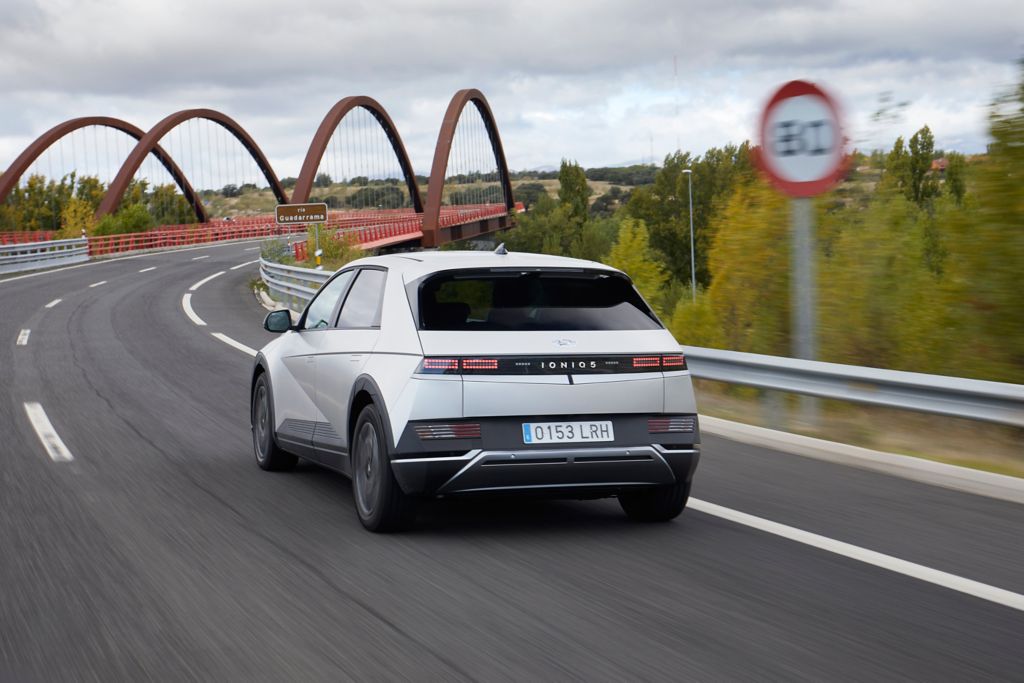
We compare the Hyundai IONIQ 5 and the Tesla Model Y RWD by calculating the real cost per kilometre of homologated range in the Spanish market in 2026. A cold figure that clears up quite a bit of the doubt about which one is worth more.
There are questions that seem simple and aren’t: “Which electric car is worth more to me?” is one of them. In 2026, with the Spanish electric car market already consolidated and no longer the novelty it was three years ago, the comparison between the Hyundai IONIQ 5 and the Tesla Model Y remains one of the most searched by anyone considering the switch. And with good reason: they are two proposals playing in the same price league but with quite different philosophies.
We’re going to do something unusual for these comparisons: rather than stopping at power or design, we’ll divide the price by the homologated range. A cold number, yes, but a revealing one.
Hyundai IONIQ 5, from €44,790: key figures
The Hyundai IONIQ 5 in its 170 63kWh Light 5-door Automatic version starts at an indicative RRP of €44,790. It delivers 130 kW, around 170 CV, and promises 440 kilometres of homologated range with its 63 kWh battery. Top speed stays at 190 km/h, a figure that matters little day to day but defines the character of the car: it doesn’t aim to be the fastest in its segment.
| Model | Power (kW) | Power (CV) | Top speed | Range | Battery | Fuel |
|---|---|---|---|---|---|---|
| Hyundai IONIQ 5 170 63kWh Light | 130 kW | 170 CV | 190 km/h | 440 km | 63 kWh | Electric |
Tesla Model Y, from €39,990: key figures
The Tesla Model Y in the 272 60kWh Rear-Wheel Drive configuration starts at €39,990, that is, almost 5,000 euros less than the IONIQ 5. And yet on paper it offers more across the board: 220 kW, around 300 CV, 201 km/h top speed and 534 kilometres of homologated range with a battery of around 60-64 kWh, barely one kWh more than the Korean’s.
| Model | Power (kW) | Power (CV) | Top speed | Range | Battery | Fuel |
|---|---|---|---|---|---|---|
| Tesla Model Y 272 60kWh RWD | 220 kW | ≈300 CV | 201 km/h | 534 km | ≈60-64 kWh | Electric |
The calculation that really matters: cost per kilometre of range
This is where things get interesting. Dividing the price by the homologated kilometres of range gives us a fairly honest indicator of how much you pay for each kilometre the car promises to cover on a single charge.
- Hyundai IONIQ 5: €44,790 / 440 km = €101.8/km of range.
- Tesla Model Y: €39,990 / 534 km = €74.9/km of range.
The difference is more than 26 euros per homologated kilometre in favour of the Model Y. It’s not a nuance, it’s a considerable gap. And that’s without counting that the American also has the edge in power: more than 100 CV extra for almost 5,000 euros less.
Why does the IONIQ 5 cost more and deliver less on paper?
It’s worth not staying only with the table of numbers. The IONIQ 5 makes up for it with an interior that, to my taste, feels more carefully finished in materials and ergonomics, an 800-volt platform that allows ultra-fast charging under optimal conditions, and a warranty that has traditionally worked in Hyundai’s favour. It isn’t the panacea in range either, that’s undeniable, but the overall package has a finish that some users value more than the bare figure of kilometres per euro.
The Model Y, for its part, plays the card of the Supercharger network and a software ecosystem that remains a benchmark. It is fast, yes, but the minimalist interior doesn’t convince everyone: that single screen that controls everything has fans and detractors in equal measure.
Real-world use: charging, space and day to day
In practice, both comfortably cover the daily commute of any average Spanish driver. The difference shows on long journeys: with 534 homologated km, the Model Y needs fewer stops than the IONIQ 5. That said, the homologated figure is rarely replicated 100% on motorway with the climate control at full blast, so expectations should be lowered for both, not just one.
Comparative summary table
| Model | Price from | Range | Power | €/km of range | Range-to-price score (1-10) |
|---|---|---|---|---|---|
| Hyundai IONIQ 5 | €44,790 | 440 km | 170 CV | €101.8 | 6.5 |
| Tesla Model Y | €39,990 | 534 km | ≈300 CV | €74.9 | 8.8 |
It’s worth remembering that both prices are indicative RRPs without dealer discounts, one-off campaigns or purchase aids. Anyone wishing to reduce the final bill can check the Plan Auto+, the current public aid in Spain for electrified vehicles, although the exact amounts should be checked on the official website as they vary by autonomous community and call.
If budget is the priority and you’re looking for something under 45,000 euros, this same outlet’s ranking of electric SUVs with the best range-to-price ratio gives more context on where both sit against the rest of the segment.
Which offers the better range-to-price ratio in 2026?
With the numbers in front of us, the Tesla Model Y wins this specific comparison: more range, more power, less price. The figure of €74.9/km against the IONIQ 5’s €101.8/km is hard to dispute. That doesn’t mean the Hyundai isn’t still a solid option for those who prioritise finish, 800V ultra-fast charging or simply prefer not to depend on the Tesla ecosystem. Whether those nuances are worth almost 27 euros per homologated kilometre is debatable — in our view, for the buyer who looks at the spreadsheet before the logo, the Model Y comes out ahead.
Frequently asked questions
What range does the Hyundai IONIQ 5 really have in 2026?
The 170 63kWh Light version is homologated at 440 km with its 63 kWh battery, although in real use with motorway driving and climate control that figure usually drops.
How much does the Tesla Model Y cost in Spain in 2026?
The 272 60kWh Rear-Wheel Drive configuration starts at an indicative RRP of €39,990, without discounts or aid applied.
Is the Tesla Model Y always cheaper per kilometre of range than the Hyundai IONIQ 5?
According to the price/homologated range calculation, yes: €74.9/km against €101.8/km, a significant difference in favour of the Model Y.
Can I apply the Plan Auto+ to these two models?
Both are pure electric and would fall within the general framework of Plan Auto+ aid, but check the current amount and requirements on the official website before taking anything for granted.
Technical specifications of the cars in this article


 Peugeot E-208 GTi: a battery-powered toy that revives the spirit of the 1980s sports cars
 New Lexus ES: luxury grows and goes electric
 First contact with the Dacia Sandero Hybrid 155: power and efficiency from €19,890
Deja un comentario