CR-V Honda KIA RAV4 Sportage Toyota Hybrid Cars Comparisons Tests SUV
Toyota RAV4 vs KIA Sportage: which family hybrid SUV offers the better ride comfort on long journeys?
 Iván Navarro
22 October 2026
6 min.
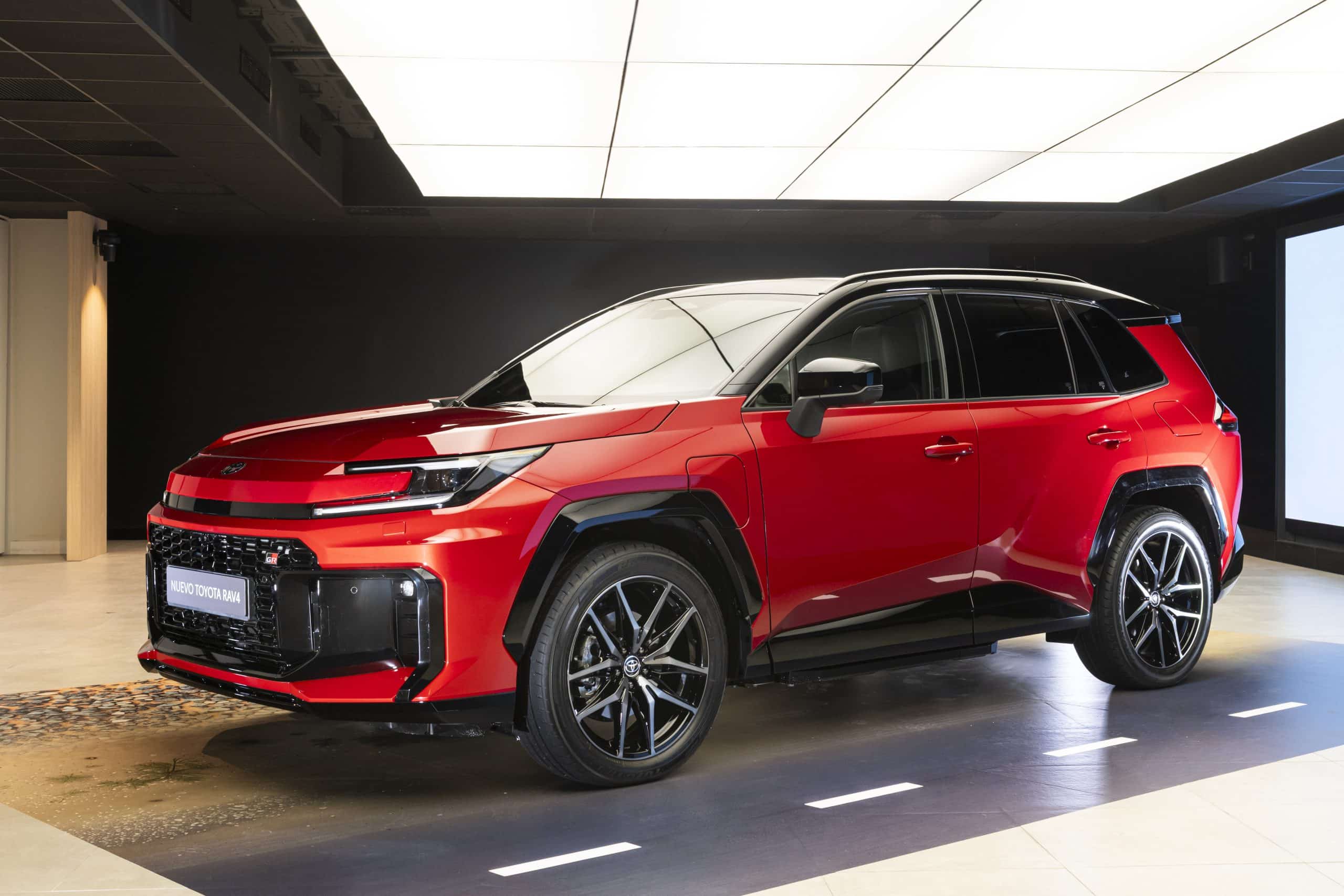
Choosing a family plug-in hybrid SUV in Spain is no longer a simple decision. The Toyota RAV4 and KIA Sportage PHEV compete in the same segment, with similar prices and an almost identical target audience: families who frequently drive on motorways and want genuine electrification, not just showroom appeal. But as soon as you look under the bonnet —and under the battery— the differences start to show. A lot.
Toyota RAV4 vs KIA Sportage hybrid: the duel that really matters on the road
We are not talking about just any two cars. The RAV4 and the Sportage are probably the two best-selling plug-in hybrid SUVs in their category on the Spanish market. And although on paper they share segment and purpose, the technical approach of Toyota and KIA is radically different. One bets on a generous battery that prioritises silent electric driving; the other on a more traditional balance between combustion engine and electric assistance. On long journeys, that difference in approach is felt at the wheel.
Real electric range: over 100 km for the RAV4 versus 70 km for the Sportage
Here is the figure that weighs most in this comparison. The Toyota RAV4 Plug-in Hybrid 300 Advance features a 22.7 kWh battery that allows it to run in fully electric mode for more than 100 km, according to the official specification. The KIA Sportage Hybrid PHEV, with a 13.8 kWh battery, is limited to 70 km of electric range.
In practice, this means that a typical round trip to work —or much of a weekend getaway— can be completed without using petrol in the RAV4. In the Sportage, by contrast, the combustion engine comes into play much sooner, which affects both consumption and the driving feel.
| Model | Power (kW) | Power (CV) | Top speed | Electric range | Battery | Consumption | Fuel |
|---|---|---|---|---|---|---|---|
| Toyota RAV4 Plug-in Hybrid 300 Advance | ≈197 kW | ≈268 CV | ≈180 km/h | over 100 km | 22.7 kWh | ≈1.5 l/100 km | Plug-in hybrid (PHEV) |
| Model | Power (kW) | Power (CV) | Top speed | Electric range | Battery | Consumption | Fuel |
|---|---|---|---|---|---|---|---|
| KIA Sportage Hybrid PHEV 1.6 T-GDi 252 Drive 4×4 | ≈185 kW | ≈252 CV | ≈190 km/h | ≈70 km | 13.8 kWh | ≈1.1 l/100 km | Plug-in hybrid (PHEV) |
Ride comfort and acoustic refinement on the motorway
At cruising speed, the RAV4 conveys a calm that the Sportage struggles to match. The sound insulation of Toyota, inherited from previous generations of the model, filters road noise well even with low-profile tyres. The Sportage is not noisy —far from it— but its soundproofing is a step behind on the motorway at 120 km/h, especially when the petrol engine kicks in after the battery is depleted.
Does it make a difference on a four-hour journey with children asleep in the back? In our opinion, yes. And it is not a minor nuance.
Suspension and handling on long family journeys
The RAV4’s suspension tuning prioritises absorbing bumps over precision in corners, which is consistent with its vocation as a long-distance family SUV. The Sportage, by contrast, offers a bit more firmness, which is appreciated on secondary roads but translates into somewhat more vertical movement when the surface deteriorates on the motorway. Neither disappoints, but the RAV4 is, to our taste, more relaxed when the goal is to arrive rested after 400 km.
Interior space and room for luggage, children and baggage
Both offer comfortable rear seats for two adults and an occasional third, with good legroom. The Sportage’s boot is somewhat reduced by the battery’s location, which is common in PHEV versions, whereas the RAV4 integrates its battery pack with less practical penalty for everyday family use. If you travel with child seats, a pushchair and week-long luggage, that difference in cubic capacity is noticeable when closing the tailgate.
Consumption when the battery is depleted: the other figure that matters
With the battery discharged, the Sportage declares a homologated consumption of around 1.1 l/100 km, compared with approximately 1.5 l/100 km for the RAV4. These are WLTP figures that include residual electric contribution and should be read with caveats: on long motorway journeys, where electric assistance fades, both models move closer to the behaviour of a conventional hybrid than to these laboratory figures. Even so, with greater starting electric range, the RAV4 tends to need less accumulated petrol on an average trip because it covers more kilometres before the combustion engine takes over.
Indicative prices: Toyota RAV4 from and KIA Sportage from
The Toyota RAV4 Plug-in Hybrid 300 Advance starts at an indicative RRP of approximately €50,750, while the KIA Sportage Hybrid PHEV 1.6 T-GDi 252 Drive is around €47,500. These are manufacturer’s recommended prices, without dealer discounts, occasional campaigns or purchase aids such as the Plan Auto+, which should be checked on the official website for the amount valid at any given time.
Summary table and Highmotor verdict
| Model | Electric range | Power | Price from | Ride comfort (1-10) | Interior space (1-10) | EV range (1-10) |
|---|---|---|---|---|---|---|
| Toyota RAV4 Plug-in Hybrid 300 Advance | over 100 km | ≈268 CV | ≈€50,750 | 8.5 | 8 | 8.5 |
| KIA Sportage Hybrid PHEV 1.6 T-GDi 252 | ≈70 km | ≈252 CV | ≈€47,500 | 7.5 | 7.5 | 6.5 |
If the criterion is ride comfort on long journeys, the RAV4 wins the comparison on electric range, acoustic insulation and suspension behaviour. The Sportage is not far behind, and for those who prioritise entry price or slightly more agile handling on secondary roads, it remains a solid option. We carried out a similar exercise when comparing the Toyota RAV4 with the Honda CR-V, and the pattern repeats: the RAV4 performs especially well when the journey gets longer. If you want to explore more alternatives with a generous battery, the ranking of plug-in hybrid SUVs with the greatest real electric range is a good starting point.
Frequently asked questions
Which has more electric range, the Toyota RAV4 or the KIA Sportage PHEV?
The Toyota RAV4 Plug-in Hybrid claims more than 100 km of electric range, compared with 70 km for the KIA Sportage PHEV, according to official specifications.
Which plug-in hybrid SUV is quieter on the motorway?
The Toyota RAV4 offers somewhat better acoustic insulation at cruising speed, especially when running in pure electric mode on long journeys.
How much does the KIA Sportage PHEV consume with the battery depleted?
The Sportage declares a homologated consumption of around 1.1 l/100 km, although on long motorway journeys it tends to approach the behaviour of a conventional hybrid.
Which is cheaper to get into, the RAV4 or the Sportage?
The KIA Sportage PHEV starts at an indicative RRP of approximately €47,500, while the Toyota RAV4 PHEV is around €50,750, both prices excluding discounts and purchase aids.
Technical specifications of the cars in this article

 Kia offers an electric range of 10 models, 50 versions and 400 possible combinations
 The seven finalists for the 2027 European Car of the Year (COTY) are exclusively electric
 Peugeot E-208 GTi: a battery-powered toy that revives the spirit of the 1980s sports cars
Deja un comentario