C-HR Hyundai Kona Mokka Opel Toyota Electric Cars Hybrid Cars Comparisons
Hyundai Kona vs Toyota C-HR: which hybrid urban SUV-B offers better real-world efficiency in 2026
 Iván Navarro
13 November 2026
6 min.
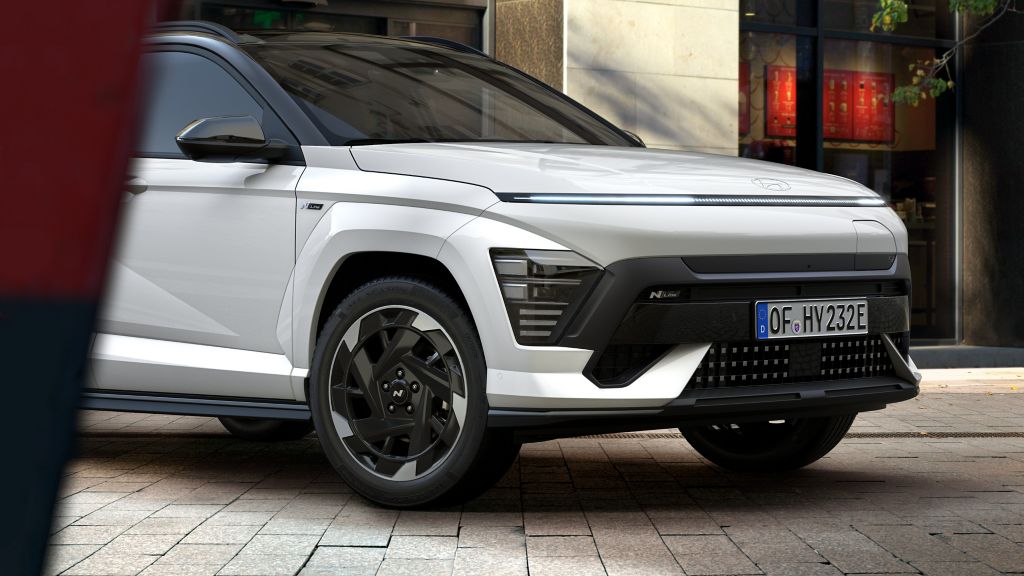
We compare the Hyundai Kona and the Toyota C-HR in their electrified versions for the urban SUV-B segment, using official data on range, power and indicative RRP. Two different philosophies: more accessible entry price versus greater range.
The urban SUV-B segment no longer runs only on petrol with a bit of electric assistance. In 2026, full hybrid, mild hybrid and fully electric versions coexist within the same model family, which complicates any simplistic comparison. Hyundai Kona and Toyota C-HR are two of the names that come up most often when a buyer looks for a compact electrified SUV to get around the city without giving up some highway range. Highmotor puts them face to face in their electric versions from the catalogue, the ones that currently define each range’s efficiency ceiling.
This is no minor comparison. They are two different approaches to the same problem: how to electrify a small SUV without pushing up the price or sacrificing the range that Spanish users still demand before making the leap.
Context: why compare the Kona and C-HR in the 2026 electrified SUV-B segment
Both models share body style, use and target audience, but not battery strategy. The Hyundai Kona relies on a more compact battery, designed to lower the cost of entering electric driving. The Toyota C-HR increases capacity to offer more kilometres between charges, although this is reflected in the RRP. Highmotor has already analysed the Hyundai Kona in its conventional hybrid variant in a review dedicated to its real-world consumption, so here we focus on the purely electric reading of the range, which marks the upper efficiency limit of the model.
Hyundai Kona, from €38,100 RRP: the most affordable entry point into the electrified segment
The Kona EV 135 49kWh Black Line with automatic gearbox stands as the most sensible entry point to an electric SUV-B with a full specification. With 100 kW (140 CV) and a 51 kWh battery, the Kona is not trying to win the range race: it aims to make the switch to electric painless for your bank account. And it achieves this with an indicative RRP from €38,100, which places it below its direct rival in this comparison.
| Model | ||||||
|---|---|---|---|---|---|---|
| Hyundai Kona EV 135 49kWh Black Line | 100 kW | 140 CV | 160 km/h | 380 km | 51 kWh | Electric |
The homologated range of 380 km is more than enough for the usual urban and interurban driving that accounts for most daily mobility in Spain. Where the Kona loses ground is on long consecutive journeys: there the C-HR has the advantage, as we will see shortly.
Toyota C-HR, from €36,500 RRP: the bet on range
The Toyota C-HR Electric 230 77kWh Advance approaches the problem from the opposite end. With 165 kW (224 CV) and a 77 kWh battery, it prioritises range over entry price. The result is 609 km of homologated range, a figure that places the C-HR among the electric SUV-Bs with the greatest real-world range on the current Spanish market.
| Model | ||||||
|---|---|---|---|---|---|---|
| Toyota C-HR Electric 230 77kWh Advance | 165 kW | 224 CV | 160 km/h | 609 km | 77 kWh | Electric |
Those 224 CV are also noticeable in everyday driving: the C-HR responds with more ease when overtaking and joining motorways, something the Kona, more modest in power, cannot match. The RRP gap, from €36,500 compared with the Kona’s €38,100, is better understood when you look at the battery: nearly 50% more capacity accounts for much of that extra cost (although the C-HR is more affordable at entry level).
Real-world efficiency comparison: consumption, range and price
This is where it is worth pausing and not being swayed only by the biggest figure. The C-HR offers 229 km more range than the Kona, but to achieve it fits a battery 51% larger. In terms of efficiency per installed kWh, the Kona does not fare badly: its range-to-battery ratio is around 7.5 km per kWh, compared with 7.9 km per kWh for the C-HR. The differences are small; what really changes is the total capacity available, not so much the intrinsic efficiency of each platform.
For an urban user who charges at home or at work, the Kona more than covers the typical week without ever touching a fast charger. For those who frequently make long journeys, the C-HR reduces stops, and it does so with an even lower entry RRP.
| Model | Power (CV) | Range | Battery | RRP from | Highmotor score |
|---|---|---|---|---|---|
| Hyundai Kona EV 135 Black Line | 140 CV | 380 km | 51 kWh | €38,100 | 8.2/10 |
| Toyota C-HR Electric 230 Advance | 224 CV | 609 km | 77 kWh | €36,500 | 8.5/10 |
The prices indicated are the manufacturer’s indicative RRP, without dealer discounts, commercial campaigns or purchase aid. Anyone wishing to lower the cost of the deal further can check the current conditions of the Plan Auto+ on the official website, as the amounts change frequently.
Highmotor verdict: which electric SUV-B to choose in 2026
There is no absolute winner; there is a buyer profile for each. The Hyundai Kona is the most sensible option if the priority is entering electric driving without pushing up the budget and actual use is predominantly urban. The Toyota C-HR is the better fit for those who need plenty of margin for long journeys and do not mind (or even benefit from) paying a little less for those 609 km of homologated range. Highmotor has already compared the direct competition between the two in the conventional hybrid segment in the Stellantis duel between the Peugeot 2008 and the Opel Mokka, another example of how the urban SUV-B has become the true battleground of accessible electrification.
Frequently asked questions
Which is cheaper, the Hyundai Kona or the Toyota C-HR?
The Toyota C-HR, with an indicative RRP from €36,500 compared with €38,100 for the Hyundai Kona in the electric versions compared here.
What real range does the electric Toyota C-HR offer?
The official specification homologates up to 609 km of range for the C-HR Electric 230 77kWh Advance, with a 77 kWh battery.
Is it worth paying more for the Toyota C-HR than the Hyundai Kona?
It depends on use. If long journeys are frequent, the C-HR’s 609 km of range and 224 CV justify the choice (and in fact it starts from a lower RRP). For predominantly urban use, the Kona is competitive on entry cost.
Do the prices include discounts or public aid?
No. They are the manufacturer’s recommended RRP, without dealer promotions or aid such as the Plan Auto+, whose amounts should be checked up to date on the official website.
Technical specifications of the cars in this article


 Kia offers an electric range of 10 models, 50 versions and 400 possible combinations
 The seven finalists for the 2027 European Car of the Year (COTY) are exclusively electric
 Peugeot E-208 GTi: a battery-powered toy that revives the spirit of the 1980s sports cars
Deja un comentario