Hyundai Tucson Comparisons Tests SUV
Hyundai Tucson vs Kia Sportage: Korean mid-size SUV showdown in interior space and onboard technology
 Iván Navarro
5 June 2026
5 min.
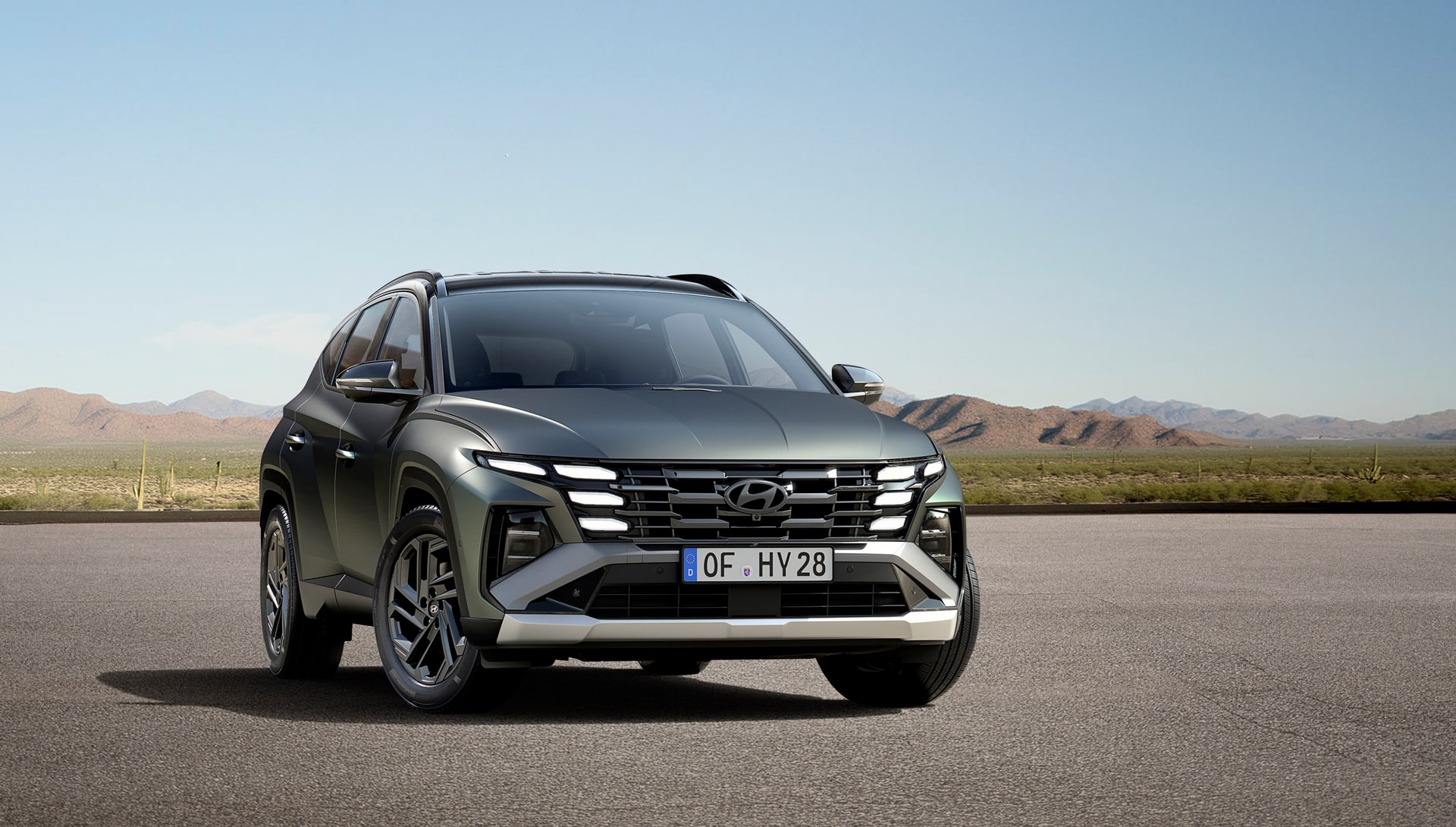
Technical comparison between the Hyundai Tucson 1.6 TGDi petrol and the Kia Sportage PHEV 4×4: two Korean cousins that share a platform but take opposing approaches in the C-SUV segment.
At the heart of the Spanish C-SUV segment, two cars share architecture, engines and suppliers, yet have built very different personalities. The comparison between the Hyundai Tucson and the Kia Sportage is not a duel between strangers: it is a family conversation, that of two brothers within the Hyundai Motor Company group who compete for the same customers on the same online dealership sites. And yet, one sit behind the wheel of each and you will see that their engineering philosophy diverges more than their kinship would suggest.
Two siblings with shared DNA and opposing characters
Both are built on the group’s N3 platform, both measure around 4.50 metres and both fight for a place on the podium of registrations in their segment. But while Hyundai has embraced a disruptive formal language—parametric headlights hidden in the grille and an almost futuristic look—Kia has opted for cleaner assertiveness, with the boomerang light signature and a silhouette that ages with greater restraint.
Common platform, divergent philosophy
The Tucson positions itself as the rational-access SUV, with a well-balanced petrol engine range starting from the 150 CV 1.6 TGDi. The Sportage, in its most interesting version for the premium customer, has gone for plug-in electrification with all-wheel drive. Two different answers to the same question.
Hyundai Tucson 1.6 TGDi 150 CV petrol: from approximately €35,500
The Hyundai Tucson in its Klass trim with the 150 CV 1.6 TGDi engine represents the entry door to the best-selling Korean SUV universe in Spain. It is a no-frills proposition: pure petrol, C label and a homologated consumption of around 7 l/100 km in the combined cycle.
| Power kW | Power CV | Top speed | Range | Consumption | Label | Fuel |
|---|---|---|---|---|---|---|
| ≈110 kW | ≈150 CV | ≈190 km/h | ≈700 km | ≈7 l/100 km | C | Petrol |
Dynamic behaviour and real-world consumption
The 1.6 TGDi feels lively in town and sufficient on open roads, where the manual gearbox helps you extract the most from its modest torque of around 250 Nm. On the motorway, maintaining a real 120 km/h pushes consumption above 7.5 l/100 km, an honest figure for a 1,500 kg SUV with a C label.
Interior space: the Tucson’s advantage
Here the Tucson plays one of its best cards. The 1,095 litres of boot space (with the rear bench pushed forward) and generous rear legroom make it one of the most practical mid-size Korean SUVs in its segment. The Tucson’s interior space is, quite simply, outstanding for families of four with a dog and a pram.
Kia Sportage PHEV 1.6 T-GDi 252 CV 4×4: from approximately €47,500
At the other end of the Korean range, the Kia Sportage PHEV takes the proposition to another level. It combines the same 1.6 turbo engine with an electric motor powered by a battery of around 14 kWh, reaches a combined 252 CV and adds all-wheel drive 4×4.
| Power kW | Power CV | Top speed | Range | Consumption | Label | Fuel |
|---|---|---|---|---|---|---|
| ≈190 kW | ≈252 CV | ≈190 km/h | ≈70 km electric | ≈1 l/100 km | ZERO | PHEV |
Real electric mode and hybrid experience
The 70 km of homologated electric range translates into around 55-60 real km in mixed use, enough for an urban user with a home charger to cover most daily journeys without touching the petrol pump. The ZERO label grants unrestricted access to Madrid Central and to Barcelona’s ZBE.
Onboard technology: curved dual screen and chassis tricks
The Sportage in Drive trim integrates the 12.3 + 12.3 inch curved panoramic dual screen, climate control with switchable capacitive panels and an interface that, while not radically different from the Tucson’s, conveys greater visual sophistication. In the technology section they share the same brain, but Kia has managed to give it a better presentation.
Tucson vs Sportage comparison: summary table and verdict
It is worth remembering that the prices indicated are the manufacturer’s recommended RRP, excluding dealer discounts, one-off campaigns and purchase incentives.
| Model | Power | Label | Consumption | Interior space (1-10) | Technology (1-10) | Efficiency (1-10) | Indicative price | Overall score |
|---|---|---|---|---|---|---|---|---|
| Hyundai Tucson 1.6 TGDi 150 | 150 CV | C | ≈7 l/100 | 9 | 8 | 6 | ≈€35,500 | 7.7 |
| Kia Sportage PHEV 252 4×4 | 252 CV | ZERO | ≈1 l/100 | 8 | 9 | 9 | ≈€47,500 | 8.7 |
Which one pays off depending on use?
For the customer who covers 15,000 km a year mostly on open roads and has no charging point, the petrol Hyundai Tucson is the rational decision: lower upfront outlay, simpler maintenance and a leading interior space. For the urban-periurban driver with a garage space and a plug, the Sportage PHEV justifies the extra €12,000 in less than five years through unburnt fuel and free access to the ZBE.
Frequently asked questions
Which has better interior space, the Tucson or the Sportage?
The Hyundai Tucson offers slightly more legroom in the rear seats and a somewhat more generous boot, although the difference with the petrol Sportage is less than 30 litres. The Sportage PHEV loses around 50 litres because of the battery under the floor.
Is the extra cost of the Kia Sportage PHEV over the petrol Tucson worth it?
It is if you have home charging and make daily journeys of less than 60 km. Without your own plug, the PHEV loses much of its appeal and consumes like a conventional hybrid with extra weight.
Which SUV has better onboard technology?
Both share the same electronic architecture, but the Sportage in its higher trims comes with the curved dual screen as standard, whereas in the Tucson it is reserved for versions above the entry-level Klass.
Are both models reliable?
Yes. They share seven years of official warranty and powertrains with a proven reliability record in the European market since 2021.
Technical specifications of this car


 Peugeot E-208 GTi: a battery-powered toy that revives the spirit of the 1980s sports cars
 New Lexus ES: luxury grows and goes electric
 First contact with the Dacia Sandero Hybrid 155: power and efficiency from €19,890
Deja un comentario