Key tips and advice for towing a trailer
 Miguel Lorente
23 November 2018
5 min.
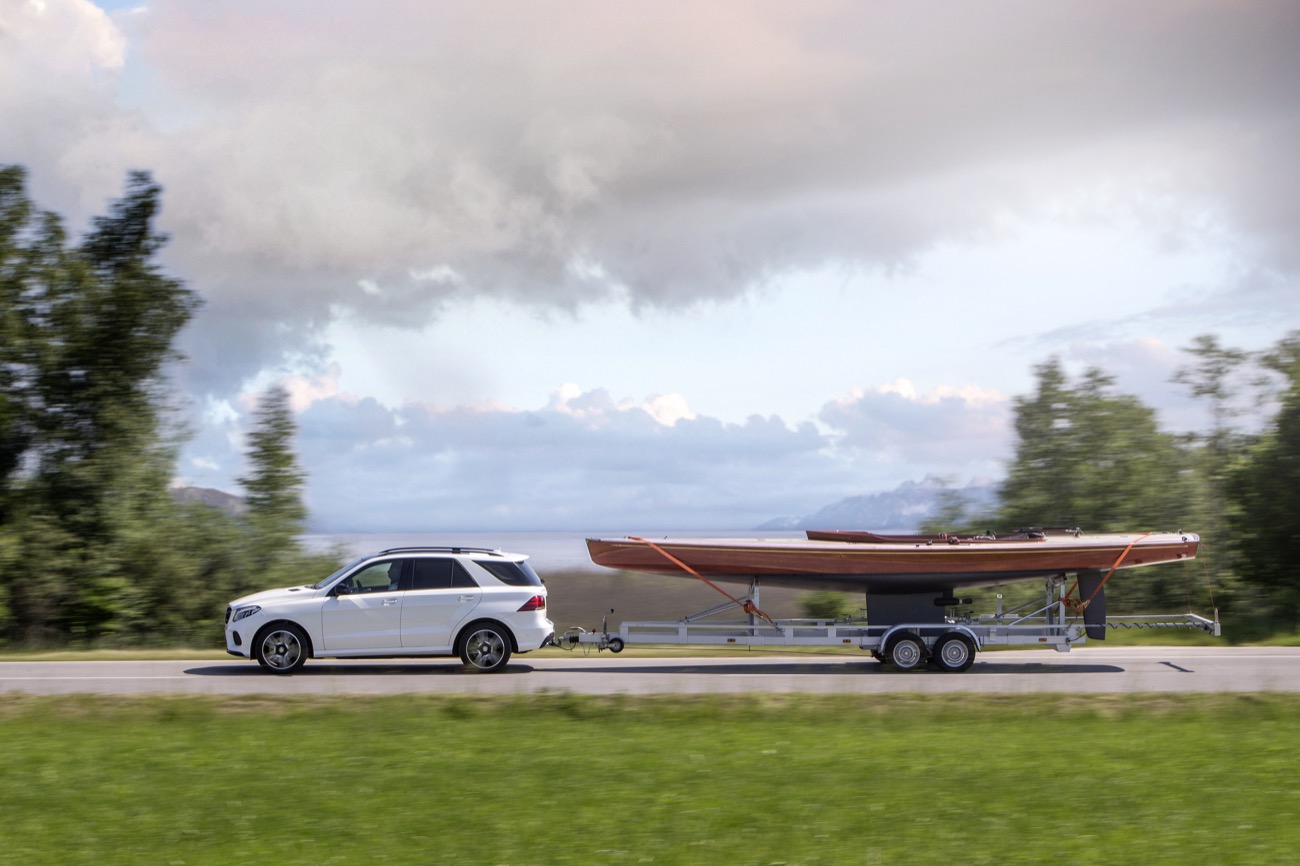
Towing a trailer can solve both the problem of lack of space in the car’s boot and make it easier to transport goods, caravans or other vehicles. But there are some important things you should bear in mind.
From traditional roof racks to roof boxes, these are good alternatives for increasing the load capacity of a car. But so is considering installing and towing a trailer.
In this way, you not only gain volume, mass and cargo space, but you can also travel in isolation from anything being transported, which improves comfort and increases safety, making it one of the best options for transporting luggage outside the boot
Before driving a car with a trailer, you need to know which type to choose, always depending on the needs you want to meet. It is also necessary to bear in mind that the regulations distinguish between two types: the light trailer, whose maximum authorised mass is 750 kg or less, and the non-light trailer, which exceeds that weight.
For light trailers, no special driving permit, registration plate or separate insurance is required. For non-light trailers, a specific permit, a distinctive registration plate, separate mandatory insurance and passing the ITV (technical inspection) are all required.
The driving licence for light trailers is category B, as long as the car does not exceed 3,500 kg. If the trailer exceeds 750 kg but the car remains under 3,500 kg and, together, the total mass does not exceed 4,250 kg, the B-96 licence will be required. If you are towing a mass of up to 3,500 kg and, provided the vehicle towing it does not exceed that same weight, you will need the B+E licence.
Installing a trailer
To drive with a trailer, the vehicle needs a specific, approved system that allows the two to be coupled and connected; this is what is popularly known as a towbar or tow hitch, while the trailer itself must be approved and have an ITV card.
As this is a significant modification, installing a trailer requires that, within a maximum of 15 days of its installation, a technical inspection be carried out on both the car fitted with the tow hitch and the trailer attached to it. This inspection must be done at an ITV station, so that the legality of the modification is certified.
Advice before driving with a trailer
The routine checks of car maintenance must be extended to the trailer, for example, the legibility of the registration plate, the condition of the tyres (tread, wear, pressure…), the correct functioning of the lights, etc.
Related to lighting, both the connection system between the vehicle and the trailer and the coupling mechanism between the two must be checked.
It is necessary to know the maximum approved weight of the trailer, information that will be shown in its specifications; knowing this figure will ensure that driving it is legal and safe.
Balanced loading of the cargo is also very important. For this reason, it is not recommended to place the heaviest objects closest to the car; ideally they should be placed over the trailer’s axle.
Consider the weight of the drawbar on the towball: too much weight loaded in front of the trailer’s axle would lift the front of the vehicle, which could cause the car to lose steering control.
Recommendations for driving safely with a trailer
When attaching an external element with considerable weight to the car, you must understand that driving the vehicle is different. Various factors must be taken into account, for example, that the trailer’s position and weight increase the braking distance by between 15 and 20 % due to the inertia it generates.
The car’s turning is affected because the trailer has its own turning radius, so it is advisable to widen the turn you would normally make when not towing.
If from the outset you expect to regularly use a trailer, it is advisable to choose a new car that incorporates a trailer driving assistant. These work by using the stability control, which stabilises the trailer when necessary or during reversing manoeuvres, making them one of the most useful driving assistants in these cases; brands such as Audi or Ford offer them.
When reversing, the procedure is the opposite of what you would do without a trailer, however contradictory that may seem. It is worth noting that the smaller the trailer, the more difficult this manoeuvre is.
For this reason, the maximum speed of a car with a trailer is reduced on motorways and dual carriageways to 90 km/h for light trailers and 80 km/h for non-light trailers; it is also 80 km/h on conventional roads with a paved hard shoulder of more than one and a half metres, and 70 km/h on all other inter-urban roads. In urban areas the general limit of 50 km/h remains.


 Peugeot E-208 GTi: a battery-powered toy that revives the spirit of the 1980s sports cars
 New Lexus ES: luxury grows and goes electric
 First contact with the Dacia Sandero Hybrid 155: power and efficiency from €19,890
Comentarios cerrados