Mercedes Clase E: the executive car that was born in 1926
 Victor Alós Yus @sepelaci
23 August 2020
5 min.
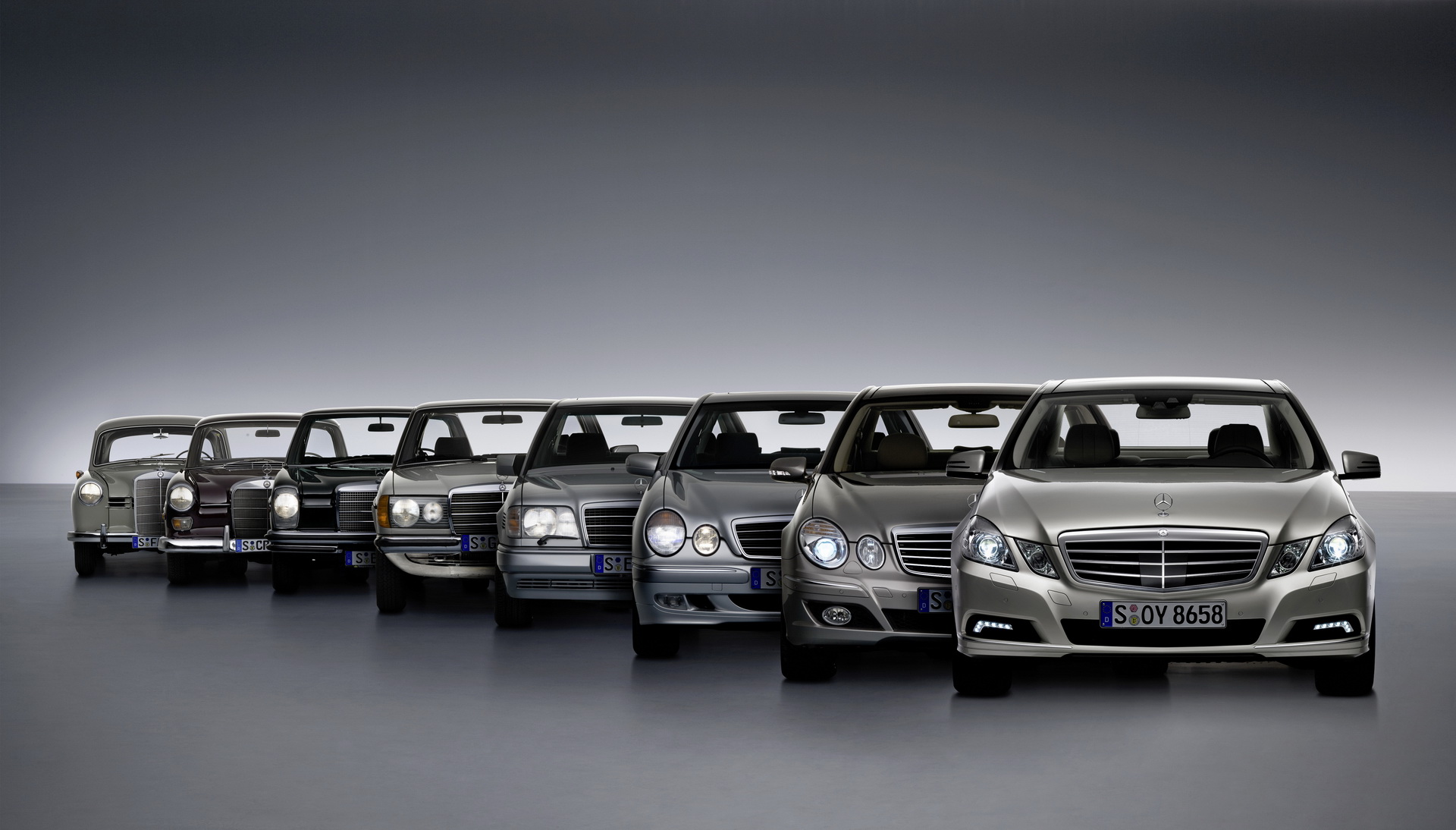
Although the name ‘Clase E’ began to be used in 1993, the model that gave rise to today’s car has gone through several incarnations to reach where it is today.
The name ‘Clase E‘ appeared on the market in 1993, but the car that first carried this name was not new. It was the evolution of a model that was born in 1926. A constant evolution that turned this car into a benchmark for what an executive saloon should be. Let us look at the history of this model and how it has evolved since its origins in the 1920s.
The 1920s and 1930s
In 1926 Mercedes-Benz launched the type 8/38 PS (W02), which two years later was renamed Stuttgart 200. This model included the 200 (W21), 230 (W143) and 260 D (W138) variants, which saw the light in 1933 for the first and in 1936 for the other two. This was the first passenger car to use a diesel engine.
From 1944 to 1956
Over the following 15 years more variants of this model appeared, which kept increasing its technology, and after the Second World War production resumed with the 170 V. This model was actually developed in 1936, but the outbreak of war meant it could not be produced. After the conflict, it was updated with the latest automotive innovations to make it more attractive and begin its sale.
The saloon that came from this model was the brand’s first post-war model and used a 36 hp engine, which was increased to 44 hp in 1950.
Advances in technology helped improve the series. In 1949 the 170 D diesel, with 38 hp, was released, which evolved to 40 hp in 1950. The 170 S Saloon, with a steel body and a 52 hp engine, also appeared, as did the Cabriolet A and Cabriolet B, which became the top-of-the-range model. The six-cylinder 220 and the 300, which replaced the previous model, also appeared. The 40 hp 170 DS diesel was launched in 1952, and the following year came the 170 S-V and 170 S-D, which remained in production until 1955.
1952 to 1966
In 1952 a new version of this model was confirmed, which used a 1.9-litre engine producing 52 hp, although within a few years the power was increased to 65 and 68 hp. Its image changed and it became a three-box saloon with a prominent tailgate at the rear.
It was followed by the 180 D version, with a 40 hp engine that went on to offer 43 hp and 48 hp. In 1956 the 190 version arrived with 75 hp, and three years later it was updated to 80 hp, while the 50 hp 190 D arrived in 1959. At that time 443,000 buyers opted for these updated versions for their performance, engines and the first passive safety features, which arrived from 1960.
1961 to 1968
In 1961 the W110 generation debuted and gained a nickname. It was called ‘Tail Fin‘, due to the design of its rear fins. Passive safety measures improved greatly, with crumple zones on both sides, to improve passenger safety in the event of an accident. Disc brakes were fitted to the front axle in 1963, and in 1967 it introduced a telescopic steering column that absorbed impacts.
During this period we see the 190 and 190 D variants, as well as the 200 and 200 D in 1965, and the 230 with a 105 hp engine, which reached 120 hp in 1966. Power steering, a sunroof, a heated rear window, air conditioning and electric windows arrived.
1968 to 1976
In 1968 the model known as ‘Stroke/8‘ was launched, which used a long limousine body, with seven or eight seats. The designations W114 were used for six-cylinder engines and W115 for three- and four-cylinder powerplants. Technology improved and the most advanced innovations of the time were applied. It was the first Mercedes car to pass one million sales and that planted the seed for later models, always improving their characteristics.
From 1976 to 1986
During this period the foundations of what would become the future Clase E were laid , and this model set itself apart from its competitors with technological innovations and greater comfort for its occupants. The 123 series was a milestone for the brand, as it sold 2.5 million units and introduced a new body style and an image that has evolved over the years but remains recognisable.
Greater safety, including the airbag for the driver, tests with other fuels such as LPG and electricity, marked the modern stage of the model, which offered engines ranging from 55 to 150 hp.
[inisertarArticulo url= “https://www.highmotor.com/mercedes-clase-e-coupe-cabrio-restyling.html”]
From 1986 to 1997
This period marked the definitive arrival of the Clase E. The 124 series was named the E-Series to distinguish it from the smaller Clase C and the larger, more powerful and comfortable Clase S. It was offered in four body styles: saloon, estate, coupé and convertible.
As for engines, the 500E used units from 72 to 326 hp, although with the arrival of the E 60 AMG an Mercedes Clase E with 381 hp was offered. Four-wheel drive 4Matic and independent multi-link rear suspension were introduced. At the end of its commercial life, 2,737,000 units had been built, of which 2,213,000 were saloons, about 340,000 had estate bodies, 140,000 were coupé versions and 34,000 were convertibles.
1997-2020
The
Mercedes Clase E has continued to improve with each generation, both aesthetically and technologically. From 1995, with its second official generation, the model began to use the twin headlights, which have defined the model’s image. This has gone hand in hand with improvements in safety and passenger comfort. Little by little we have seen new versions of the Mercedes Clase E leading up to the current version.
Presented in 2016, the fifth generation of the Mercedes Clase E is prepared for today’s demands, with car-to-car connectivity, a new infotainment system and safety improvements. Earlier this year it received a facelift and an update, although it still has a way to go before the next generation arrives.


 Peugeot E-208 GTi: a battery-powered toy that revives the spirit of the 1980s sports cars
 New Lexus ES: luxury grows and goes electric
 First contact with the Dacia Sandero Hybrid 155: power and efficiency from €19,890
Deja un comentario