OMODA and JAECOO are the two Chinese brands arriving in Spain this summer
 Victor Alós Yus @sepelaci
10 May 2023
2 min.
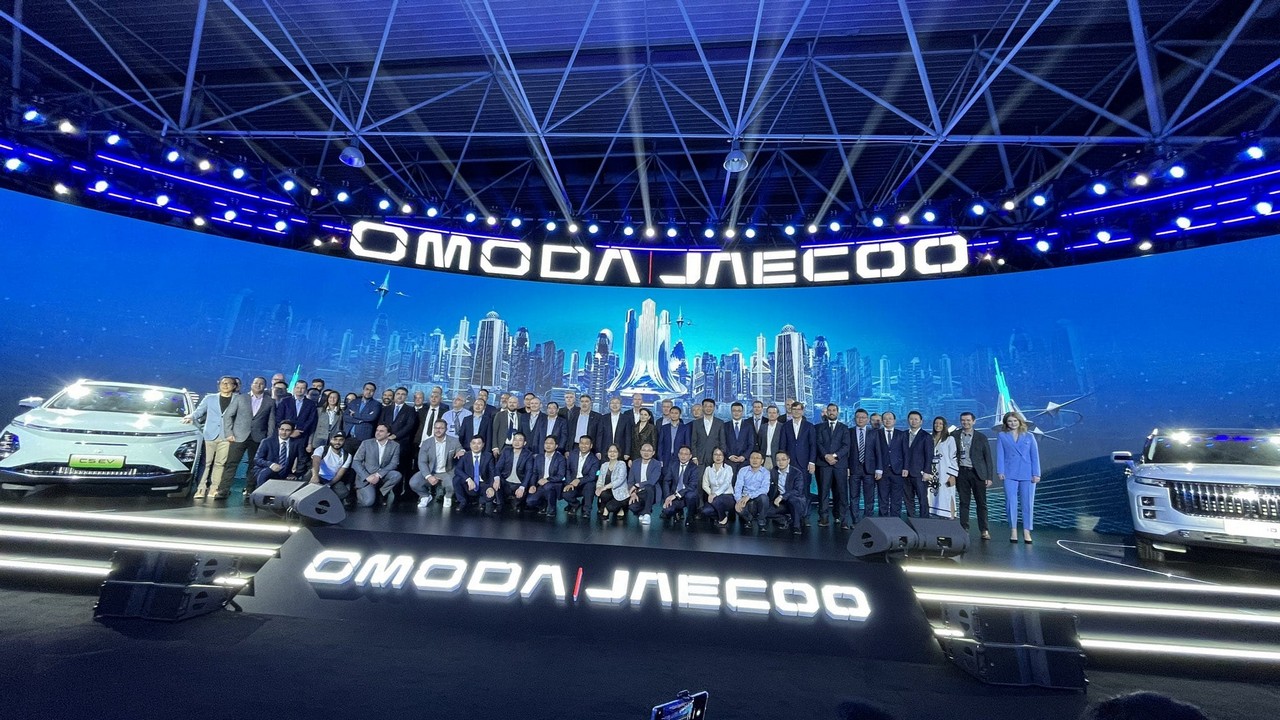
The first units of the Omoda 5, the first model from these two Chinese brands to arrive in Spain, will go on sale in the Canary Islands.
Chinese cars used to seem a distant prospect, low-quality vehicles that imitated several well-known models from the West, but suddenly we find they are already here and steadily taking up a larger share of the market. This summer two new brands from the Asian country arrive, although both sit under the umbrella of the same manufacturer, the multinational Chery.
The arrival of both brands is scheduled for the end of June, although one of their models has already been registered in our country. For now, the first dealership to start selling these brands in Spain will be Grupo Rafael Alfonso, in the Canary Islands. But the expansion across the whole Spanish territory will soon begin so that potential buyers can get to know them.
The delivery of the first units has already taken place at the Chery plant in Wuhu, China, and they will soon reach the dealerships of the Canarian group. At the handover ceremony, members of the Chinese multinational’s executive team and representatives of the Spanish company took part.
In principle they will be present at three dealerships in the archipelago, although a fourth will be added during 2024. Little by little, it is also expected that they will expand to the rest of the autonomous communities, as well as to other European countries.
The Omoda 5, its first model
The first model to arrive in Spain will be the Omoda 5, which already has one unit registered in Spain. This crossover will initially arrive with a 1.6-litre four-cylinder turbocharged T-GDi engine. It delivers 197 CV and is paired with a seven-speed automatic gearbox and front-wheel drive.
A electric version will follow later, offering a motor with an output of 150 kW, equivalent to 204 CV. Initially, it will have a 64 kWh battery, giving it a range of 450 kilometres. That said, these figures correspond, in principle, to the CLTC homologation, which is less demanding than the European WLTP.


 Peugeot E-208 GTi: a battery-powered toy that revives the spirit of the 1980s sports cars
 New Lexus ES: luxury grows and goes electric
 First contact with the Dacia Sandero Hybrid 155: power and efficiency from €19,890
Deja un comentario