Opel Zafira Tourer 2.0 CDTi 165 CV, road test (Engine and performance)
 Diego G. Moreira
31 July 2012
4 min.
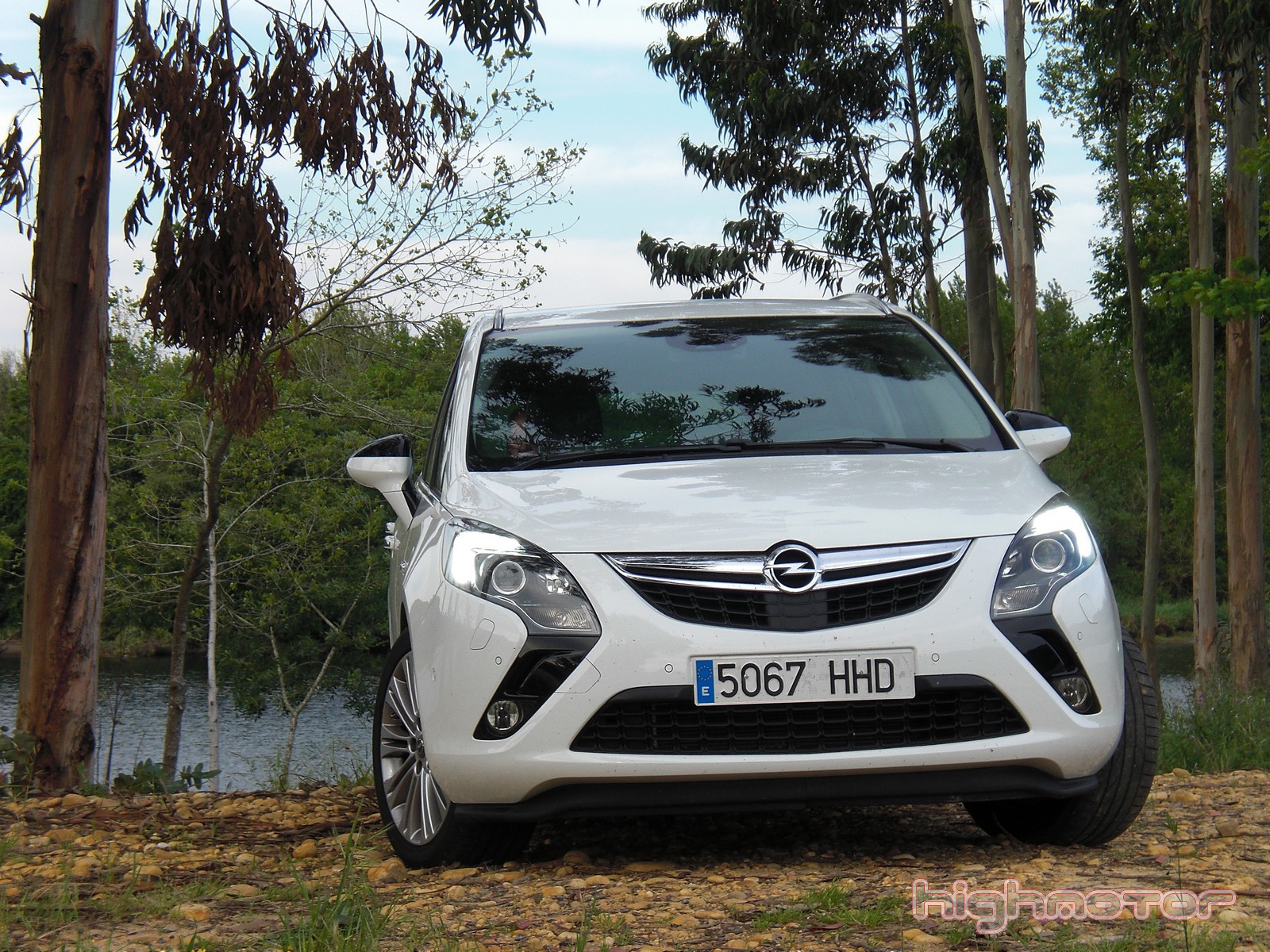
Among the latest launches in the MPV segment, the new Opel Zafira Tourer may go unnoticed, but don’t be fooled by the exterior changes alone, because this MPV has undergone a complete overhaul and emerges as an interesting option for families.
Its space, comfort and interior flexibility are its aces for success in an increasingly competitive segment. To this we must add technology that until now was not available from the German brand, such as adaptive cruise control, and a high-performance two-litre engine producing 165 CV.
The new Zafira Tourer placed third in the CAI Car of the Year BP Ultimate 2012 award, being one of the jury’s favourites. Over the three parts of this road test we will reveal all the qualities, and the less favourable points, of the Opel Zafira Tourer.
Engine and performance
Two litres with 165 CV: an old acquaintance, this engine called CDTi, which is really the fruit of the collaboration between the Grupo Fiat and General Motors. It is the same engine that was fitted until now but with only 160 CV, and shares its base with other Italian models (Fiat Freemont, Alfa Romeo Giulietta, 159, Lancia Delta…)
It is not the most fuel-efficient in its segment, but at least it is performance-oriented. It meets the driver’s demands and responds with ferocity when we press the accelerator pedal, and it even allows certain sporty liberties to give this MPV a more fun character.
Now the engine comes with Stop&Start as standard, to improve efficiency. As always, it can be switched off with a button located on the centre console.
This engine is not noted for smoothness, although it does respond forcefully from 1,500 rpm up to 4,000 rpm, feeling typically turbo and noticeable when the turbo starts to blow. Below 1,500 rpm, however, the engine is completely dead, so when shifting you have to rev it quite high.
Paired with the engine is a six-speed manual gearbox, with a correct feel.
Handling
Our test unit was equipped with FlexRide, which allows the car’s response to be configured in three different modes: Sport, Tour and normal. The Sport mode provides firmer suspension, a heavier steering feel and a greater response when pressing the accelerator. Meanwhile, the Tour mode favours comfort and therefore opts for a softer suspension and steering setup.
Add to that a fairly capable chassis with good cornering, and the end result has little to do with the typical MPVs that suffer from body roll. The Zafira Tourer remains very stable and agile, especially when we select Sport mode.
All of this does not come at the expense of comfort, since a journey aboard the Opel Zafira Tourer is comfortable, whether thanks to the good interior soundproofing or the fairly pleasant suspension over road irregularities, which keeps them from reaching the cabin (especially in Tour mode).
The steering could be a little more precise, but with its variable assistance it strikes a good balance for an MPV and for those who still do not want to give up sportiness entirely. Meanwhile, the braking system fulfils its role perfectly.
Consumption
This is not the most brilliant aspect of the Zafira Tourer, but it stays within the normal range for consumption. We must not forget that under the bonnet lies a two-litre engine producing 165 CV, an engine that responds with considerable force to the accelerator, and perhaps that is why consumption is not entirely frugal.
On motorway it hovered around 6.3 litres per 100 km, while on country roads average consumption came to 6.2 litres per 100 km, making it hard to get below six litres in normal driving. Meanwhile, in towns consumption rises to 9 litres per 100 km on our usual 50 km urban route.
In the second part of the test we will look at the exterior design, and its strong point, the interior design and liveability. We will also discuss the quality of the materials (which we can already anticipate is up to standard) and the boot.
Photos | Diego G. Moreira


 Peugeot E-208 GTi: a battery-powered toy that revives the spirit of the 1980s sports cars
 New Lexus ES: luxury grows and goes electric
 First contact with the Dacia Sandero Hybrid 155: power and efficiency from €19,890
Deja un comentario