Porsche C88, the economy saloon from the Stuttgart brand that never made it to production
 Mónica Redondo @MonicaRedondoD
24 November 2019
3 min.
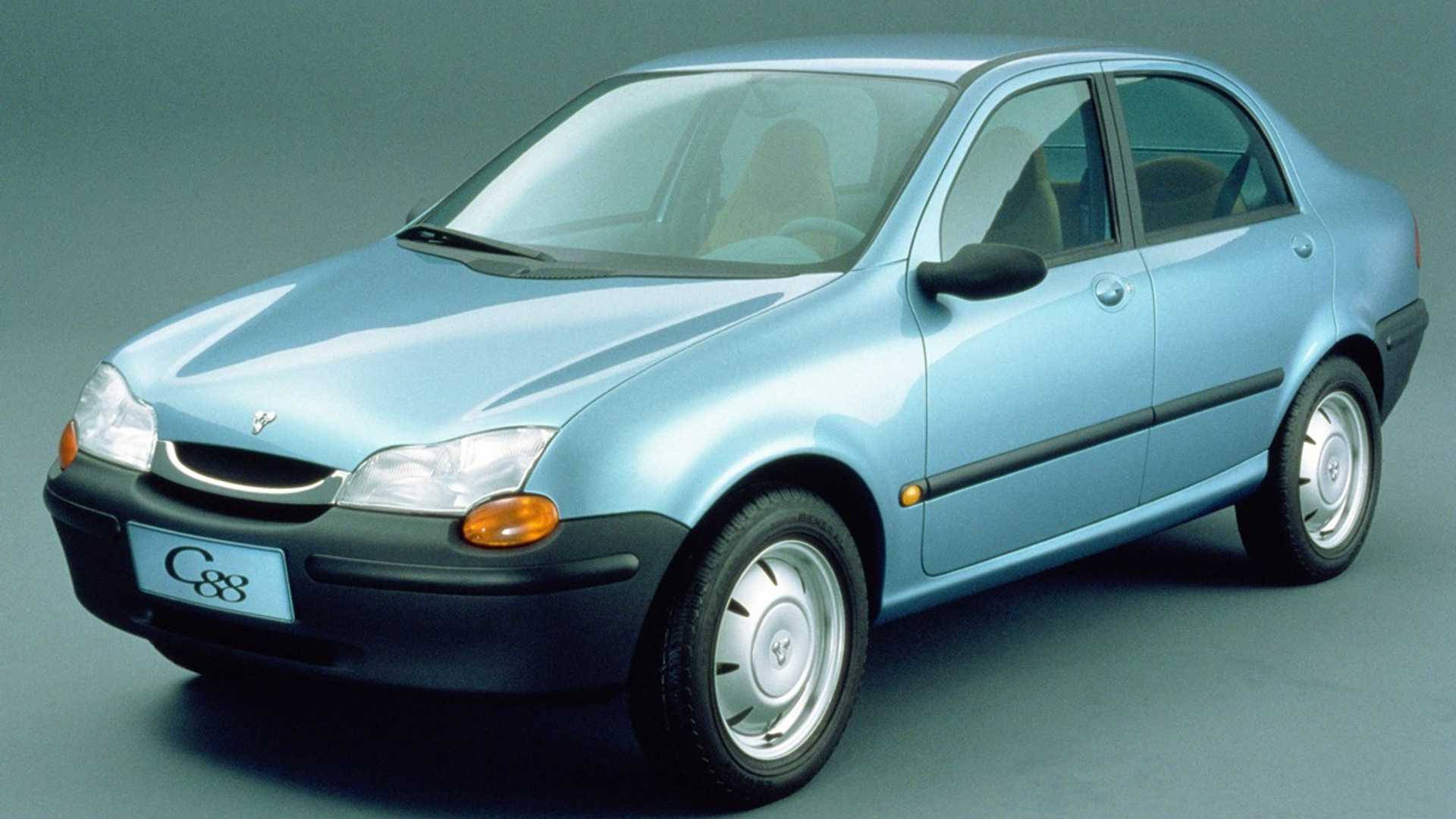
It is called the Porsche C88 and it is a concept that never made it to production. It was aimed at the Chinese market and was presented in 1994 at the Beijing Motor Show.
Yes, this saloon is from the Stuttgart brand and it was a concept presented in 1994 that never actually reached the roads. It is known as Porsche C88, and its name has a very special meaning. The C stands for China, and 88 symbolises good luck and fortune in Chinese culture.
It was developed in just four months, and the designers drew inspiration from the original Volkswagen Beetle. The 1994 Beijing Motor Show was the venue chosen to present this new model.
The Porsche C88 concept was powered by a four-cylinder engine of 1.1 litres producing up to 68 CV. This powertrain was paired with a four-speed automatic gearbox. It was front-wheel drive and fitted with 15-inch steel wheels. It could accelerate from 0 to 100 km/h in 16 seconds and reached a top speed of 161 km/h.
The economy concept by Porsche for the Chinese market
Porsche Engineering Services developed this simple saloon for the Chinese market. Almost everyone knows that the Stuttgart brand took part in the development of the legendary Mercedes-Benz 500E, W124, but when the super saloon was about to be retired, another saloon of a completely different nature emerged.
Returning to the revolutionary concept of the German brand, it is important to note that the Porsche C88 was developed in response to an invitation from the Chinese government to around 20 foreign car manufacturers, with the aim of developing an economical car.
The Porsche C88 was the solution the brand presented. First, it developed a three-door hatchback and a second unit compatible with several body styles: saloon, estate and pick-up. The images show the only unit that was built at full scale.
Although the model was developed mainly for China, the saloon was also designed as a possible model for the European market, meeting the emissions and safety regulations applicable in 1990. The Porsche C88 had a length of 4.03 metres, a width of 1.62 m and a height of 1.42 m.
Porsche Engineering Services needed only four months to develop the saloon, which was ultimately rejected by the Chinese government, as the entire project was cancelled. That meant the efforts made by several other car manufacturers, including Mercedes-Benz, Ford, Chrysler, came to nothing. Had it gone into production, the Porsche saloon would have been offered with a more modern four-speed automatic gearbox and a more robust 1.6-litre diesel engine. On the safety side, it would have had airbags for the driver and passenger, along with an anti-lock braking system for those 15-inch steel wheels.
Like the unadorned exterior, the cabin was also quite rudimentary and included only the basics. To keep things under control while sticking to a tight budget, Porsche designed a rounded dashboard with a centre console and a curved tunnel, while the digital screen looked more like a sticker than a real display. There was also an analogue clock to the right of the driver’s screen, surrounded by a round cluster of warning lights and indicators.
As for the logo, it is obviously not the Porsche badge but a specially developed emblem that depicts a family. During the brief development phase, the engineers had the original Volkswagen Beetle in mind, since they wanted to create a simple, reliable and cheap car to take people from point A to point B.
As some sources confirm, Porsche received input from a technician and an engineer from China when creating the C88, in order to better serve the local market, as these people had a better understanding of what Chinese customers were looking for.


 Peugeot E-208 GTi: a battery-powered toy that revives the spirit of the 1980s sports cars
 New Lexus ES: luxury grows and goes electric
 First contact with the Dacia Sandero Hybrid 155: power and efficiency from €19,890
Comentarios cerrados