Renault and Mercedes scale back their collaboration: they will no longer manufacture vans together
 Victor Alós Yus @sepelaci
14 April 2025
2 min.
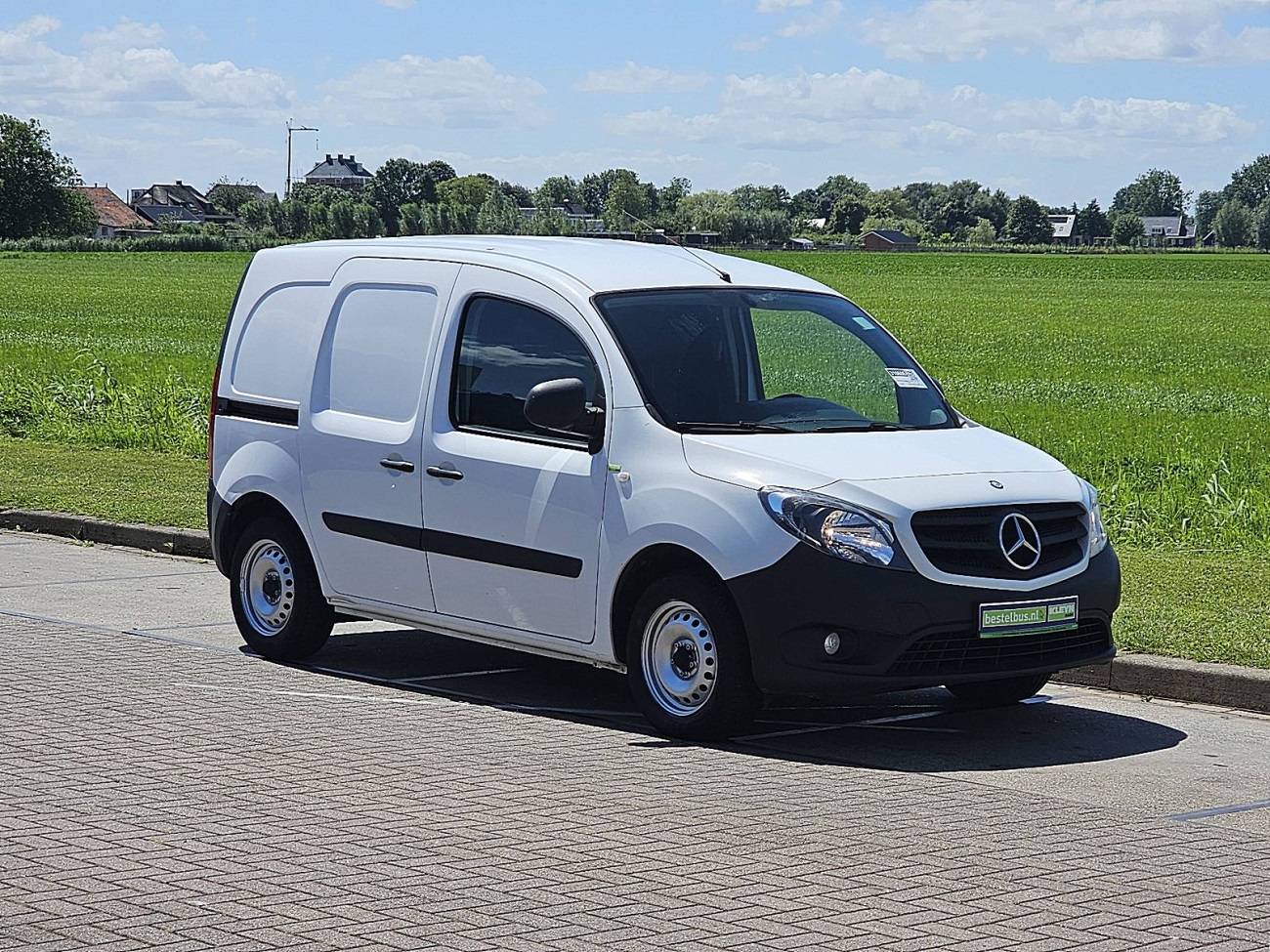
Mercedes and Renault are going to halt production of the Citan and T-Class vans, which until 2026 were to be manufactured in collaboration at a French plant.
For several years, up to now, Mercedes and Renault have been collaborating to manufacture small vans jointly. The experience of Renault and Mercedes in this segment has allowed both companies to work together and produce models that can offer the quality both companies require. But it has now been announced that this collaboration is ending and that both brands will go their separate ways.
Up to now, the Mercedes Citan van was one of the models built under this collaboration agreement, alongside its passenger-transport version, the T-Class. Now, both models will be discontinued, as Mercedes wants to keep focusing on other models that are more profitable and should deliver superior commercial performance.
These two models are based on the Renault Kangoo and are built alongside it at the Maubeuge plant in France. For the time being, everything will remain the same, although mid-2026 has been announced as the date to end production of these two models. This means the commercial life of the Citan and the T-Class will continue for a few more months, as a significant stock will remain at dealerships.
From that point on, Mercedes will focus on manufacturing and selling the Vito, V-Class and Sprinter models, which are more profitable for the German company’s operations. The reason could be optimising the manufacturer’s range, as Mercedes wants to shed models that have not proven as profitable as expected in favour of others that report higher earnings.
Poor sales results
Although the drop in sales has occurred across several Mercedes models, in the case of the T-Class it has been quite significant. In fact, sales of this model have fallen by 31%, as only 5,117 units were sold in 2024. The Mercedes Citan reduced its sales by 3%, with a total of 23,351 units over the same period.
The van market is quite important for Mercedes, as these generate a higher profit margin for the brand. In this case, Mercedes achieves a profit margin of between 10 and 12%, whereas for passenger cars the margin is between 6 and 8%.
The new Mercedes vans will be based on the Van.EA electric platform, which will come into effect from 2026. One of the vans announced for inclusion in the Mercedes range is a model based on the Vision V concept and will be presented on 23 April at the Shanghai Auto Show.


 Kia offers an electric range of 10 models, 50 versions and 400 possible combinations
 The seven finalists for the 2027 European Car of the Year (COTY) are exclusively electric
 Peugeot E-208 GTi: a battery-powered toy that revives the spirit of the 1980s sports cars
Deja un comentario