Tesla could be interested in using Michelin's airless tyres on its vehicles
 Javier Cantagalli
27 June 2024
3 min.
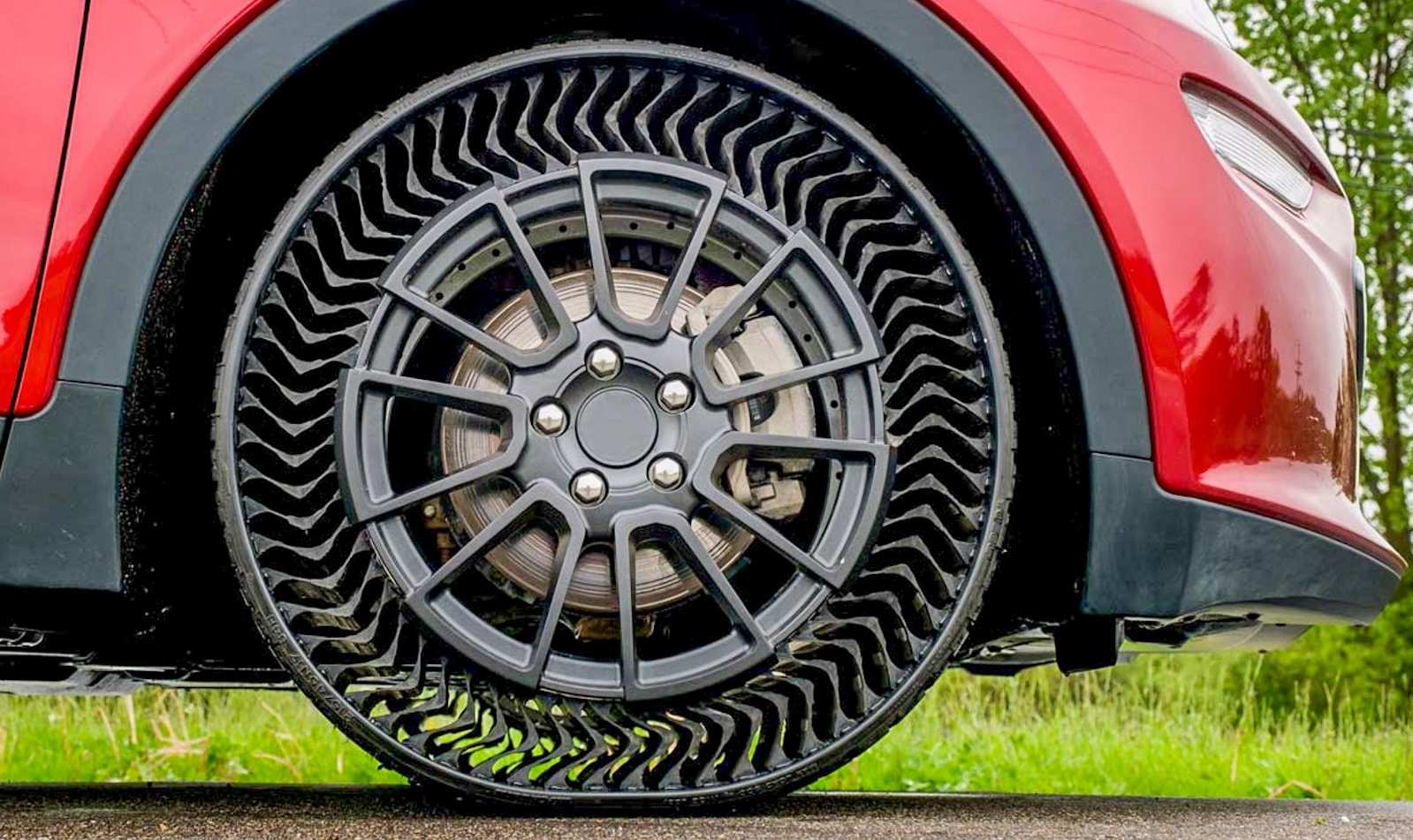
The advantages offered by this new tyre technology make its implementation particularly interesting for electric vehicles. Below we explain the reasons.
According to a recent report, tyre manufacturer Michelin has started talks with Tesla so that the latter can have access to its innovative airless tyre technology, known as Uptis. This information was later also confirmed to the media by Florent Menegaux, the current Chief Executive Officer of the French tyre company.
Until now, Michelin has been testing Uptis tyres on the Chevy Bolt and has started talks with General Motors for their use on the American manufacturer’s electric models. Although all Uptis tyres are currently test prototypes and therefore not available to consumers, everything points to this changing at the end of this same year, when they are expected to finally reach the market. It should also be noted that Tesla already tested Goodyear’s airless tyres in 2021.
The Uptis system, which stands for Unique Puncture-Proof Tire System, features a unique design that requires no air, so it cannot suffer a puncture either, and is based on an open-cell structure. Uptis technology uses the strength of a special compound with a bonded rubber tread. On the inside of the tyre there is a network of flexible spokes that bend and adapt according to road conditions and the weight of the vehicle.
Advantages of Michelin’s Uptis tyres
Michelin expects Uptis tyres to last roughly three times longer than conventional tyres, which would reduce tyre waste and the emissions produced by tread wear. This could also help reduce the number of tyres that end up in landfill, representing a major step forward in terms of sustainability.
According to the manufacturer, Uptis tyres are also lighter and more aerodynamically efficient than traditional tyres. This is a very important advantage for their implementation in electric vehicles. Although one might think the open cells of these tyres would cause more resistance, the truth is that initial tests carried out by Michelin on electric vehicles have shown just the opposite.
If these tyres really reduce resistance, or at least generate a resistance similar to that of conventional tyres, the lower weight of airless tyres could improve the efficiency of electric vehicles. However, it should be clarified that, according to the manufacturer itself, these airless tyres will probably be limited to certain types of applications, at least initially. Michelin has not specified, however, what these applications may be or why this limitation exists.
In this regard, it is possible that they will be restricted to certain weather conditions or types of roads, although this is something we do not know at this time.


 Peugeot E-208 GTi: a battery-powered toy that revives the spirit of the 1980s sports cars
 New Lexus ES: luxury grows and goes electric
 First contact with the Dacia Sandero Hybrid 155: power and efficiency from €19,890
Deja un comentario