Golf Hybrid Cars Compact Sports Cars Tests
Test: Volkswagen Golf GTE: the hybrid that could dethrone the legendary GTI?
 Óscar Sanz
18 September 2025
7 min.
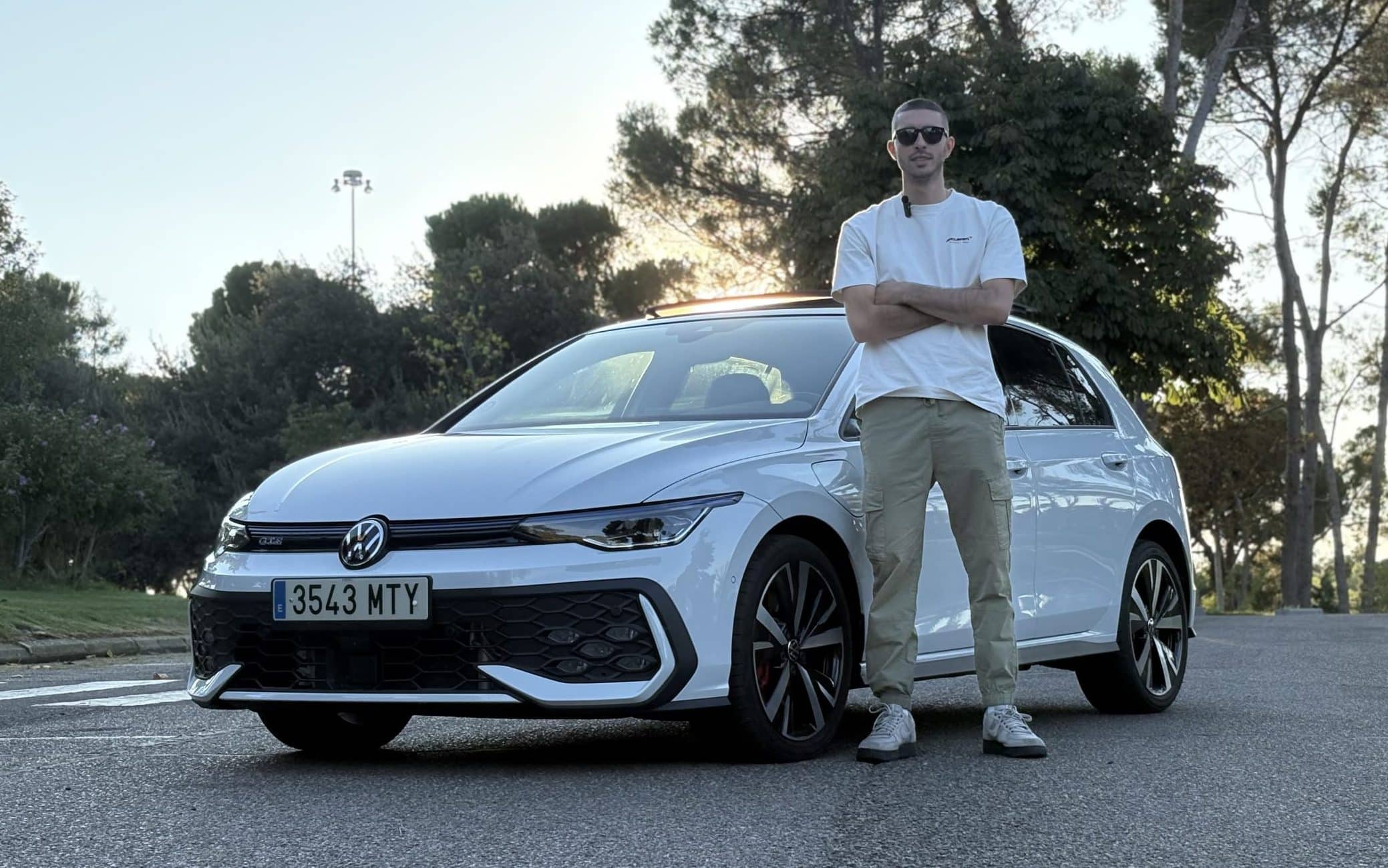
We test the Volkswagen Golf GTE and discover that it can be just as exciting as its GTI sibling, with the added advantage of gliding along silently for up to 130 km on electricity alone
The Volkswagen Golf has always been an icon of the European automobile. For decades, the GTI badge has represented the perfect balance between sportiness and everyday usability. However, the motoring world is changing, and with it, the way we understand “responsible performance”. That is where the Golf GTE comes in, the plug-in hybrid alternative that promises sensations similar to those of a GTI, but with a greener conscience and tangible benefits in day-to-day use.
I have had the chance to put the GTE to the test and, honestly, it has left me with more questions than answers. Is it really the natural successor to the GTI in an electrified era, or simply an experiment for those who want it all without giving anything up? The GTE is not just a simple eco experiment. It is a car with solid arguments that forces you to compare it directly with the GTI.
The Golf GTI uses the classic 2.0 TSI four-cylinder engine, now with 265 CV sent to the front axle through a 7-speed DSG gearbox. It is a proven, finely tuned package that delivers quick acceleration (0 to 100 km/h in 5.9 s) and a top speed of 250 km/h.
The Golf GTE, for its part, combines a 1.5 TSI evo2 engine with 150 CV with an electric unit of 115 CV and a battery of 19.7 kWh net. The total combined output rises to 272 CV with a maximum torque of 450 Nm, which in theory places it above the GTI. However, the extra weight, around 1,740 kg, almost 200 more than the GTI, takes its toll: the 0 to 100 km/h sprint comes in at 6.6 s and its top speed is limited to 230 km/h.
In practice, the GTE is surprising off the line in town, where the electric motor delivers instant torque and makes the first few metres even livelier than in the GTI. On the open road, however, the GTI feels more agile, purer and has that linear response that makes you fall in love with it.
Range and efficiency: the GTE wins by a mile
When it comes to efficiency, the GTE plays in another league. Its battery lets it cover up to 131 km in 100% electric mode (WLTP), a figure that places it well above most plug-in hybrids on the market. This means that, in daily urban or mixed use, it is perfectly possible to forget about petrol for the whole week.
In addition, in homologated hybrid mode, it can use as little as 0.4 l/100 km with a full battery. At the other extreme, with a depleted battery, consumption rises to 6.8–7.0 l/100 km, a reasonable figure for a car of its weight and power.
A key differentiator compared with other PHEVs (and with the GTI itself) is fast charging on direct current (DC) of up to 40 kW, which allows you to go from 0 to 80% in about 26 minutes. On a 2.3 kW household plug, a full charge takes around 6 hours, while on an 11 kW wallbox (AC) it drops to around 2.5 hours.
In terms of consumption, the scales tip clearly towards the Golf GTE. With a charged battery, it is rated at just 0.4 l/100 km, compared with the 7–7.5 l/100 km real-world that the GTI typically records in mixed use. Even with the battery depleted, the GTE hovers around 6.8–7.0 l/100 km, very similar to a pure petrol car, but with the advantage that its electric range of up to 131 km allows you to cover most daily journeys without using a single drop of fuel.
Driving modes and regeneration
The Golf GTI offers the classic modes (Eco, Comfort, Sport, Individual), adjusting the suspension, steering and engine response.
The GTE adds an extra touch of sophistication:
-
e-Mode: 100% electric driving.
-
Hybrid: intelligent management of both motors.
-
Battery Hold: saves the battery for use later on.
-
GTE: maximum performance, with both motors working in unison.
It also lets you adjust regenerative braking across three levels (Gentle, Automatic and Strong), something absent from the GTI and which changes the driving experience a great deal: from barely perceptible retardation to a “one-pedal driving” feel in town.
Exterior design: same genes, different character
Both models share the Golf bodywork, but their details set them apart:
-
The GTI flaunts the classic red accents, the honeycomb grille and a more aggressive air.
-
The GTE opts for a more high-tech look, with blue details, LED strips at the front, IQ.Light Matrix LED headlights and model-specific alloy wheels of up to 18 inches.
Both convey sportiness, but the GTE looks more sophisticated, almost futuristic, while the GTI keeps that “pure petrol” aesthetic.
Interior: subtle differences
Inside the cabin we find more similarities than differences: dual screens (a 10.25″ digital instrument cluster and a 12.9″ multimedia screen), a minimalist design and good materials.
The GTE introduces its own identity with check upholstery in blue, specific graphics for electric mode and controls related to hybrid management. In both, comfort and build quality remain the hallmark of the brand.
That said, here the GTI wins on practicality: its boot reaches 374 litres, while the GTE is limited to 273 litres because of the battery, and the floor is also higher.
Real costs and advantages
In terms of price, the GTE starts higher than the GTI. But some nuance is needed: thanks to the DGT Zero label, the plug-in hybrid gives access to restricted zones, free parking in many cities and, most importantly, eligibility for the MOVES III Plan, with up to €7,000 in grants if you scrap an old car. The GTI, without those tax and administrative advantages, plays a different card: the long-term reliability of a simpler system that depends less on plugs and batteries.
Driving: emotion vs pragmatism
If I had to sum up the experience, I would say that the GTI remains lighter, more direct and with a classic sporting character. It is not the most efficient, but it delivers pure sensations and an immediate, fun connection with the road.
The GTE, on the other hand, convinces the head: it is quick, efficient and technological. Driving it in electric mode is addictive, and when it combines both motors it offers more than enough performance for any scenario. It does not thrill like the GTI, but its versatility is hard to match. The GTI is passion, the GTE is pragmatism.
With the GTE, the sensations are different at first, but they surprise just as much as the GTI, albeit in a different way. In town, the electric silence, the absence of vibration and the smoothness of pulling away in electric mode offer a pleasant, relaxed experience, almost a “suspension of the everyday”. Then, when the combustion engine comes into play (when you press the pedal decisively, when overtaking or when you activate the sportier modes), the feeling gets quite close to the GTI: the thrust, the sound (albeit filtered), and the response of the gearbox and steering evoke the best of its petrol sibling. They are not identical, as the GTE is heavier, the hybrid transition introduces certain variations and the regeneration can alter the feel in corners, but there are moments when you almost forget you are driving a hybrid: you believe you are at the wheel of a GTI, with a very capable blend of punch and composure.
That said, it asks the driver to change their mindset: it will not be in “performance” mode all the time, and the feel can vary a lot depending on the mode (Sport, Hybrid, electric), which gives breadth but also a certain contrast when moving from relaxed driving to dynamic driving. The regeneration and the feel of the brake pedal are other key points: in the GTE, lifting off the accelerator in strong mode is clearly noticeable, almost as if you were engine-braking hard, and this can disrupt your rhythm in corners if you are not used to it.
Technical specifications of this car


 Peugeot E-208 GTi: a battery-powered toy that revives the spirit of the 1980s sports cars
 New Lexus ES: luxury grows and goes electric
 First contact with the Dacia Sandero Hybrid 155: power and efficiency from €19,890
Deja un comentario