The e-Call, the life-saving SOS button, is now mandatory on all new cars
 Guillermo Lopez
3 April 2018
3 min.
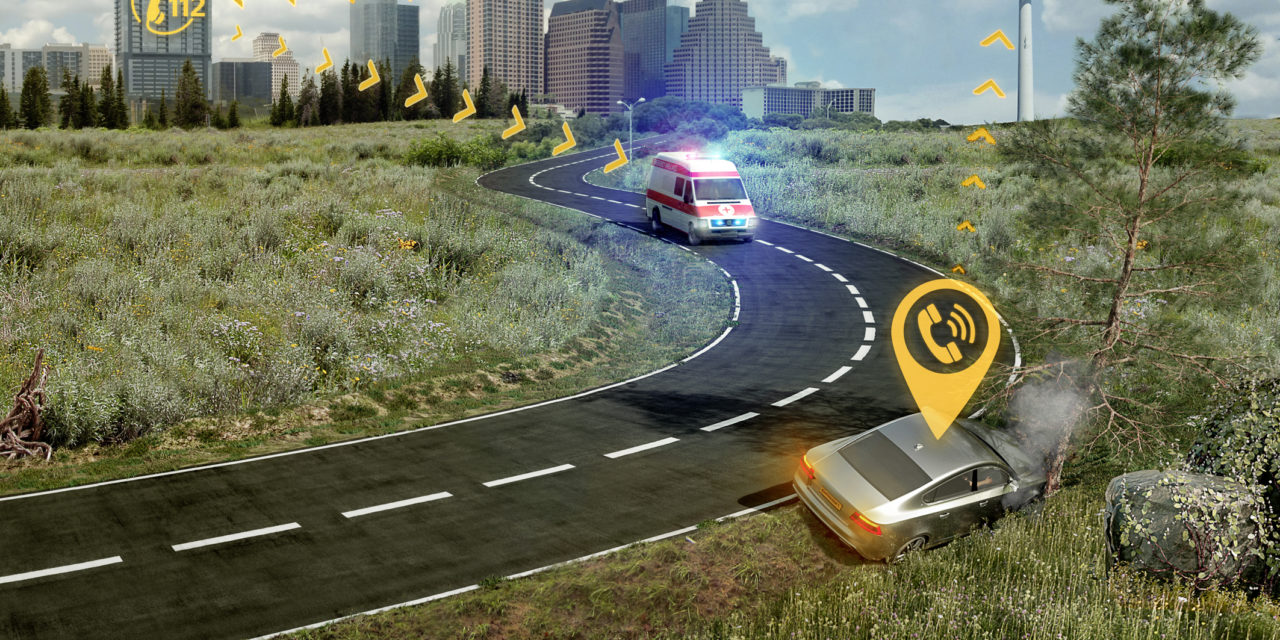
The SOS button that activates the emergency call or e-Call from your vehicle is now mandatory on all new cars sold in Europe
The quality of the primary care that injured people receive in a car accident can mean the difference between life and death. The vast majority of accident victims who receive medical assistance within the first ten minutes after the accident survive when emergency services arrive quickly at the scene. That is why the European Union decided in 2015 to make it mandatory to install on all new cars what is known as the mandatory emergency call, or e-Call.
The system must work fully automatically in the event of an accident. When the system detects that the car has been involved in a crash, the car itself calls the emergency services, at 112, to report the exact location of the vehicle and the number of occupants on board at the time of the accident. Upon receiving the alert, the emergency services will get in direct contact with the occupants to confirm the incident and find out first-hand whether assistance is needed and, if so, what kind, so that they can immediately dispatch the necessary medical, police or mechanical help.
Using a virtual SIM card built from various sensors fitted to the vehicle, the e-Call automatically sends a signal via GPS that gives the emergency services the exact details of the accident (location on the road, time, number of passengers on board, type of fuel…) without the driver or passengers having to do anything such as pressing a button.
The call will reach the 112 technical services in the relevant autonomous community or province, who will quickly get in touch with the vehicle’s occupants to assess the seriousness of the crash and consider dispatching the emergency services needed to resolve it.
Besides this automatic operation, the e-Call can also be activated manually by the occupants of the vehicle, for example when a passenger faints.
The system does not track the route of vehicles; it only records their location and the precise data needed to dispatch emergency services properly. The European regulation governing the system explicitly prohibits storing the data of the incident, requiring that “the data in the system’s internal memory or in the independent technical unit be deleted automatically and continuously, and that no entity outside the system or the integrated independent technical unit have access to such data before the e-Call is activated”.
Making the system mandatory will help reduce road deaths, since response times to accidents are expected to fall by 50 percent in rural areas and by up to 40 percent in urban areas once it takes effect. It is also estimated that in 15 percent of cases, the consequences for people injured in road accidents will be less severe, according to calculations by the European Union based on scientific studies showing that during the first half hour after a crash, 7 out of 10 road accident fatalities occur.


 Peugeot E-208 GTi: a battery-powered toy that revives the spirit of the 1980s sports cars
 New Lexus ES: luxury grows and goes electric
 First contact with the Dacia Sandero Hybrid 155: power and efficiency from €19,890
Deja un comentario