A5 Audi Range / versions Industry Technology
The new Audi A5 built on the Premium Combustion Platform (PPC) begins production in Germany
 Óscar Sanz
14 August 2024
4 min.
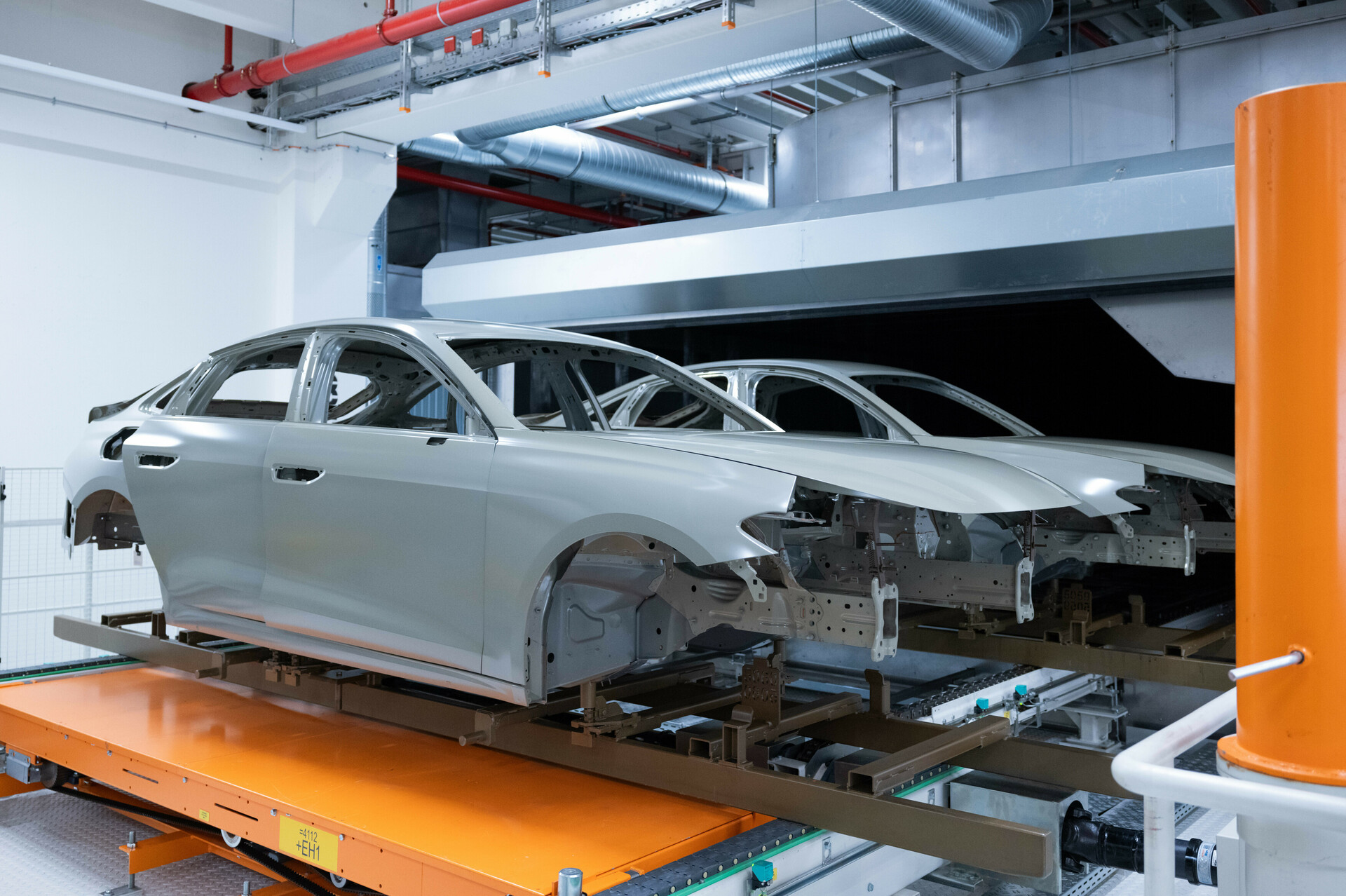
Discover how Audi is transforming its Neckarsulm plant into a modern and sustainable production site, with optimised processes and technologies for manufacturing the Audi A5
Audi has launched one of the most significant transformations at its Neckarsulm plant, in Germany, with the arrival of the new Audi A5 family. This renewal marks the start of the most ambitious production phase in the plant’s history, which seeks not only to modernise its processes but also to do so with a focus on sustainability and energy efficiency.
The Neckarsulm plant is preparing to become a model of modern production, with advanced systems that guarantee the manufacture of high-quality vehicles with minimal environmental impact. By 2025, Audi’s goal is for every model leaving this plant to be manufactured with a carbon-neutral balance. To achieve this, the company has implemented a series of technological innovations and optimised processes that not only improve efficiency but also promote the responsible use of resources.
Efficient and automated production
The new Audi A5 is the first to be manufactured on the Premium Combustion Platform (PPC) in Neckarsulm, with partially electrified propulsion systems and an advanced electronic architecture. This platform clearly reflects Audi’s commitment to sustainable mobility, integrating technologies that not only improve vehicle performance but also reduce its environmental impact.
One of the pillars of this modernisation is the increase in plant automation. Neckarsulm has been a pioneer in adopting driverless transport systems (DTS), which now handle more than 80% of the material in the body shop automatically. This level of automation not only improves efficiency but also guarantees superior quality in assembly processes, minimising possible variations and errors.
Innovation in the paint shop
The plant’s paint shop has also undergone a major renovation. By 2025, it is expected to be one of the most modern in the automotive industry. This shop incorporates new techniques that considerably reduce energy consumption. For example, instead of using filler and subjecting it to a drying process, Audi has introduced a pre-zone paint that can be applied directly onto the wet surface, eliminating the need for intermediate drying and saving up to 140 kWh per vehicle.
In addition, the plant has adopted a dry paint separation process, which allows the paint overspray to be captured with advanced filters and more than 90% of the filtered air to be reused. This technique not only reduces energy consumption but also eliminates the need to use water and chemical products in the process, reinforcing Audi’s commitment to sustainability.
Responsible water use
Another crucial aspect of the transformation of Neckarsulm is the sustainable management of water. Audi has implemented a closed water cycle in collaboration with the wastewater treatment plant of the Unteres Sulmtal Wastewater Association, adjacent to the plant. This initiative will save up to 70% of fresh water from 2025 onwards, a significant achievement that underlines the brand’s commitment to conservation of water resources.
Furthermore, Audi has joined the Alliance for Water Stewardship (AWS), demonstrating its dedication to using water efficiently and reducing its water footprint. This approach not only benefits the environment but also ensures the long-term sustainability of the plant’s operations.
Quality control and innovative technologies
Quality is a priority in the production of the new Audi A5, and the Neckarsulm plant has implemented cutting-edge technologies to ensure it. The use of augmented reality (AR) allows employees to inspect bodies with unprecedented precision. Using a tablet equipped with AR, inspectors can verify in real time whether welds and other aspects of the vehicle meet specifications, speeding up the quality control process and reducing the margin of error.
The body shop has also improved its assembly process, using robots to fit components automatically, which guarantees an accurate fit and minimises external influences. This high degree of automation is key to maintaining quality in every vehicle leaving the production line.
Production image gallery Audi A5


 The seven finalists for the 2027 European Car of the Year (COTY) are exclusively electric
 Peugeot E-208 GTi: a battery-powered toy that revives the spirit of the 1980s sports cars
 New Lexus ES: luxury grows and goes electric
Deja un comentario