The third generation of the Dacia Duster is here: more 4x4, more performance and more sustainable
 David Lopez @espacionblanco
30 November 2023
6 min.
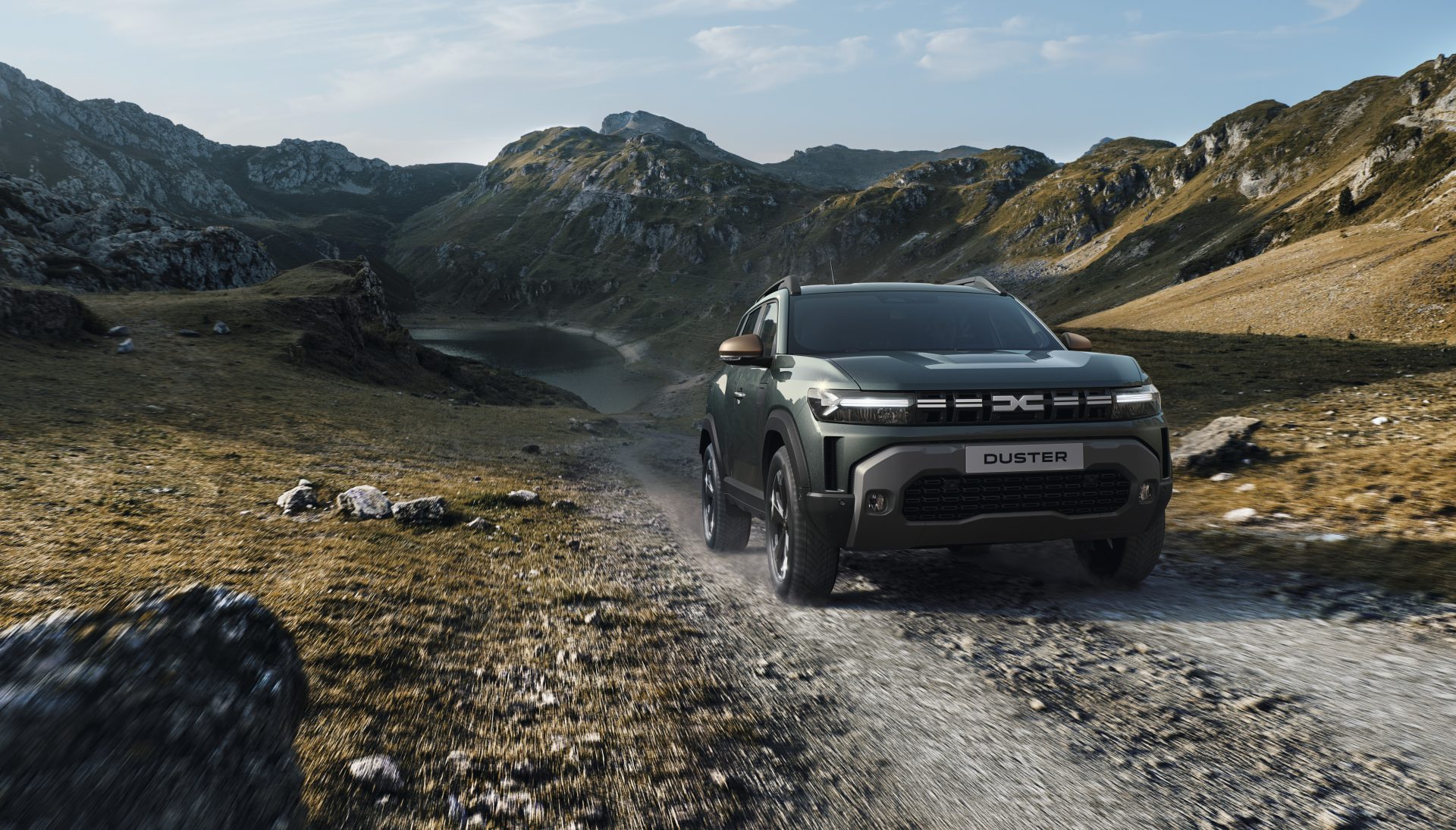
The Dacia Duster has been a bestseller that wants to remain one in its third generation, much more complete, technological and capable than its predecessors
Over 2.2 million units sold and recognised with more than 40 awards. These are some of the impressive figures the Dacia Duster has achieved in just 13 years on the market, to which we must add one more award: the best-selling SUV in 2022 among private buyers. A success story that shows no sign of slowing down and that the brand clearly does not want to end; we will see whether they manage to maintain and surpass it with the new third generation.
We had already anticipated some details to you, which we will now confirm since the new Dacia Duster is now a reality. It is built on the CMF-B platform, which is also used on other models from the brand such as the Jogger, and within the group on the Renault Clio and the Captur. This means its dimensions are now 4,340 mm in length, 1,810 mm in width and 1,660 mm in height, generally giving occupants greater habitability; specifically, it improves width in the front seats and legroom in the rear seats.
Aesthetically, and as we already knew, the new Dacia Duster changes its image radically and, at least in photographs, looks more like a 4×4 than ever. New technologies obviously make their appearance, such as the new light cluster with a “Y”-shaped light signature, but this more robust look is shown in elements such as the front and rear bumpers, the lower side protections or the wheel arch protectors, all made from a new material called Starkle, which is robust and sustainable, containing up to 20% recycled material. In addition, they are mass-dyed, which avoids the use of paint and means that even if they get scratched they never lose their original colour.
The exterior of the new Dacia Duster is not the only area where the brand has emphasised sustainability: the interior uses no decorative chrome and no animal-origin leather and, on the highest trims, it incorporates washable TEP microcloud upholstery and rubber floor mats with 20% recycled material. Even future customers will receive a reduced user manual that limits paper use, so to access the full version we will have to do so through the MyDacia app or on the brand’s website.
Apart from this, the Dacia Duster now boasts a renewed, clean and technological design in which, depending on the trim chosen, we can equip the infotainment system with a 10.1-inch touchscreen, angled 10º towards the driver, or the 7-inch digital instrument cluster. It obviously adopts elements from other models, such as the flat-bottomed steering wheel, which is flat at both the top and bottom, although it also receives its own identity features, such as again the “Y” shape, present on the door handles or, more discreetly, on the air vent surrounds.
Dacia has already confirmed that the new Duster will be available in four trims, which will include standard equipment such as the following:
- Essential: This is the base trim and its equipment includes the Media Control multimedia system, an instrument panel with 3.5-inch analogue dials, 4 speakers, Bluetooth connectivity, one USB port, a smartphone holder integrated into the dashboard, cruise control and speed limiter, 6 airbags, roof bars, manual climate control, rear parking sensors and a sensor for automatic switching between dipped and main beam, among others.
- Expression: Adds to the previous trim elements such as 17-inch alloy wheels, a 7-inch digital instrument cluster, a 10.1-inch touchscreen with the Media Display multimedia system and with Apple CarPlay and Android Auto, 2 USB-C sockets at the front and 2 at the rear, and a rear-view camera, among others.
- Extreme: Adds to the previous trim elements such as modular roof bars, washable TEP microcloud upholstery, rubber floor mats, automatic climate control, power-adjustable and power-folding exterior mirrors, the “3-in-1” YouClip system, and interior and exterior decorative elements in Copper Brown.
- Journey: Adds to the previous trim elements such as 18-inch alloy wheels, automatic climate control, automatic parking brake, wireless smartphone charger, the Media Nav Live multimedia system with connected navigation, and the Arkamys 3D Sound System audio system with 6 speakers.
This standard equipment can be increased with numerous optional extras as well as safety and driver assistance systems such as automatic emergency braking, traffic sign recognition with speeding alert, rear parking assist, emergency stop signal, lane change alert, lane keeping assist, driver attention monitoring system and emergency call (eCall).
Finally, we come to the mechanical side, where Dacia has already confirmed that diesel engines are disappearing from its range in favour of a degree of electrification. Firstly, we have the TCe 130 engine, which arrives on the Duster for the first time and consists of a three-cylinder turbo petrol unit of 1,200 cc with a six-speed manual gearbox and 4×2 or 4×4 traction, as well as a 48 V mild-hybrid system, so it carries the ECO label; the 100 Eco-G engine does too, which allows the use of LPG and offers a range of 1,300 kilometres.
The most ecological option comes from the Hybrid 140 engine, similar to the one fitted to the Jogger, so we find a four-cylinder 1,600 cc petrol unit producing 94 CV working together with a 49 CV electric motor and an electrified automatic gearbox. Alongside this system is a 1.2 kWh battery, which is charged by the regenerative braking system.
As for its 4×4 capability, if we opt for this, we will first enjoy the 4×4 Terrain Control transmission, which lets us select between the Auto, Snow, Mud/Sand, Off-Road and ECO driving modes, depending on the terrain we are driving on and our needs. In addition, the new Dacia Duster improves its off-road capabilities with a ground clearance of 217 mm, with approach and departure angles improved by up to 31º at the front and up to 36º at the rear, plus a breakover angle of 24º. It also features a descent control system and, if fitted with the 10.1-inch infotainment system, it will also display information such as the lateral inclination angle, the pitch angle and the torque split between the axles.
Technical specifications of this car


 The seven finalists for the 2027 European Car of the Year (COTY) are exclusively electric
 Peugeot E-208 GTi: a battery-powered toy that revives the spirit of the 1980s sports cars
 New Lexus ES: luxury grows and goes electric
Deja un comentario