What is R33 or Blue Diesel, the fuel that will soon arrive at European petrol stations?
 David Lopez @espacionblanco
26 February 2019
3 min.
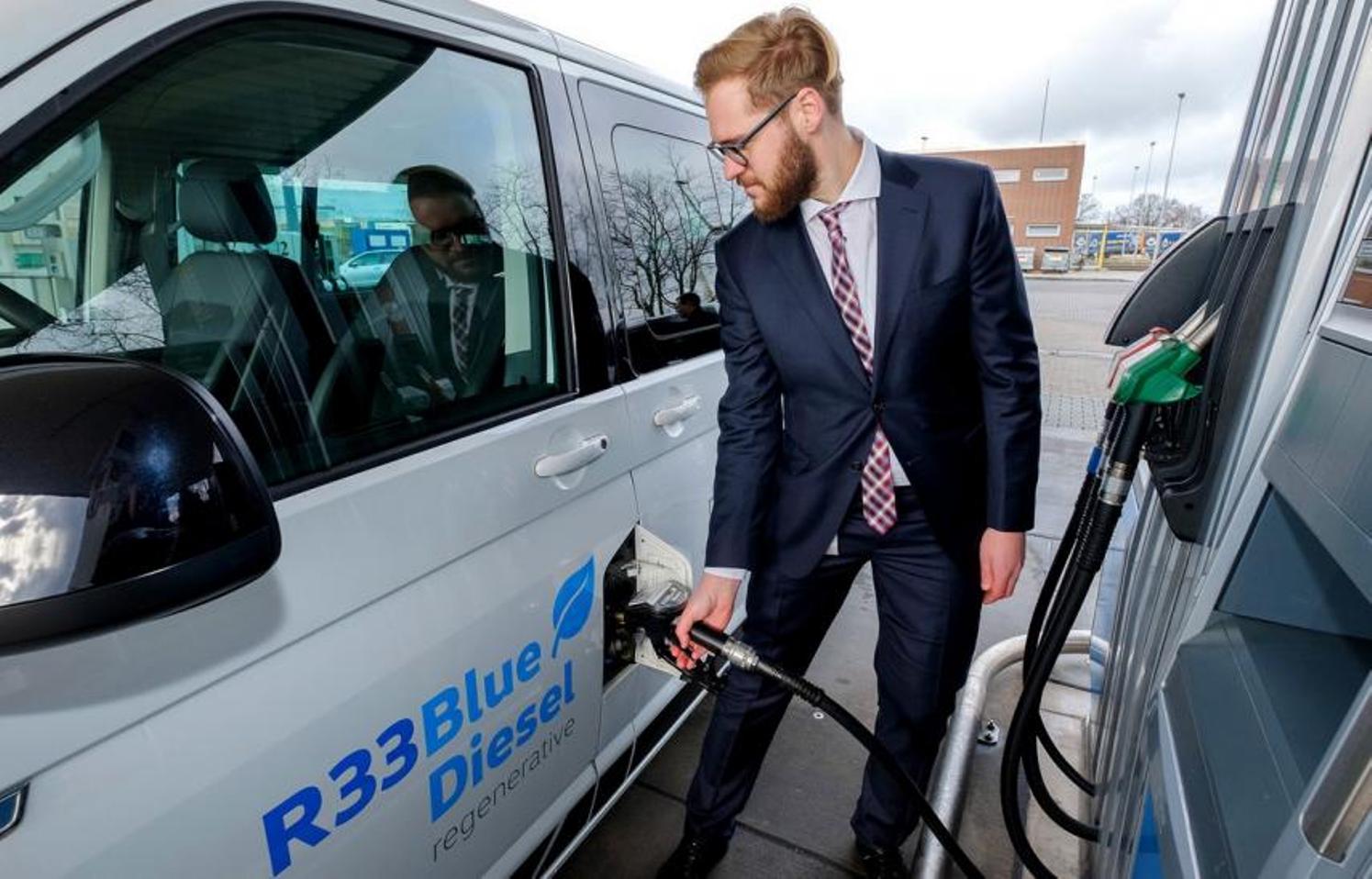
Diesel engines may be able to keep fighting for longer than expected thanks to the new Diesel R33 fuel, also known as Blue Diesel.
Since the earthquake caused by the modifications that Volkswagen made to its diesel engines to falsify pollutant emissions data began, the life of this fuel has been shortened dramatically, partly because of this scandal and partly because it coincided with the rise of hybrid engines, in which petrol is the main protagonist. But those who advocate keeping diesel among the mechanical options may be in luck, thanks to a new diesel that will soon arrive at European petrol stations.
You may not have heard anything about this fuel yet, which is perfectly normal, but get used to it, because it won’t be long before the new Diesel R33, also known as Blue Diesel, is at the pumps. It is a fuel that aims to be the boost that diesel engines need to keep fighting in the automotive industry, all thanks to its best qualities in terms of pollutant emissions.
Diesel R33 is a new type of biofuel that has been in development since 2013, a project born at the University of Coburg in Germany and backed by numerous companies, among them, believe it or not, also Volkswagen and companies like Bosch. These years of development have made Diesel R33 compatible with any diesel engine, and it already has European approval under the DIN EN 590 standard, which gives it the green light to begin marketing. For now there is no specific arrival date, but with research in its final phase and the relevant procedures completed, everything points to it arriving sometime this year.
Diesel R33, or Blue Diesel, promises a 20% reduction in pollutant emissions
But what does Diesel R33 offer us? This fuel promises its users a reduction in CO2 emissions of up to 20%. It achieves this thanks to its composition, which is 67% extracted from fossil fuel and 33%, hence its name, of recycled materials. These recycled materials are 26% hydrogenated vegetable oil obtained from paraffins extracted from waste materials, and 7% comes from used cooking oil that can be recycled for this use, thus preventing it from ending up polluting a landfill.
In this way, Diesel R33 has three very good features: it recycles highly polluting materials that would otherwise end up in our landfills; it enables diesel engines to substantially reduce their pollutant emissions; and, in addition, it can be used in any diesel engine regardless of its year of manufacture. This last point should not worry you: first, because it has the approval for this, and second, because Volkswagen, certainly a brand very interested in it working, has tested it on 1,300 of its vehicles covering roughly 26 million kilometres without any of them suffering any kind of problem.
As mentioned above, its arrival date in the various European countries is not yet confirmed, but it should not be long, since several German towns already have petrol stations offering Diesel R33 for anyone who wants to use it alongside the other types of diesel we already know.


 Kia offers an electric range of 10 models, 50 versions and 400 possible combinations
 The seven finalists for the 2027 European Car of the Year (COTY) are exclusively electric
 Peugeot E-208 GTi: a battery-powered toy that revives the spirit of the 1980s sports cars
Deja un comentario