What types of automatic gearboxes are on the market, and what are their characteristics?
 David Lopez @espacionblanco
26 April 2019
4 min.
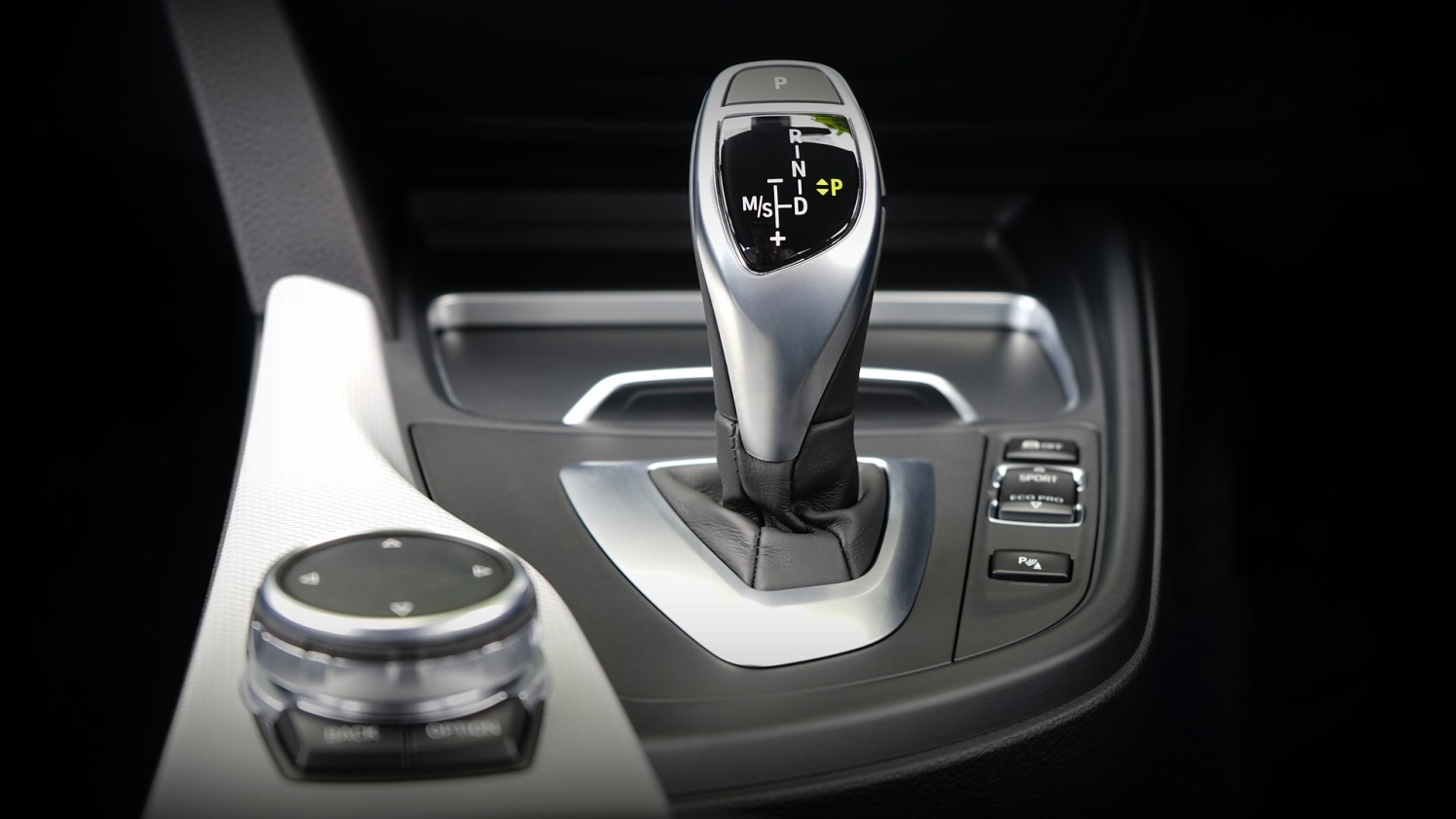
There is a wide variety of automatic gearboxes, so it is worth knowing which ones we are most likely to come across.
Most people understand an automatic gearbox to be one that has no clutch pedal and changes gears without our intervention. This is entirely true and valid, but if we look a little deeper into the subject we will see that not all automatic gearboxes are the same. On the market we will find several types, and even within a single model they can differ depending on the version, which is why it is important to know the main types of automatic gearboxes so we know what we are buying.
Before explaining the most common types of automatic gearbox, you should know that it is very difficult to opt for one in particular. Depending on the characteristics we are looking for in our next car, the gearbox will vary according to the job it has to do. Even so, this does not mean it is not important to know which system we are using, since it will help us understand what we are paying for and how it works.
Torque converter
Torque converter automatic gearboxes could be considered the classic ones, the most widely used and the preferred option of manufacturers. This is because the torque converter automatic is capable of changing gears smoothly, thanks to the fact that the classic clutch disc of manual gearboxes is replaced by a torque converter that transmits power through a very viscous fluid.
In their early days these gearboxes tended to be too abrupt, which led to breakdowns, but with subsequent development torque converter automatic gearboxes have improved substantially, and the seven- or eight-speed versions are the benchmark for a great balance between efficiency, smoothness, reliability and cost. You can even find them with 10 speeds in high-displacement vehicles.
You will hardly ever see torque converter automatic gearboxes in entry-level cars; for these we have to move up to the mid/upper range, where examples of this gearbox include the Triptonic from the VAG Group or the Steptronic fitted to BMW.
https://www.youtube.com/watch?v=oBcIOfMSOGY
Robotised dual-clutch
If the previous gearbox is characterised by its smoothness, in robotised dual-clutch gearboxes this characteristic is taken to the extreme, making gear changes imperceptible to the occupants. In addition, gear selection is very quick. On the downside, robotised dual-clutch gearboxes cost substantially more than a manual gearbox, although compared with it, and depending on our driving style, we can save up to 10% in fuel.
These characteristics of the robotised dual-clutch gearbox are achieved by fitting two clutches that sit in an oil bath and are operated by two control shafts, which engage the different ratios. In this way one clutch handles the even gears while the other handles the odd gears, pre-selecting the next gear when we upshift or downshift, which is where its speed and smoothness come from.
This type of gearbox is the star of Volkswagen. If instead of calling it that we name it by its DSG designation, it may sound more familiar, although within the same group it can also be found as the S Tronic in Audi.
https://www.youtube.com/watch?v=BBsI2egSpLU
Continuously variable transmission (CVT)
The continuously variable automatic transmission stands out for its great smoothness, because inside it there are no gears as we know them, only a continuous variation of ratios between the engine and the transmission. Unfortunately, despite its smoothness, this type of gearbox does not meet the standards required by a sports or high-displacement vehicle that we are going to demand a lot from. On the other hand, in cars intended for urban driving this is the ideal gearbox. Even so, thanks to advances made, it has become a viable option for higher-powered vehicles too, such as the Audi equipped with the Multitronic gearbox.
This gearbox can deliver significant fuel savings, since it works best when the engine is kept at low revs, whereas if we push the revs up it is where this gearbox tends to become excessively noisy. Apart from the Multitronic in Audi, this gearbox is commonly found in Japanese vehicles such as the e-CVT fitted to the Toyota Prius, as they are reliable and inexpensive to produce.
https://www.youtube.com/watch?v=cRKI5D7d4Es


 Peugeot E-208 GTi: a battery-powered toy that revives the spirit of the 1980s sports cars
 New Lexus ES: luxury grows and goes electric
 First contact with the Dacia Sandero Hybrid 155: power and efficiency from €19,890
Deja un comentario