Xiaomi will double production of the SU7 to meet high demand
 Javier Cantagalli
19 May 2024
3 min.
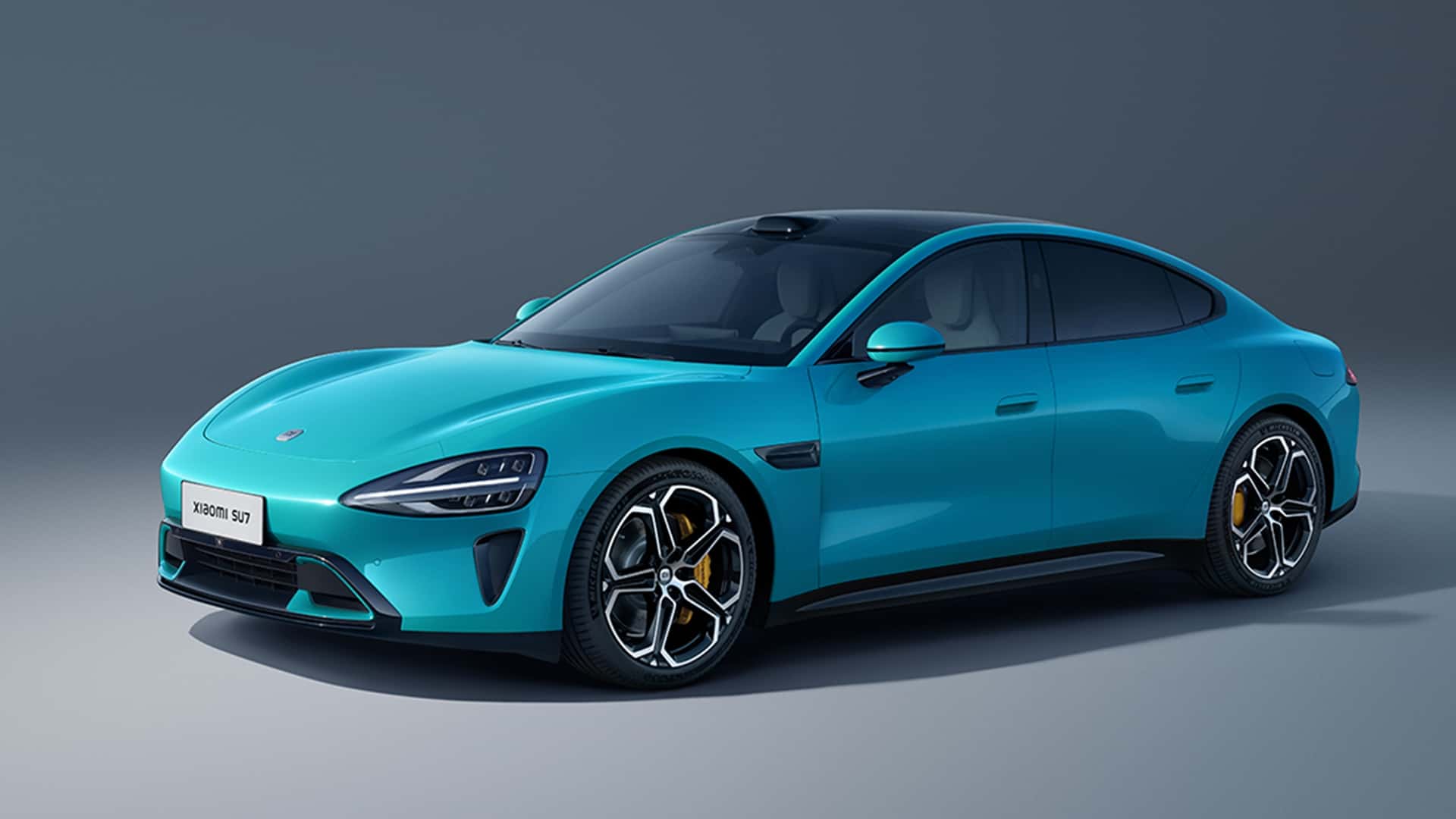
For the time being, it is unclear whether the SU7 will ever reach other markets such as Spain.
In China, people are enthusiastic about the Xiaomi SU7, an electric car that has exceeded all initial sales expectations. Since its launch, the order volume recorded by Xiaomi has already surpassed its annual sales target, to the point that the company has been forced to plan a significant increase in production to meet the growing demand.
But the SU7 stands out not only for its technical specifications or the technological arsenal it integrates, but also for its selling price. It is therefore no surprise that in just 43 days Xiaomi has already delivered more than 10,000 units of this model, with the aim of reaching 100,000 units in total sales in 2024. This is a truly ambitious goal that will lead Xiaomi to double its current production volume.
According to a recent report, the Chinese manufacturer plans to add a second production shift that will increase the plant’s daily operating hours from 8 to 16. The production of Xiaomi’s first electric model takes place at a plant located in the Yizhuang Development Zone in Beijing, which covers an area of 718 thousand square meters. With the expansion of production capacity planned for a second phase in 2025, Xiaomi will be able to manufacture up to 150,000 vehicles per year.
Lei Jun, the current CEO of the Chinese company, has explained that the company is currently capable of producing 40 units of the SU7 every hour. Thus, it is expected that with the addition of a second shift, monthly production will rise to almost 20,000 units. To make this possible, Xiaomi recently began hiring new employees who will form part of the second shift we have already referred to.
The Xiaomi SU7 is a saloon with considerable dimensions: nearly five metres long -4,997 mm-, 1,963 mm wide and 1,455 mm high. It also has a wheelbase of 3,000 mm and offers 517 litres of boot space, plus a front boot with an additional 105 litres of cargo capacity. It is available in three versions: Standard, Pro and Max.
Which one would you choose?
The standard SU7 variant has a single powertrain delivering 220 kW and 400 Nm of torque, accelerating from 0 to 100 km/h in 5.28 seconds. Its top speed is electronically limited to 210 km/h. On the other hand, the 73.6 kWh LFP battery pack it features allows charging from 10 to 80 percent in just 25 minutes; its range is 700 km under the overly optimistic Chinese CLTC homologation cycle.
The SU7 Pro uses the same powertrain but improves with its 94.3 kWh Shenxing battery pack produced by CATL. This battery pack requires only 30 minutes to charge from 10 to 80%, also providing a greater range of 830 km according to the CLTC homologation cycle. Although the top speed remains 210 km/h, this version’s 0 to 100 km/h acceleration drops to 5.7 seconds.
Finally, the SU7 Max adds a second electric motor, offering a combined output of 495 kW and 838 Nm of torque. In this case, 0 to 100 km/h acceleration is 2.78 seconds, and its top speed rises to 265 km/h. The two motors it integrates are powered by a 101 kWh NMC battery pack from CATL, called Qilin, which can charge from 10 to 80% in just 19 minutes and provides a range of 800 km when fully charged.
The price of the Xiaomi SU7 in its standard version is 215,900 yuan -approximately 27,500 euros-. The Pro variant is priced at 245,900 yuan -around 31 thousand euros-. While the Max version costs 299,900 yuan -approximately 38 thousand euros-. For the time being, Chinese media assure that Xiaomi has no intention of selling the SU7 outside China in the next three years. However, a new electric SUV could debut at the end of 2024.


 Kia offers an electric range of 10 models, 50 versions and 400 possible combinations
 The seven finalists for the 2027 European Car of the Year (COTY) are exclusively electric
 Peugeot E-208 GTi: a battery-powered toy that revives the spirit of the 1980s sports cars
Deja un comentario