Audi Q7 4.2 V8 TDI 340 CV, road test (Exterior design, interior and finishes)
 Diego G. Moreira
5 September 2012
4 min.
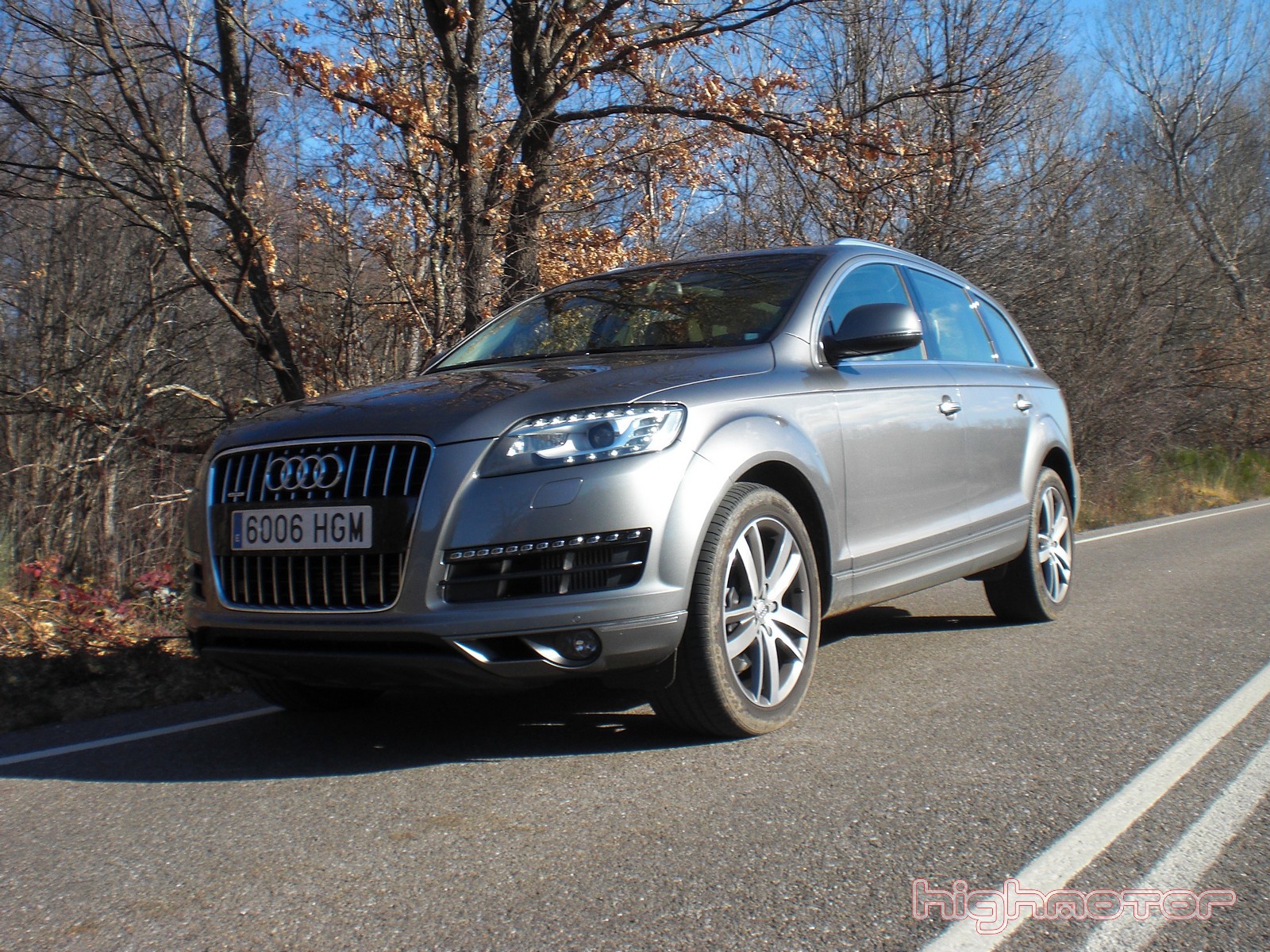
Second part of the road test of the Audi Q7. In this section we discuss the exterior design, finishes and interior space.
We continue with the Audi Q7, our protagonist during these days in the testing section. It is the largest Audi in every sense, only the Audi A8 overshadows it in size. But the Q7 also offers an extra advantage for those looking for space, since it can be equipped with seven seats.
Precisely, the exterior design, interior finishes, space and liveability section will be the topic of this second part of the road test. A few days ago, in the first part, we discussed its powerful 4.2 V8 TDI engine producing 340 CV, as well as its handling and consumption.
Exterior design
In 2006 a very distinctive SUV was launched for Audi. It was the brand’s first foray into this segment, and it would be the model that paved the way for the later Q5 and Q3. Since then, the changes to the Audi Q7 in terms of design have been minor, keeping its look practically unchanged.
Currently, the headlights offer the option of LED daytime running lights, the front indicators or the rear lights, and a few other distinguishing elements, but these are always minor details that keep the Audi Q7 almost completely intact on the outside.
The aesthetic differences between the base trim (Advance) and the two higher levels (Ambition and Ambiente) are noteworthy. For example, the LED daytime running lights surrounding the front headlights are exclusive to the two higher trim levels, as are the LED front indicators.
Otherwise, we have an SUV five metres long, with considerable dimensions (over 2 metres wide) and rugged capabilities that are always limited by those dimensions. We must not forget that it is an SUV. Our test unit had height- and firmness-adjustable suspension, and all-wheel drive is standard, but even so the tyres are not all-terrain and it doesn’t stand out for its off-road abilities.
Another element our Q7 featured, and it is interesting, was the double sunroof, which lets a lot of light into the cabin.
Interior design, liveability and build quality
This section is the strong point of the Audi Q7, one of the reasons it can be an interesting purchase, and where it leaves other similar alternatives in a worse position. The Audi Q7 is spacious even with seven seats; compared with other seven-seat luxury SUVs, it still enjoys greater roominess.
But first let’s start at the front, with the dashboard and space in the front seats. The dashboard has a typically Audi design and high-quality finish. The front seats can be described more as armchairs, with excellent body support and an elevated driving position.
The rear seats can comfortably accommodate three adults, while two will enjoy great comfort. The centre seat is firmer than the side seats and this is noticeable when travelling; it is also not very versatile because of the raised central tunnel.
That said, the space in the rear seats is more than ample for feet and head. There are also climate control air vents and, on our unit, even an independent climate regulator.
The second-row seats slide to gain space for the third row or the second row itself, which adds greater practicality inside.
The third row is easy to access; it has two sizeable seats, and head room is adequate if you are no taller than 1.75 metres. Access is what I liked most about the third row of seats, and they even have air vents, courtesy lights and cup holders.
If we compare the Q7 with the BMW X5 that we tested a few months ago, in the third row we can clearly see that the Audi is roomier and has better access.
Storage spaces and boot
In terms of storage spaces and room, the Q7 feels like an MPV. Because besides being spacious, it also has a good number of interior storage compartments. In the doors, in the rear doors and even in the third row of seats.
The boot is of regular dimensions and has two nets to hold our items or to separate the load. It also has a small compartment under the shelf for storing extra things.
Its 775-litre capacity attests to the size of the boot, ideal for those seeking space. Even with the third row of seats folded up, there is room in the boot for small objects.
In the third part we will discuss equipment, including safety features, as well as the price and overall assessment of the model.
Photos | Diego G. Moreira and Test Team


 The seven finalists for the 2027 European Car of the Year (COTY) are exclusively electric
 Peugeot E-208 GTi: a battery-powered toy that revives the spirit of the 1980s sports cars
 New Lexus ES: luxury grows and goes electric
Deja un comentario