BMW iX1 Electric Cars Comparisons SUV
BMW iX1 vs Volvo EX40: the compact premium electric SUV that best suits everyday life
 Iván Navarro
16 June 2026
5 min.
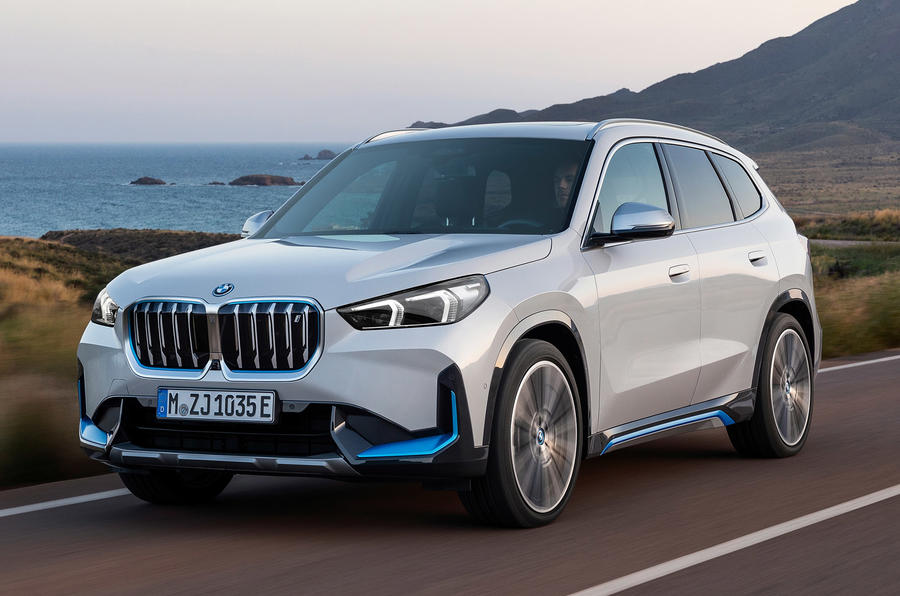
We compare the BMW iX1 eDrive20 and the Volvo EX40 Single Motor in range, charging, technology and price to decide which compact premium electric SUV suits you best.
The compact premium electric SUV segment has become the real battlefield in Spain. This is where the buyer lives who wants to go electric without giving up finish, equipment and a brand with real standing, but who is also not willing to pay what an EQE costs. In this bracket, two models stand out for opposite reasons: the BMW iX1 eDrive20 and the Volvo EX40 Single Motor. One is Munich’s most recent and rational bet; the other is the mature evolution of the former XC40 Recharge, now with rear-wheel drive and noticeably improved efficiency.
Two premium philosophies for the same segment
The iX1 is built on BMW’s FAAR platform, shared with the combustion X1, and this shows in its handling, driving position and interior usability. The EX40, by contrast, is based on Geely-Volvo’s CMA architecture, a platform that already has real-world experience and which, in its latest update, has made a significant leap in range thanks to the switch to rear-wheel propulsion.
The philosophy also differs. BMW offers a car with more of a driver’s focus, with precise steering and firmly tuned suspension. Volvo goes for silent comfort, Scandinavian styling and native Google digital integration that remains a benchmark.
BMW iX1 eDrive20 from approximately €49,800
The entry version of the iX1 uses a single front motor of 204 CV, powered by a 65.2 kWh net battery. It is rated at around 470 km WLTP, a very competitive figure considering it achieves real-world consumption close to 16-17 kWh/100 km in mixed driving.
| Power kW | Power CV | Top speed | Range | Consumption | Label | Fuel |
|---|---|---|---|---|---|---|
| 150 kW | 204 CV | 170 km/h | ≈470 km | ≈16.8 kWh/100 km | 0 emissions | Electric |
What it offers in everyday life
DC charging up to 130 kW, which translates to 10-80% in about 29 minutes at a decent fast charger. On AC it accepts 11 kW three-phase. Its boot (490 litres) is among the most usable in the segment, and the flexibility of the rear seats makes it very capable as a family car.
Where it falls short
It has no frunk, the setup is somewhat firm in town, and the iDrive 9 system, based on Android, is powerful but has a learning curve. The price climbs quickly once option packs are added.
Volvo EX40 Single Motor from approximately €47,000
Following the rebranding, the EX40 gains rear-wheel drive with 238 CV and a 70 kWh battery, offering a homologated range of 480 km WLTP. It is the most balanced version of the range: sufficient power, improved efficiency and a more restrained price than its Twin Motor sibling.
| Power kW | Power CV | Top speed | Range | Consumption | Label | Fuel |
|---|---|---|---|---|---|---|
| 175 kW | 238 CV | 180 km/h | ≈480 km | ≈17.5 kWh/100 km | 0 emissions | Electric |
What it offers in everyday life
The switch to rear-wheel drive improves both driving feel and consumption. It charges at up to 200 kW DC, a figure well above the iX1’s, which cuts stops on long trips to about 27 minutes for 10-80%. The multimedia system with integrated Google is among the fastest and most intuitive on the market, with Maps natively planning routes with charging stops.
Where it falls short
The boot (410 litres) is a little tighter, rear legroom is limited for tall adults, and the feel of some plastics in lower areas doesn’t match the price.
Range, consumption and charging: the tiebreaker
On real journeys, the EX40 has the advantage of its larger battery and higher peak DC charging rate. The iX1 makes up ground with slightly lower consumption in town and a more refined, adjustable paddle-based regeneration system.
Interior space and boot
The BMW wins on rear seat room and cargo capacity. The Volvo earns back points with a 31-litre front compartment (frunk) that is very handy for charging cables.
Technology and driver assistance
Both come with full ADAS packages as standard. The semi-autonomous driving assistant of the BMW is somewhat more reliable on motorways; the Volvo’s Pilot Assist is smoother but more conservative.
Summary table and score
| Model | Power | Range | DC charging | Starting price | Score /10 |
|---|---|---|---|---|---|
| BMW iX1 eDrive20 | 204 CV | ≈470 km | 130 kW | ≈€49,800 | 8.6 |
| Volvo EX40 Single Motor | 238 CV | ≈480 km | 200 kW | ≈€47,000 | 8.8 |
Verdict by usage profile
- Urban: the iX1, for its compact dimensions and manoeuvrability.
- Family: the iX1, for its interior space and boot.
- Long-distance driver: the EX40, for its fast charging and range.
Frequently asked questions
Which has more real-world range, the BMW iX1 or the Volvo EX40?
The Volvo EX40 Single Motor is homologated at around 480 km compared with the ≈470 km of the iX1 eDrive20. In real consumption both hover around 17 kWh/100 km, with a slight edge for the BMW in town and the Volvo on the motorway.
Which charges faster at a fast charger?
The EX40 accepts up to 200 kW DC, while the iX1 tops out at 130 kW. On a journey, the Volvo recovers 10-80% in around 27 minutes.
Which is roomier inside?
The BMW iX1 offers more legroom in the rear seats and a 490-litre boot, compared with the EX40’s 410 litres, which the EX40 offsets with a 31-litre front frunk.
Which compact premium electric SUV is the better buy today?
For those who prioritise long trips and fast charging, the Volvo EX40. For those seeking agility, interior space and the BMW network, the iX1 eDrive20 is the most balanced choice.
Technical specifications of this car


 Peugeot E-208 GTi: a battery-powered toy that revives the spirit of the 1980s sports cars
 New Lexus ES: luxury grows and goes electric
 First contact with the Dacia Sandero Hybrid 155: power and efficiency from €19,890
Deja un comentario