Comparison BMW iX3 vs Volvo EX60: which premium electric SUV to choose in 2026
 Óscar Sanz
13 May 2026
7 min.
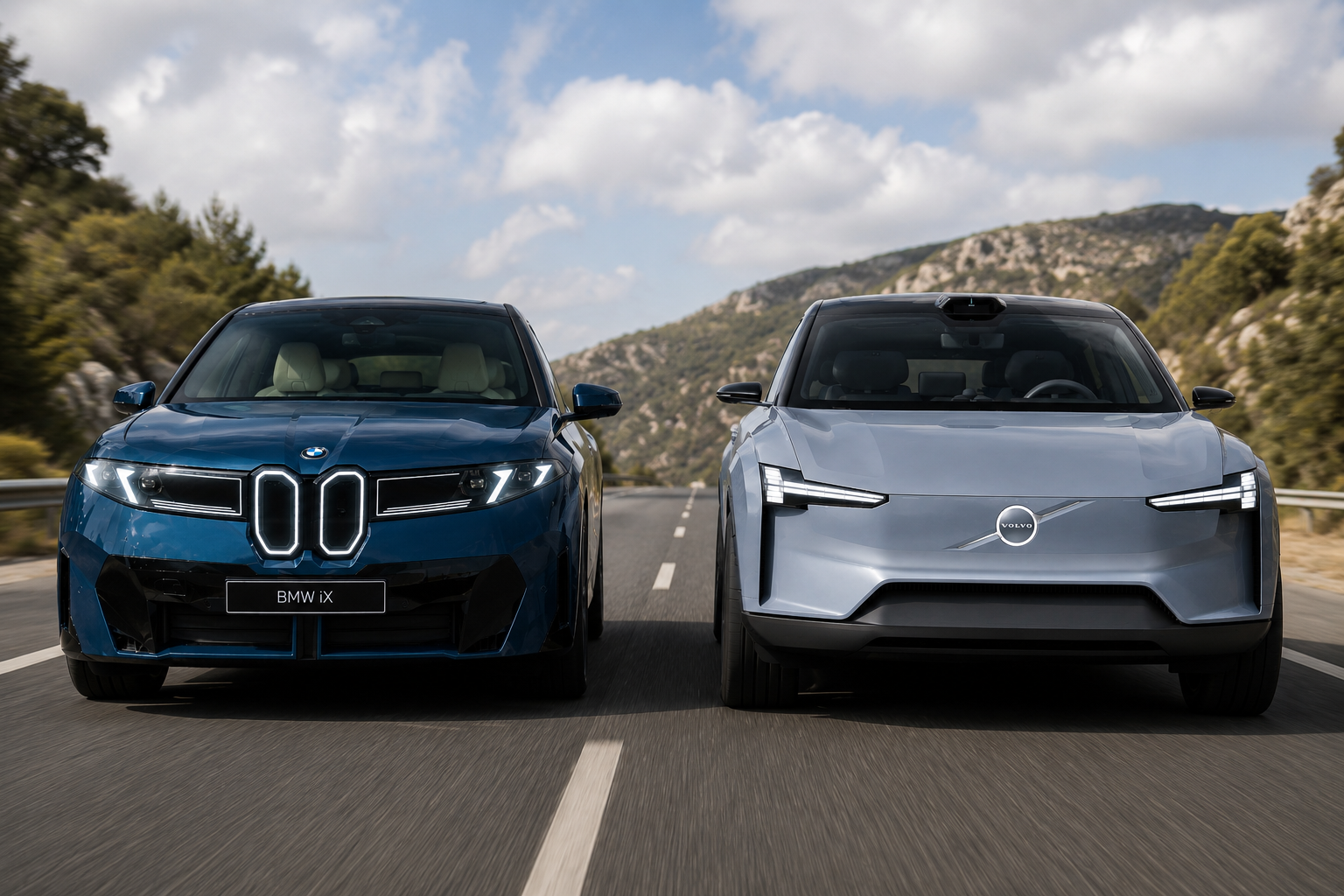
The Volvo stands out for range, safety and ultra-fast charging, while the BMW iX3 excels in real-world motorway efficiency, driving dynamics and interior technology
The Volvo EX60 and the BMW iX3 are two of the most advanced premium electric SUVs of 2026. The Volvo stands out for range, safety and ultra-fast charging, while the BMW iX3 excels in real-world motorway efficiency, driving dynamics and interior technology.
If the goal is to find the best electric SUV for long-distance travel, both are among the market’s benchmarks. However, each interprets the premium concept in a very different way.
BMW iX3 vs Volvo EX60: key differences
— More homologated range → Volvo EX60
— More real-world motorway range → BMW iX3
— Better fast charging → BMW iX3 / Volvo EX60 (very closely matched)
— More preventive safety → Volvo EX60
— More innovative interior → BMW iX3
— Better driving feel → BMW iX3
Two new-generation premium electric SUVs
The BMW iX3 and the Volvo EX60 represent a major leap within the premium electric market. Both have been developed from scratch as electric vehicles and use 800-volt architectures, a key solution for improving efficiency, range and charging speed.
The philosophy, however, is different. The BMW maintains a strong focus on the driving experience and real-world efficiency, while the Volvo is betting on comfort, safety and technology applied to long journeys.
They are two of the most advanced electric SUVs on the European market in 2026.
Volvo EX60: up to 810 km WLTP and a total focus on safety and comfort
The Volvo EX60 is one of the most ambitious electric projects of the Swedish brand. It is built on the new SPA3 platform, designed specifically for the Geely group’s future electric vehicles and prepared to evolve over the next decade.
The range will consist of three versions:
| Version | Battery | Power | WLTP range |
| EX60 P6 | 80 kWh | 374 CV | 620 km |
| EX60 P10 | 91 kWh | 510 CV | 660 km |
| EX60 P12 | 112 kWh | 680 CV | up to 810 km |
The P12 version directly targets the segment leadership in range. The Volvo claims up to 810 km WLTP, a figure that would place it among the electric SUVs with the greatest reach on the market.
Fast charging is another of its major selling points. The EX60 accepts up to 370 kW DC, allowing approximately 340 kilometres of range to be recovered in just 10 minutes and going from 10 to 80% in about 20 minutes. All of this is supported by an 800-volt electrical architecture and a new-generation thermal management system.
Inside, the Volvo keeps its minimalist Scandinavian design but introduces a major technological leap. The new horizontal central screen measures 15.4 inches and runs on an integrated next-generation Google ecosystem. The dual wireless phone charging, the electrochromic roof and a much wider and more configurable central console also stand out.
Interior space improves over the XC60 thanks to a longer wheelbase. The boot offers 523 litres, plus a front compartment of 58 litres for cables and small objects.
Safety remains the great hallmark of the Volvo. The EX60 debuts an adaptive intelligent seatbelt capable of changing its operation depending on the type of impact and the occupant’s build. It also incorporates advanced sensors, cameras, radars and permanent driver monitoring.
The Volvo EX60 is one of the most complete electric SUVs on the market for those seeking range, comfort and safety technology.
BMW iX3: over 500 real-world km on the motorway and a unique technological experience
The 2026 BMW iX3 ushers in the new Neue Klasse electric generation and is one of the most important models in the recent history of the BMW. It measures 4.78 metres, uses an 800-volt architecture and initially arrives in the iX3 50 xDrive version, with 469 CV, all-wheel drive and a starting price of 69,900 euros.
One of its most relevant aspects is the battery. The iX3 uses a 108.7 kWh usable battery, made up of 960 cylindrical cells of new generation. Thanks to it, it is homologated for up to 805 km WLTP.
However, the most important thing is not the homologated figure but the real-world data: it has managed to cover more than 500 real kilometres at motorway speed without needing to recharge.
The BMW iX3 is one of the few electric SUVs capable of exceeding 500 real motorway km.
Fast charging is also among the best on the market. The BMW claims up to 400 kW DC, with charging from 10 to 80% in 21 minutes.
The interior is probably one of the most revolutionary aspects of the car. The iX3 debuts the new BMW Panoramic iDrive system, which replaces the traditional instrument cluster with a horizontal projection at the base of the windscreen. Added to this is a huge 17.9 inch central screen, with very advanced graphics and a clearly more modern interface than in previous BMW models.
The cabin also stands out for its spaciousness. The rear boot offers 520 litres, while under the front bonnet there is another 58 litres. The rear seats are among the roomiest in the segment and sound insulation is especially good on the motorway.
Dynamically it keeps the BMW DNA. It accelerates from 0 to 100 km/h in 4.9 seconds and goes from 80 to 120 km/h in just 2.6 seconds, very impressive figures for an SUV weighing almost 2.4 tonnes. The steering has a particularly precise feel and the suspension strikes a well-judged balance between comfort and stability.
In terms of assistance, the BMW incorporates one of the most advanced driver assistance systems in its category, with lane keeping, level 2 semi-autonomous driving and advanced functions such as gaze-based lane change confirmation in some markets.
The BMW iX3 stands out for real-world efficiency, interior technology and a driving experience clearly more dynamic than most premium electric SUVs.
Range and charging: two benchmarks among premium electric SUVs
On paper, the Volvo EX60 has a slight advantage in maximum homologated range thanks to its 810 km WLTP. The BMW iX3, for its part, claims up to 805 km WLTP, although it particularly stands out for its real-world motorway performance.
In fast charging, both are at the highest level on the market:
— Volvo EX60 → up to 370 kW
— BMW iX3 → up to 400 kW
The practical difference in real use will be minimal, as both allow hundreds of kilometres to be recovered in a few minutes.
Both the EX60 and the iX3 are clearly prepared for long journeys.
Comparison BMW iX3 vs Volvo EX60
| Feature | Volvo EX60 | BMW iX3 |
| Architecture | 800 V | 800 V |
| Power | 374–680 CV | 469 CV |
| Battery | 80–112 kWh | 108.7 kWh |
| WLTP range | up to 810 km | up to 805 km |
| Fast charging | up to 370 kW | up to 400 kW |
| Main screen | 15.4″ | 17.9″ |
| Rear boot | 523 l | 520 l |
| Front boot | 58 l | 58 l |
| Length | 4.80 m | 4.78 m |
| 0-100 km/h | up to 4.6 s | 4.9 s |
| Price from | 64,900 € | 69,900 € |
Which premium electric SUV to choose in 2026
The Volvo EX60 is the best option if you are looking for maximum range, advanced safety and comfortable driving. The BMW iX3, on the other hand, is probably the most interesting electric SUV for those who prioritise real-world motorway efficiency, driving feel and interior technology.
The EX60 is more comfortable and technologically advanced in safety; the iX3 is more dynamic and efficient in real-world use.
BMW iX3 vs Volvo EX60
Which has more range?
The Volvo EX60 claims up to 810 km WLTP and the BMW iX3 up to 805 km WLTP.
Which charges faster?
The BMW claims up to 400 kW for the iX3 and the Volvo up to 370 kW for the EX60.
Which is better for travelling?
Both are among the best electric SUVs for travelling, although the BMW iX3 has demonstrated more than 500 real km on the motorway.
Which has the most technological interior?
The BMW iX3, thanks to the Panoramic iDrive system and its 17.9-inch screen.
Which is safer?
The Volvo EX60, due to its long-standing focus on preventive safety and advanced assistance systems.
Expert opinion
The comparison between the BMW iX3 and the Volvo EX60 pits two very different ways of understanding the premium electric SUV against each other.
The BMW iX3 impresses with real-world efficiency, motorway range and a very advanced technological experience. The Volvo EX60, for its part, aims to become an absolute benchmark for range, fast charging and safety.
If you are looking for the most dynamic and efficient premium electric SUV for travelling, the BMW iX3 is a reference. If you prioritise comfort, maximum range and safety, the Volvo EX60 is probably one of the most complete models of 2026.


 Peugeot E-208 GTi: a battery-powered toy that revives the spirit of the 1980s sports cars
 New Lexus ES: luxury grows and goes electric
 First contact with the Dacia Sandero Hybrid 155: power and efficiency from €19,890
Deja un comentario