The official capacity of the Tesla Semi battery has been revealed
 Javier Cantagalli
13 May 2026
2 min.
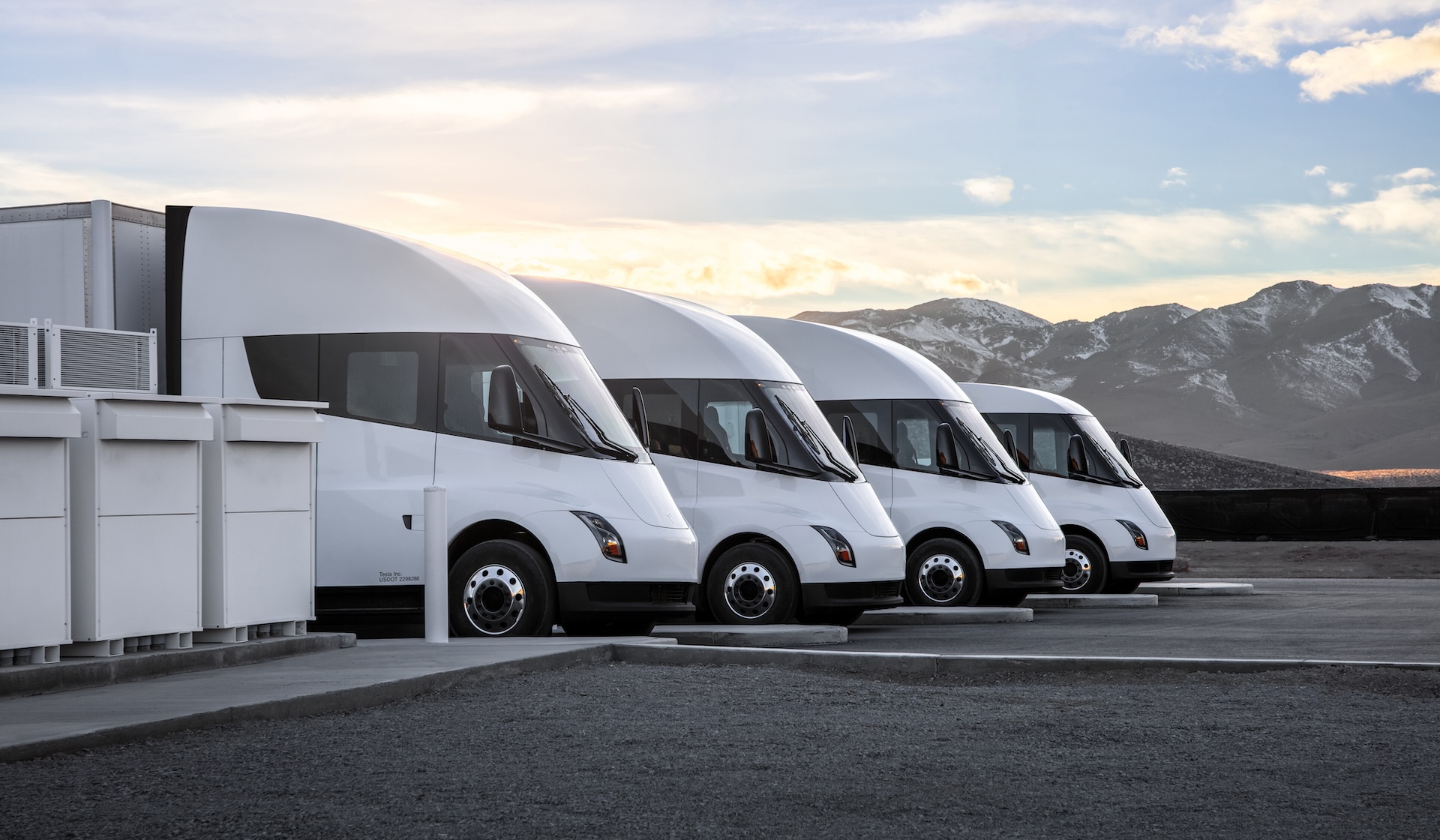
Thanks to economies of scale, the Tesla Semi is expected to be highly competitive in price: around $290,000 for the extended-range version and $260,000 for the standard one.
As we already told you here on HighMotor, Tesla recently started series production of its Semi electric truck at the Nevada Gigafactory. An important step forward for the North American company which, despite this, has kept some of its technical specifications secret. Among them, the capacity of its battery.
An official document from the California Air Resources Board (CARB) has now finally revealed the battery pack capacity of both versions of the Tesla Semi.
According to the report, the extended-range version uses three battery packs, with a total capacity of 822 kWh. Meanwhile, the standard-range version has two battery packs instead of three, and a total capacity of 548 kWh. Tesla has already begun delivering the first units built in Nevada and is advancing the rollout of its Megacharger network, initially for its own use, while receiving significant orders from American customers.
Will the Tesla Semi really be able to deliver a range of 500 miles per charge?
Given these figures, the target announced by Tesla of 500 miles -about 805 km- of range for the extended-range version raises some doubts. Although Elon Musk suggested a few years ago that the long-range Tesla Semi could use several battery packs with a combined capacity of around 900 kWh, the confirmed figure of 822 kWh, combined with an estimated consumption of 1.7 kWh per mile, would theoretically yield about 483 miles. The Standard version, with 548 kWh, comes closer to the promised 325 miles (523 km). In any case, it should be noted that the production model may turn out to be more efficient than the initial estimates, which would bring the maximum range of the extended-range Semi closer to the promised 500 miles.
It should also be noted that, in terms of weight, the standard-range version of the Semi has an empty weight of less than 9.07 tonnes, about 1,360 kg less than the extended-range version -10.43 tonnes-. Both versions can reach a maximum gross vehicle weight of 37.2 tonnes in the United States.
With all these figures on the table, we can now say that the Tesla Semi clearly outperforms its electric Class 8 rivals on sale in the United States. To put it in context, the Freightliner eCascadia offers 550 kWh and 370 km of range, while the Volvo VNR Electric reaches 564 kWh and 442 km. Even the Nikola Tre BEV falls short of the 500 miles promised by Tesla.


 Peugeot E-208 GTi: a battery-powered toy that revives the spirit of the 1980s sports cars
 New Lexus ES: luxury grows and goes electric
 First contact with the Dacia Sandero Hybrid 155: power and efficiency from €19,890
Deja un comentario