Diesel or hydrogen? This German company converts diesel engines to run on clean energy
 Victor Alós Yus @sepelaci
26 April 2022
2 min.
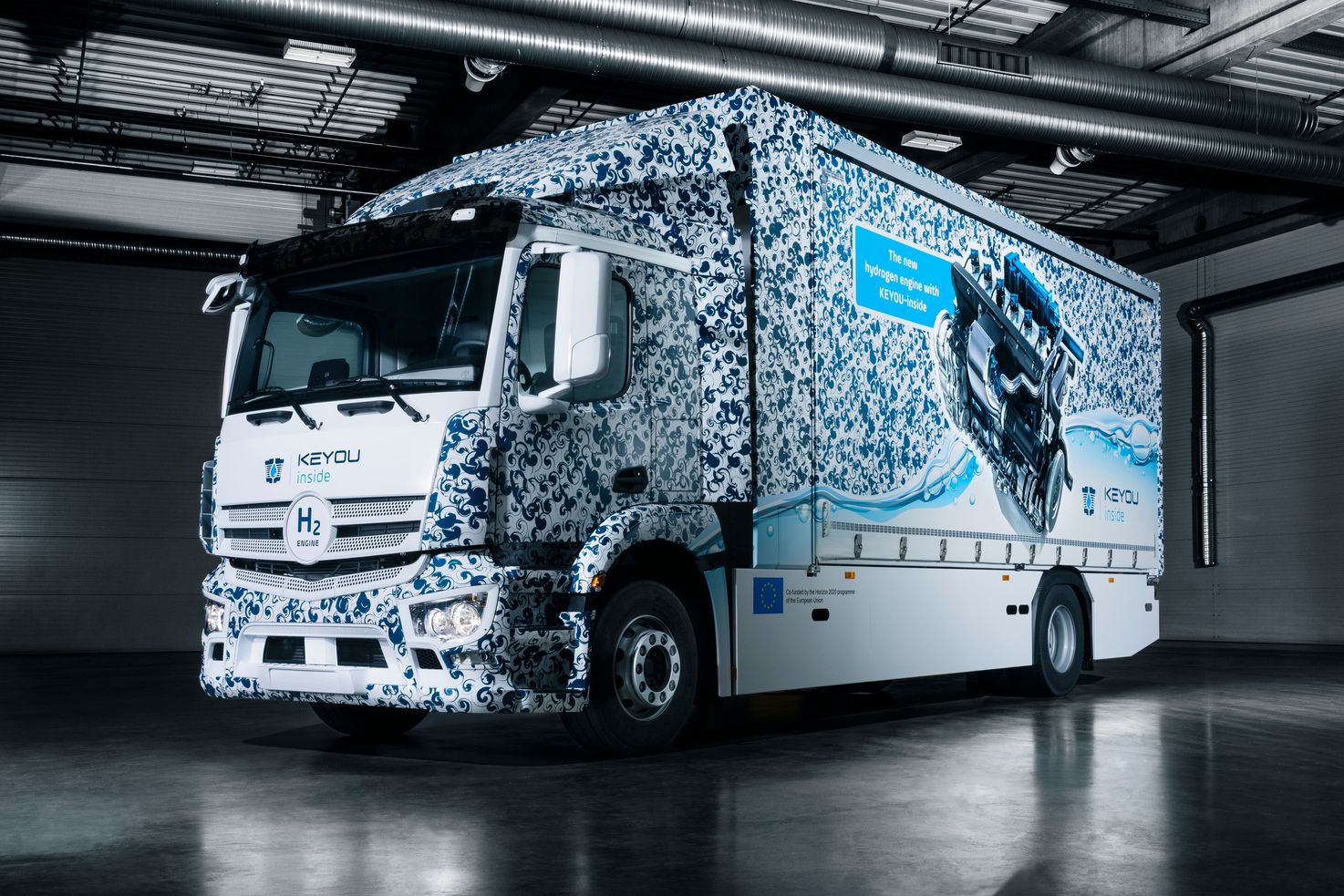
The German company Keyou offers several diesel engine modifications so that they run on hydrogen, turning them into zero-emission vehicles.
For some time now, diesel engines have been under pressure from authorities, who consider them unsuitable for use in the city. They are believed to be too polluting, and attempts are being made to remove them from traffic. Although we already know this is not the case, and petrol engines are considerably more polluting, thanks to all the elements fitted to diesel cars, there are companies working to turn them into more sustainable vehicles.
The German company Keyou is working to convert diesel vehicles into vehicles that run on hydrogen. To do this, they modify the diesel engine so that it can run on hydrogen, a fuel that produces no emissions other than water vapour. The vehicles that have undergone this transformation include a 12-metre bus and an 18-tonne truck.
A company that pursues sustainable mobility
Keyou is led by a former employee of BMW who worked with the brand to achieve hydrogen mobility. It should be remembered that engineers at the German brand managed to make several units of the BMW 7 Series e65 run, using hydrogen to power the V12 engine, which delivered 265 CV, a lower output than it produces with diesel.
Hydrogen can be used to produce electricity and drive an electric motor, but also as a fuel. This is an alternative currently being used in several compact models, and the company is even working to present a car that uses this sustainable system within a few weeks.
Instead of using the electrical energy generated by the chemical reaction of hydrogen to power an electric motor, the 7.8-litre engine used in these two heavy vehicles has been modified. The output with hydrogen is 272 CV, and real-world traffic trials are expected to begin soon. Its range is expected to be 500 kilometres, with a useful life of 700,000 kilometres.
The use of hydrogen as a fuel allows it to be used normally, but without polluting emissions. What matters is that the hydrogen is obtained through sustainable methods, so that its environmental footprint is completely neutral.
<<
The German company Keyou offers several diesel engine modifications so that they run on hydrogen, turning them into zero-emission vehicles.
<<
For some time now, diesel engines have been under pressure from authorities, who consider them unsuitable for use in the city. They are believed to be too polluting, and attempts are being made to remove them from traffic. Although we already know this is not the case, and petrol engines are considerably more polluting, thanks to all the elements fitted to diesel cars, there are companies working to turn them into more sustainable vehicles.
The German company Keyou is working to convert diesel vehicles into vehicles that run on hydrogen. To do this, they modify the diesel engine so that it can run on hydrogen, a fuel that produces no emissions other than water vapour. The vehicles that have undergone this transformation include a 12-metre bus and an 18-tonne truck.
A company that pursues sustainable mobility
Keyou is led by a former employee of BMW who worked with the brand to achieve hydrogen mobility. It should be remembered that engineers at the German brand managed to make several units of the BMW 7 Series e65 run, using hydrogen to power the V12 engine, which delivered 265 CV, a lower output than it produces with diesel.
Hydrogen can be used to produce electricity and drive an electric motor, but also as a fuel. This is an alternative currently being used in several compact models, and the company is even working to present a car that uses this sustainable system within a few weeks.
Instead of using the electrical energy generated by the chemical reaction of hydrogen to power an electric motor, the 7.8-litre engine used in these two heavy vehicles has been modified. The output with hydrogen is 272 CV, and real-world traffic trials are expected to begin soon. Its range is expected to be 500 kilometres, with a useful life of 700,000 kilometres.
The use of hydrogen as a fuel allows it to be used normally, but without polluting emissions. What matters is that the hydrogen is obtained through sustainable methods, so that its environmental footprint is completely neutral.


 Peugeot E-208 GTi: a battery-powered toy that revives the spirit of the 1980s sports cars
 New Lexus ES: luxury grows and goes electric
 First contact with the Dacia Sandero Hybrid 155: power and efficiency from €19,890
Deja un comentario