Do electric vehicles really need more range?
 Guillermo Lopez
27 September 2018
6 min.
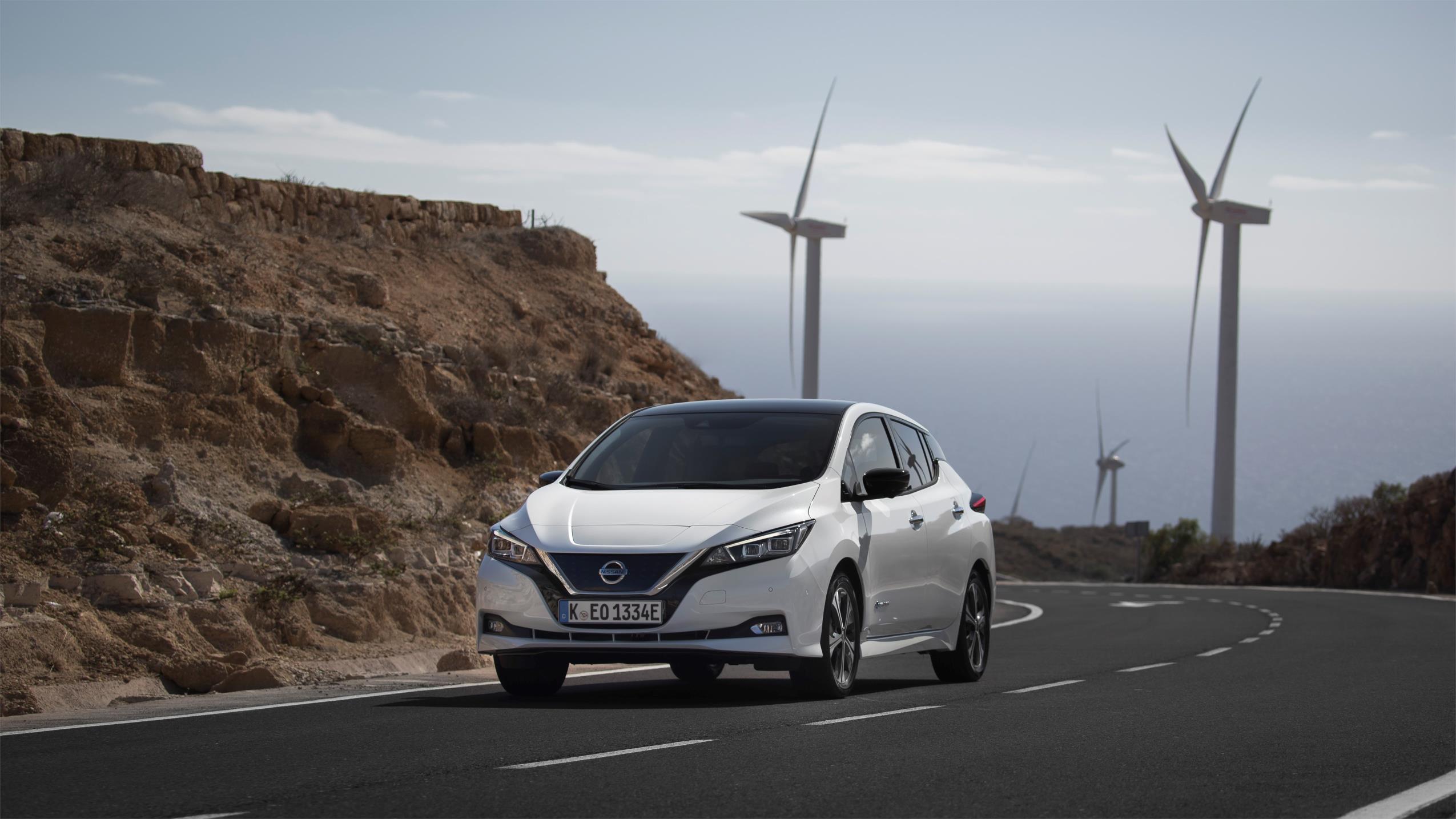
Today’s electric cars offer ranges from 150 to 250 km for the older models up to more than 400 km for the most modern ones.
According to all analysts, the “limited range” and the “poor and practically non-existent network of public charging points on streets and roads” are the main obstacle to the expansion of the use of fully electric vehicles in our society.
The older electric cars offered ranges of between 100 and 150 km, a distance that quickly grew to around 200 km, which is what the vast majority of models currently on the market offer. Tesla quickly surprised with its almost 400 km (the Model X offers 381.4 km) of total range, a figure that most of its rivals now strive to match, if not surpass, as they have recently done with the Jaguar I-PACE (386.2 km) or the new Mercedes EQC 4MATIC (450 km). The question we should now ask ourselves is: is more range really necessary for an electric vehicle?
New mobility depends on achieving the greatest efficiency in the use of technology applied to the car, but not exclusively. It also depends on using cars in the most efficient way possible. Is it efficient to use an electric vehicle to cover distances of more than 450 kilometres?
For many car users, the most modern electric cars can be a real disappointment, since their range “barely exceeds 400 km”. That is a mistake. Users who want to drive electric vehicles, mainly for reasons of image and ecology, must not only think about changing their car, they must also think about changing the way they use the car.
Obviously, when you buy an electric vehicle it is normal to worry about how far it can go, how far you can travel without needing to recharge. That is why, compared with the ranges offered by petrol, diesel or gas vehicles, pure electric cars continue to disappoint. And here comes the big question: does an electric vehicle really need more than 400 km of range? The answer is very simple: no. Let us reason it through.
Drivers do not use their car for more than 2 hours a day
On average, vehicles are parked for about 85 per cent of their useful life, and that is being generous, since some studies indicate that this figure is even higher. This means that very few people use their car for more than two hours a day. With such a utilisation rate, and taking into account that the maximum permitted speed would give us a total range of 240 km on open roads, is more than 400 km really necessary?
Continuing with road use, current regulations indicate that it is advisable to make a stop of about 20 to 30 minutes every two hours of driving. That is the time to have a coffee and use the toilet at a roadside restaurant or a petrol station. In half an hour of connection to the grid, modern electric cars can recharge up to 80 per cent of the total capacity of their batteries. If the battery were completely empty, this would mean adding enough charge for 320 km more, but since by the time we stop to rest we would still have enough charge to cover 160 km, what we would achieve by doing so is having the initial 400 km of range available to continue on our way.
And if instead of every two hours we stopped every 3 hours, that is, every 360 km (a little more than the distance separating Madrid from cities such as Valencia or Zaragoza), with half an hour of recharging we could have 360 additional kilometres of range (the 320 km mentioned plus the 40 km that the remaining charge we had left would still provide), which means that with a single half-hour stop to rest and have a snack we could cover distances of 680 kilometres, enough for journeys such as Madrid–Huelva, Barcelona–Madrid, A Coruña–Madrid, Alicante–Barcelona, Zaragoza–Seville, Badajoz–Zaragoza, Vigo–Zaragoza, Málaga–Zaragoza or Bilbao–Córdoba, to name just a few.
In cities, taxi drivers and private hire drivers do not need more than 350 kilometres of range either
As for the urban use of the electric car, let us look for example at the modern services offered by private hire platforms. A Cabify or Uber car that is “patrolling” the city 24 hours a day, as “El Fary” would say, does not cover more than 700 km a day, about 350 km per driver shift. In other words, they use up a tank of fuel roughly every two days. And if we focus even more closely on the car-sharing services that use electric vehicles to provide their service (Car2go, Emov, Zity) in cities such as Madrid, their 500 cars return to their depots once every two days to recharge their batteries, whose charge gives them a maximum range of around 200 km in the best case.
In the first case, the private hire cars are in operation 24 hours a day, with hardly any stops for the engine. In the second, the car-sharing vehicles cover only about 40 km a day on average.
For those who live in the city centre, the current range of 200 to 250 km offered by electric cars is more than sufficient for their daily activities, as long as they remember to plug their car in every one or two days. Those who live outside the city and commute to work every day also have more than enough with these figures, although for greater peace of mind it is more advisable to opt for the most modern electric cars, vehicles with up to 400 km of range, which are equally recommended for those who travel around the outskirts of large cities and for those who travel long distances.
Providing greater range for electric cars requires fitting them with larger batteries and therefore adding more weight to the cars, which also has a noticeable effect on their consumption, which is precisely what needs to be addressed in order to give the car greater range. It is a vicious circle that prevents greater efficiency from being achieved, at least for the time being with current technology.
The current problem lies in the existing charging network, not in the range
The real problem with electric cars in becoming popular is therefore the number of charging stations open to the public (not all users have a private garage where they can charge) and not so much the range of the vehicles, which, as demonstrated, is more than sufficient to guarantee their daily use. As long as that does not change, the use of pure electric cars will hardly spread in the market.
And on the other hand there is the way of driving an electric car, since, as with vehicles with combustion engines, their consumption depends to a large extent on who is pressing the pedal and how they do it. But we will look at that another time.


 Peugeot E-208 GTi: a battery-powered toy that revives the spirit of the 1980s sports cars
 New Lexus ES: luxury grows and goes electric
 First contact with the Dacia Sandero Hybrid 155: power and efficiency from €19,890
Deja un comentario