Fering Pioneer, the plug-in hybrid that promises a range of 7,000 kilometres
 Victor Alós Yus @sepelaci
5 October 2021
3 min.
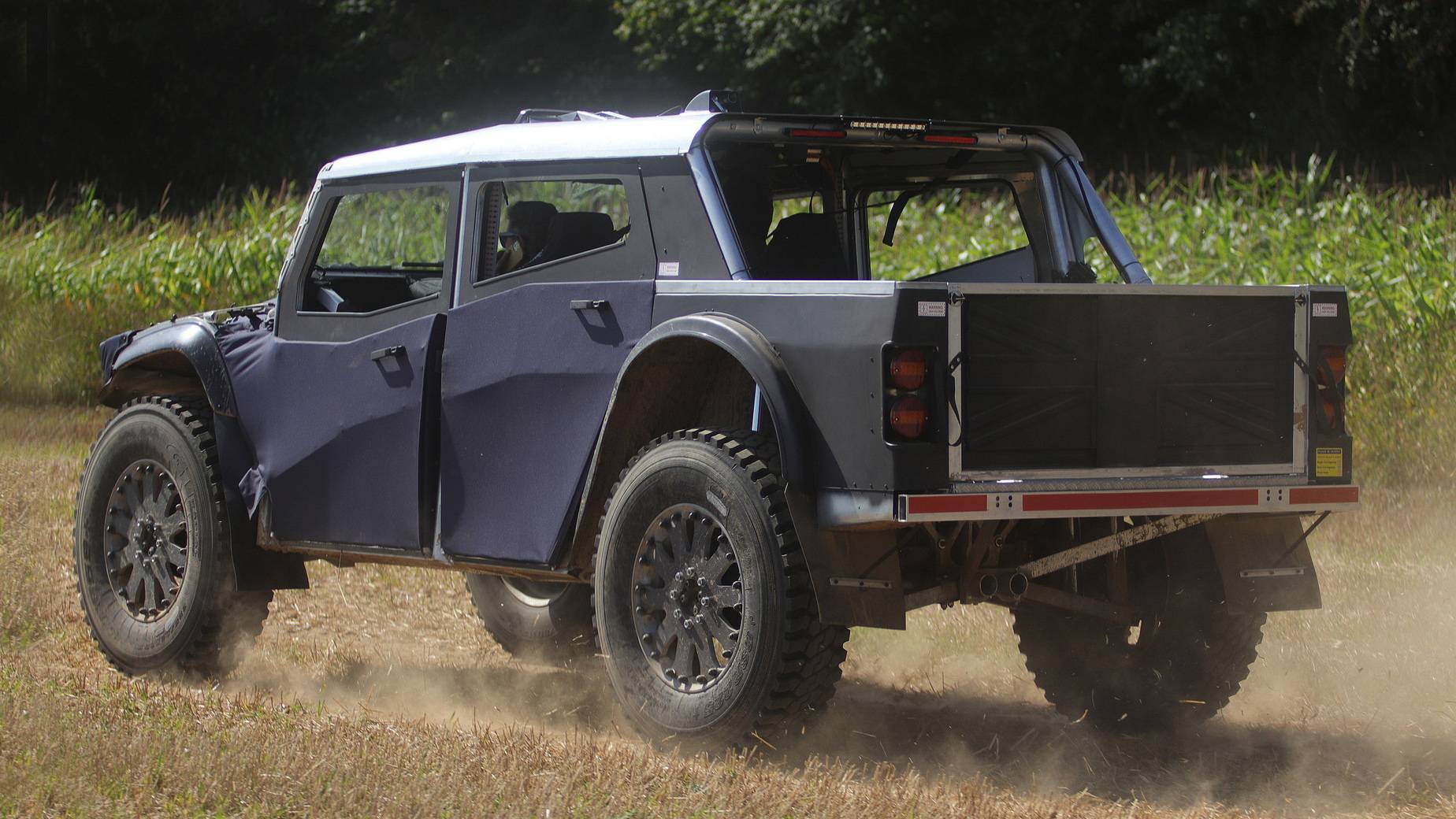
This off-roader promises up to 7,000 kilometres of range, so it can tackle any terrain without trouble thanks to its hybrid drivetrain.
Plug-in hybrid models have the advantage that they can run on the combustion engine and also on the electric motor. This allows them to have good range, which usually delivers a good number of kilometres on a full tank and a fully charged battery. But the Fering Pioneer goes a step further and aims to offer a range that is surprising: this off-road pick-up promises 7,000 kilometres of range on a full charge.
Yes, we have not made a mistake. This is, at least, what the company assures us this off-roader, created to “travel the world with minimal environmental impact“, in its own words, will be able to cover. The trick of this vehicle is partly its chassis. It is a tubular aluminium structure that greatly reduces weight. It is a vehicle that weighs only 1,500 kg, so its efficiency is very high.
High-strength canvas body
Another element that helps it achieve such a light weight is its body. It is a high-strength body… but made of canvas. In fact, it is a fabric similar to the one used in mountain boots, so it has quite high resistance. If it gets damaged, it can be replaced simply and, above all, cheaply, which favours its use for this purpose.
It is a very insulating material, safe and resistant to bad weather. It is not very good at protecting against impacts, but that role is fulfilled by the chassis. In any case, it is a good solution for this type of vehicle, which will have the chance to prove whether it is as practical as the brand claims.
A range of 7,000 kilometres
The range figure the brand offers for this off-roader surprises us. No more and no less than 7,000 kilometres. The drivetrain consists of two electric motors, one mounted on each axle, and an 800 cc combustion engine that works as a generator feeding the lithium titanate oxide batteries.
The batteries cannot store much energy, but this limited capacity is offset by the power generated by the combustion unit, which runs on biodiesel. With these two electric motors, a torque of 600 Nm is achieved, enough to move across any terrain without much trouble.
The lithium titanate oxide batteries offer good performance in adverse conditions, especially at very low temperatures, so this could be a good solution with a long potential range. For now, this model is expected to enter production from 2022. The price is not yet known, but we are eager to see it in action.


 Peugeot E-208 GTi: a battery-powered toy that revives the spirit of the 1980s sports cars
 New Lexus ES: luxury grows and goes electric
 First contact with the Dacia Sandero Hybrid 155: power and efficiency from €19,890
Deja un comentario