Audi e-tron Elroq EV5 KIA Macan Porsche Q6 e-tron Skoda Electric Cars Buying Guides SUV
How to Choose an Electric SUV with Fast Charging in 2026: Peak Power, Charging Curve and Real-World 10-80% Time
 Iván Navarro
12 November 2026
8 min.
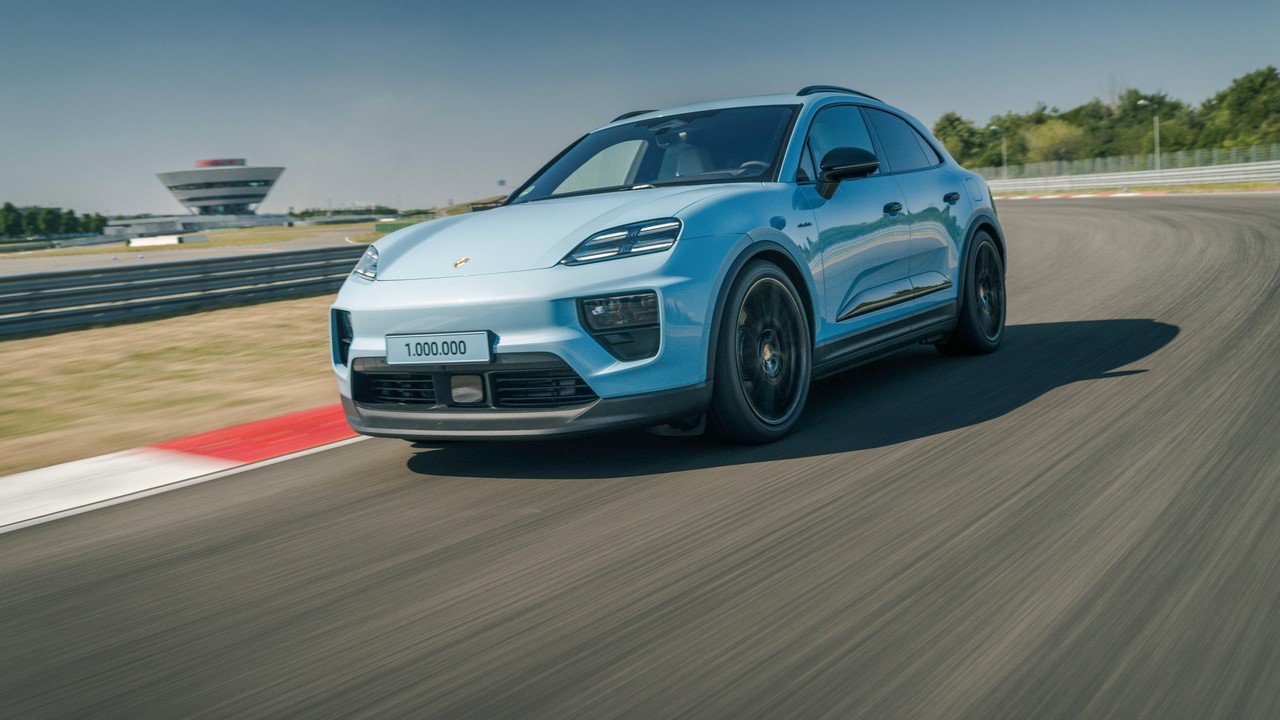
A dealership will tell you that its electric SUV “charges at 270 kW”. That’s true. For ninety seconds. Then the curve drops, the charger overheats or cools too much, and the real time you spend stopped on the motorway bears little resemblance to the brochure. In 2026, with most brands already offering 800V architectures somewhere in their range, peak power has become the most quoted and least useful figure on the entire spec sheet.
This guide takes the opposite route to the usual one. We don’t ask how many kW a car can take in the best second of its life. We ask how long it really takes to go from 10% to 80% battery, which is the window you actually use on a trip from Madrid to Valencia with a stop at a service area.
Peak power vs. charging curve: the marketing trap
Peak power is a laboratory number, almost a fairground figure. It is reached with the battery at an optimal temperature, at a low state of charge and for a very short window before the electronics start protecting the cells. What really matters —and what almost no advertisement mentions— is the curve: how that power behaves over the course of the minutes.
Two cars can advertise “250 kW” and one needs 18 minutes for 10-80% while the other needs 32. The difference isn’t in the peak, it’s in how long the car stays close to it. An electric SUV that sustains 200 kW for ten minutes is, in practice, much faster than another that touches 270 kW for ninety seconds and then collapses to 90 kW.
What real-world 10-80% time is and why you should look at it before the kW
The 10-80% figure is the metric serious test benches use and the one you should ask the seller for, even if they don’t always have it to hand. It represents the stretch where the car accepts current most steadily, avoiding both the slow start below 10% and the brutal slowdown that begins past 80%, when the system protects the battery from degradation.
An electric SUV that clocks 18-22 minutes over that stretch gets you back on the road in the time it takes to enjoy a coffee in peace. One that needs 35-40 minutes forces you to grab something to eat, look at your phone and, to top it off, feel the journey stretching for no reason.
400V vs 800V architecture: the technical basis behind the difference
Here is the root of the matter. An 800V architecture delivers the same power with less current, which reduces the heat generated in cables and connectors and allows high powers to be sustained for longer without the electronics having to throttle back to protect themselves. It’s not magic, it’s electrical resistance physics.
That doesn’t mean 400V is finished. Platforms such as the MEB from Volkswagen, used in the Skoda Elroq, still run at 400V and achieve decent charging curves thanks to well-calibrated thermal management. But for charging times below 20 minutes consistently, 800V —now present in the Porsche, Audi or XPENG— makes a difference you notice with a stopwatch in hand, not just on paper.
Battery preconditioning: the invisible step that changes real minutes
Almost nobody activates it and it is probably the factor that saves the most time without changing car. Preconditioning heats or cools the battery before you reach the charger, so the cells are within their optimal temperature range the moment you plug in. Without it, an electric SUV can spend several extra minutes just “warming up” before reaching its real power.
Most built-in navigation systems activate preconditioning automatically when you set a fast charger as the destination. The problem is that many drivers switch that function off without knowing it, or simply don’t use the car’s navigation system. Minutes are lost there which are later blamed on the car rather than on the habit.
Thermal management: why the curve holds up or collapses
A properly sized liquid cooling system is the difference between an SUV that maintains 150 kW for fifteen minutes straight and another that sustains it for only three before plunging. There are no shortcuts here: it shows in the quality of the components, the size of the heat exchanger and how the software manages power depending on outside temperature. A car tested in winter in Norway and in summer in Seville, charging equally well in both cases, is the one that has really done its homework.
The electric SUVs with the best real-world fast charging in Spain in 2026
Kia EV5 — from €46,070
On the E-GMP platform, at 400V, the EV5 prioritises curve stability over a spectacular peak. In the head-to-head we analysed between the Kia EV5 and the Skoda Elroq, the Korean car achieves 10-80% times of around 28-30 minutes, modest but consistent even with a cold battery.
| Power | Range | Label | Fuel |
|---|---|---|---|
| 160 kW (218 CV) | up to 530 km | Zero | Electric |
Skoda Elroq — from €38,390
The Elroq squeezes the 400V of the Volkswagen group to the maximum. It won’t frighten anyone with peak figures, but its thermal management lets it sustain charging powers that place it close to the EV5 in real time, at a more aggressive entry price.
| Power | Range | Label | Fuel |
|---|---|---|---|
| 125 kW (170 CV) | up to 580 km | Zero | Electric |
Porsche Macan Electric — from €83,300
Here the 800V of the PPE platform really shows. In the comparison between the Porsche Macan Electric and the Audi Q6 e-tron it became clear that the Macan sustains powers above 200 kW for a good part of the curve, with 10-80% hovering around 21 minutes. It is fast, yes, but the entry price puts it out of reach for much of the public looking for exactly this.
| Power | Range | Label | Fuel |
|---|---|---|---|
| 300 kW (408 CV) | up to 613 km | Zero | Electric |
Audi Q6 e-tron — from €66,370
A platform sibling of the Macan, the Q6 e-tron shares the same 800V architecture with a body more oriented towards families. The curve is practically identical, with similar 10-80% times and a somewhat greater range thanks to a more generous battery pack.
| Power | Range | Label | Fuel |
|---|---|---|---|
| up to 285 kW (388 CV) | up to 641 km | Zero | Electric |
XPENG G6 — from €45,000
The Chinese car that surprises most in this category. With an 800V architecture at a price that doesn’t reach €50,000, the G6 offers a charging-to-price ratio that none of the German premium brands can match. Its curve is not as linear as the Macan’s, but its 10-80% time sits at very competitive figures for what it costs.
| Power | Range | Label | Fuel |
|---|---|---|---|
| 218 kW (296 CV) | up to 535 km | Zero | Electric |
Comparative summary table: power, charging, price and score
| Model | Architecture | Price from | Range | Real-world charging score |
|---|---|---|---|---|
| Kia EV5 | 400V | €46,070 | 530 km | 7/10 |
| Skoda Elroq | 400V | €38,390 | 580 km | 7/10 |
| Porsche Macan Electric | 800V | €83,300 | 613 km | 9/10 |
| Audi Q6 e-tron | 800V | €66,370 | 641 km | 9/10 |
| XPENG G6 | 800V | €45,000 | 535 km | 8/10 |
How to read a charging curve before signing the contract
Ask the seller for the charging curve chart, not just the peak figure. If they don’t have it, look for it in independent test benches before buying. Pay attention to three things: at what battery percentage the power drops sharply, how long the high plateau lasts and whether the manufacturer publishes 10-80% times or only isolated peaks. A car with less peak kW but a longer sustained plateau will save you real minutes at every stop, which is, in the end, the only thing you notice on a long journey.
Frequently asked questions
Which electric SUV charges fastest in Spain in 2026?
Among the models analysed, the Porsche Macan Electric and the Audi Q6 e-tron offer the shortest 10-80% times thanks to their 800V architecture, around 21-23 minutes in optimal conditions. The XPENG G6 comes very close for considerably less money.
What is the difference between peak power and 10-80% time?
Peak power is the maximum value the car reaches for a few seconds under ideal conditions. The 10-80% time measures how long it actually takes to go from 10% to 80% battery, reflecting the sustained behaviour of the curve rather than an isolated peak.
Is it worth paying more for an electric SUV with an 800V architecture?
If you frequently make long trips, yes: the time difference at each stop adds up. If your use is mostly urban with home charging, the saving from a well-managed 400V, like that of the Skoda Elroq, offsets the smaller initial outlay.
Does the Plan Auto+ affect the purchase of an electric SUV with fast charging?
Yes, the Plan Auto+ remains in force as a state aid for purchasing electrified vehicles in Spain. Amounts and requirements change fairly often, so it is worth checking the official website before closing the deal.
Technical specifications of the cars in this article

 Kia offers an electric range of 10 models, 50 versions and 400 possible combinations
 The seven finalists for the 2027 European Car of the Year (COTY) are exclusively electric
 Peugeot E-208 GTi: a battery-powered toy that revives the spirit of the 1980s sports cars
Deja un comentario