Jeep Compass 2.2 CRD 163 CV 4x4, road test (Engine and performance)
 Diego G. Moreira
24 May 2012
4 min.
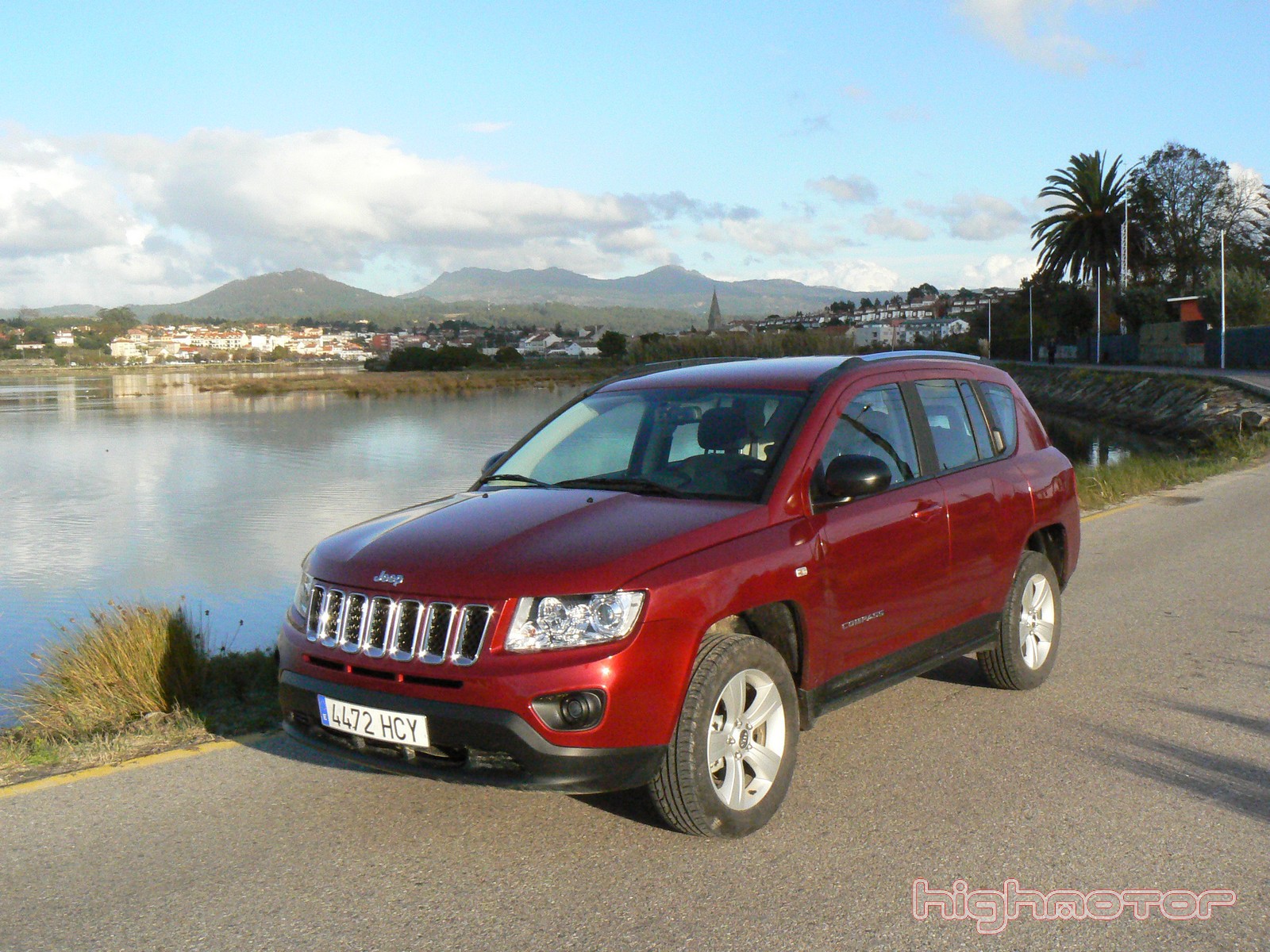
Road test of the Jeep Compass 2.2 CRD 163 CV with all-wheel drive and Sport trim. In this first part: engine, performance, handling, consumption and off-road capabilities.
We continue with off-roaders. Previously we tested the SUV from a brand such as Land Rover, which has years of experience building off-road vehicles, and now we continue with a similar test, this time with the Jeep, which also has considerable experience with this type of car.
Today we test the Jeep Compass 2.2 CRD 163 CV 4×4 in Sport trim, a model that has been controversial because of its Euro NCAP tests but which, beyond that, is a good off-roader, and the starting price is very attractive, since from 25,235 euros we get a Compass with all-wheel drive, or from 22,450 euros with front-wheel drive.
Engine and performance
Former owners of a Jeep will certainly remember the old 2.8 CRD engines for not being especially reliable, but in that respect the Jeep Compass represents a step forward, since it debuts a new 2.2-litre engine with two power outputs, 136 and 163 CV, and the best thing about the engine is its origin. This unit is of Mercedes origin, a variant of the well-known 2.2 diesel fitted to several models of the star brand.
Besides reliability, power delivery has also been improved and consumption considerably reduced. That is why we regard the engine as a strong point of the Jeep Compass. When we get behind the wheel, we notice the car starts responding from just 1,400 rpm and up to 3,500 rpm, which is a fairly good usable range and it also stands out for its low-rev response.
Its operation is smooth and progressive, we never notice jerks or abruptness, and at the same time it has more than enough strength to move the Compass (we must not forget that under the bonnet is the most powerful 163 CV variant). For those who do not look for so much sportiness or such a forceful response, the 136 CV unit may be somewhat tight but sufficient to move the Jeep Compass.
The drawback of the engine is the noise; it is a somewhat noisy powerplant and it does not seem to be very well insulated, so the noise seeps into the cabin.
Paired with the engine is a six-speed manual gearbox, which is not exactly smooth or precise, but it performs its function simply and correctly. First gear is quite long, ideal for off-road use, while sixth has struck us as rather short-geared, because at 120 km/h the car is doing 2,500 rpm, which does not help consumption.
Handling
The Compass is a conventional off-roader in terms of handling, it has a soft suspension typical of this type of car. This adds considerable interior comfort, and it is a comfortable car for travelling, but it takes away firmness in corners and stability when we decide to drive a little more briskly.
One area for improvement is the interior insulation, which reduces comfort on long journeys. It is a pity that it has such a performance-oriented engine, and in practice you have to contend more with the car, whether because of the suspension or the braking system, which are correct but no more.
That said, we must not forget that being a sports car is not the purpose of this Jeep Compass, while the steering also aims for comfort, being not very direct and characterised by a soft, comfortable feel for manoeuvring.
Consumption
In this section the origin of the engine is evident, since it achieves genuinely frugal consumption for a vehicle with (selectable) all-wheel drive. On motorway it settles at just 6.6 litres per 100 km, while on country roads that figure drops to around 6 litres per 100 km.
Finally, in town consumption rises considerably to 10 litres per 100 km, which is normal, since stopping and starting in traffic penalises consumption. But overall, both on country roads and motorways we see restrained figures for a 163 CV model.
Off-road behaviour
The spirit of the Jeep is present even in this Compass and it shows when we take it off the asphalt. It is a car that has good approach and departure angles (especially the rear one) and a generous ground clearance. Add to this the all-wheel drive that can be engaged from a button, and we have a very capable car off the tarmac, a terrain where it moves with confidence and without fear.
Some items are missing, such as a proper front skid plate (rather than the plastic one it carries) or an off-road aid such as hill descent control, but otherwise it is a valid vehicle for use in the countryside. During our tests we tried the traction system on mud and very low-grip surfaces or even sand, and it responded very well (a pity it lacks a 50:50 locking function).
During a run along mountain tracks we found that it deals with small obstacles without problems or even ventures into somewhat more complicated areas; its ground clearance lets it pass through places where other SUVs cannot go or would have problems.
Photos | David Taboada


 Peugeot E-208 GTi: a battery-powered toy that revives the spirit of the 1980s sports cars
 New Lexus ES: luxury grows and goes electric
 First contact with the Dacia Sandero Hybrid 155: power and efficiency from €19,890
Deja un comentario