KIA PV5 CREW: the version for cargo and passenger transport arrives in Spain
 Victor Alós Yus @sepelaci
8 April 2026
2 min.
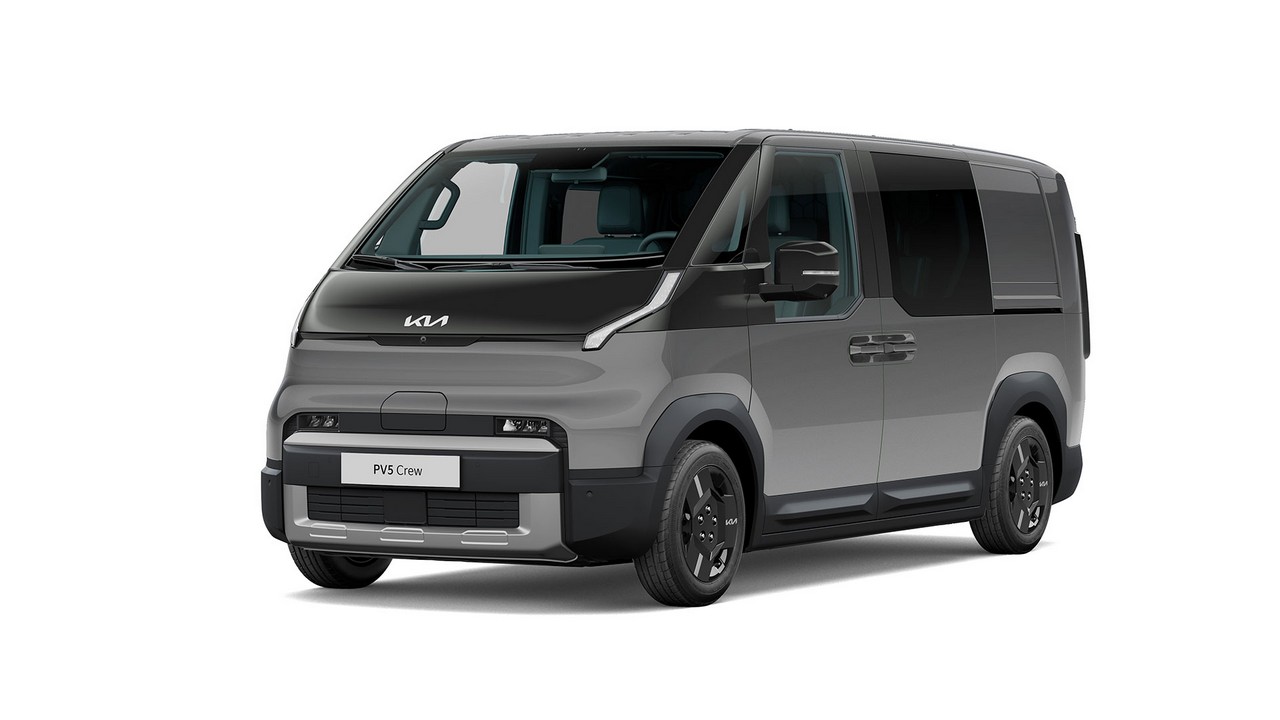
The new version of the KIA PV5 Cargo van makes it possible to transport up to five people and to remove the rear seats easily to carry cargo.
Commercial vehicles usually have a fairly high versatility and must adapt to the needs of each moment. Sometimes they have to carry cargo and other times transport people. This is achieved through the modularity of the interior space, but normally this tends to be quite cumbersome and can pose some difficulty when installing or removing the rear seats to transport people comfortably.
To avoid this problem, Kia has just presented the Kia PV5 CREW, a version of the Kia PV5 Cargo Long van. In this version, priority has been given to the ability to switch between the configurations for these two functions in a simple way, without tools and in a short time.
This system allows users to switch from a two-seat cargo configuration to a five-seat passenger configuration without having to stop for an excessive amount of time or handle tools. By operating a lever located at the rear, the rear bench’s fastening is released and it can be installed immediately, while the partition also slides out of the way.
The rear section has L-shaped rails to secure cargo, which can be very practical for a range of sectors. The floor is reinforced and has an anti-slip treatment to prevent the cargo from shifting. Another interesting feature is that V2L sockets have been installed to connect tools and electrical devices from the van.
In addition, several customization options will be available, so each user can configure the van according to their specific needs and make it even more efficient. In its five-seat configuration, the van offers a flexible cargo area of 1,278 mm, and 1,965 mm when the rear seats are removed. The cargo volume ranges from 2.4 m³ to 3.7 m³. The maximum payload capacity is 625 kg.
The battery powering the PV5 Crew has a capacity of 51.5 kWh and offers a range of up to 283 kilometres under the WLTP homologation cycle. Production is scheduled to begin on 30 April 2026, and the date of market launch will be announced shortly.


 Peugeot E-208 GTi: a battery-powered toy that revives the spirit of the 1980s sports cars
 New Lexus ES: luxury grows and goes electric
 First contact with the Dacia Sandero Hybrid 155: power and efficiency from €19,890
Deja un comentario