Looks for a parking space and parks by itself: this is the LEPAS parking assistant
 Victor Alós Yus @sepelaci
5 November 2025
3 min.
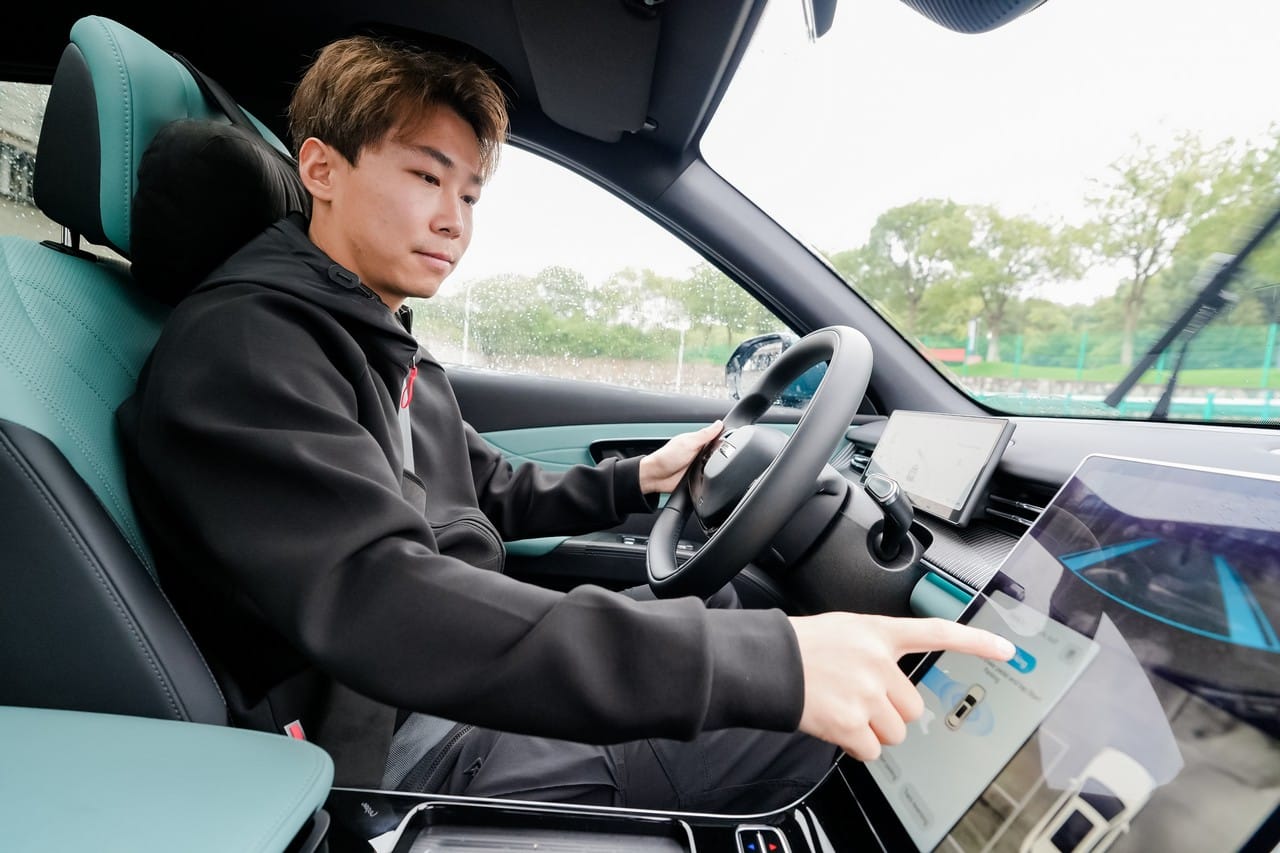
The LEPAS parking assistance system allows the L8 model to carry out parking manoeuvres automatically and easily.
One of the manoeuvres we carry out every day, and which is very common, is parking. For that reason, it has become one of the most stressful moments while driving. Finding a free space and carrying out the manoeuvre can turn into a nightmare when it comes to parking the car properly and leaving it there to rest. Manufacturers have worked to reduce the stress this moment causes, and LEPAS has presented a parking assistance system that makes it very easy to tackle this task.
The LEPAS L8 has been equipped with a dual parking system made up of the APA (Automatic Parking Assist) and RPA (Remote Parking Assist) systems, which make both the manoeuvre and the search for a free space easier. With this system, the Elegant Driving philosophy that the brand is known for is reinforced.
This system is still under development, and work is being done so that it offers even more autonomous parking functions, so that soon it will be able to park with the driver outside the vehicle. The VPD (Valet Parking Driver) system will shortly allow you to leave the car at the entrance of a car park and let it drive to the space and park there.
The LEPAS parent company, the Chery Group, is working together with other companies, such as Huawei, to improve these two systems, which already offer simple and practical parking without the need for driver intervention.
Galería de fotos -
LEPAS PARKING ASSISTANCE SYSTEM
APA (Automatic Parking Assist) System
This function can manoeuvre and park in a very short time. It can do so parallel, perpendicular or in very narrow spaces that have a minimum of 20 centimetres of manoeuvring margin. To activate it, the driver switches on the application, and an overhead image of the vehicle’s surroundings appears on the central screen. Nearby free spaces are outlined in blue lines, making them easy to locate. The driver only has to tap the space in which they want to park, and the system takes care of the manoeuvres needed to do so safely.
RPA (Remote Parking Assist) System
If the driver sees that the space needed to get out of the vehicle once parked is very small, they can get out before parking and use their mobile phone as a remote control to carry out the manoeuvre. The application interface is very simple and intuitive, so remote operation is quite functional.
While this manoeuvre is being carried out, the car moves at low speed and the system keeps distance control active thanks to ultrasonic radars and 360º cameras. If an obstacle is detected, such as a pedestrian or a vehicle, it stops automatically, although the driver can also interrupt the process through the phone, by releasing the safety button offered by the application. When the manoeuvre ends, the car stops and locks, notifying this on the screen.
The architecture of the parking assistance system
Behind the functions of these two elements there is a state-of-the-art hardware and software structure capable of locating the surroundings and processing data in real time through artificial intelligence applied to dynamic vehicle control. A set of sensors generates a virtual reconstruction of the environment that is updated several times per second, creating a highly detailed space.
At the head of this system is a high-performance SoC (System-on-Chip) that runs object detection and trajectory planning, with the necessary adjustments to steering, acceleration and braking in real time. The software uses artificial intelligence algorithms that have been trained on millions of parking manoeuvres in very varied scenarios.
 Peugeot E-208 GTi: a battery-powered toy that revives the spirit of the 1980s sports cars
 New Lexus ES: luxury grows and goes electric
 First contact with the Dacia Sandero Hybrid 155: power and efficiency from €19,890
Deja un comentario