Lotus Emira GT4: a 405 hp competition machine for the GT4
 Jaime Avilés
9 September 2021
2 min.
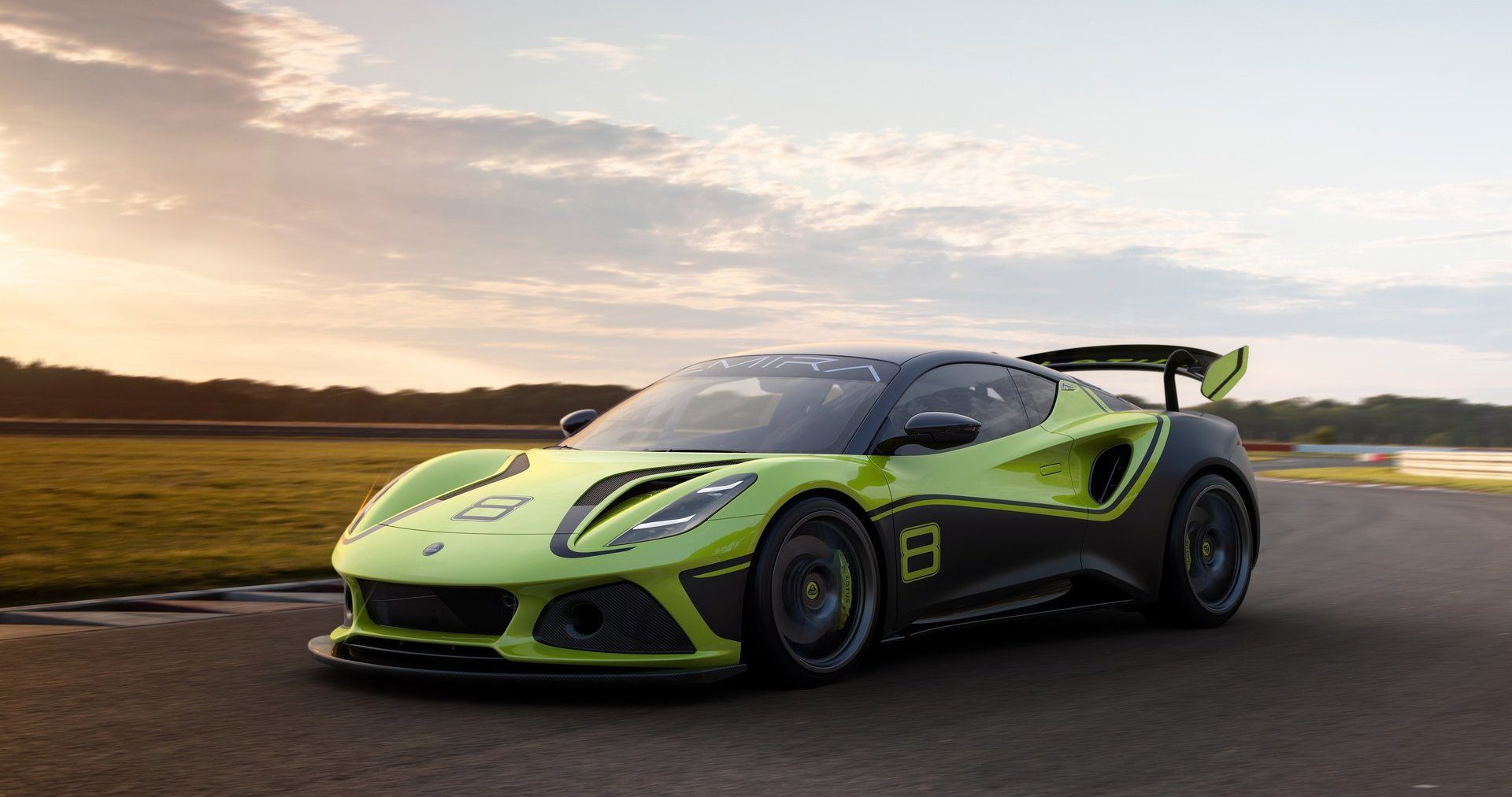
The Hethel-based brand has just unveiled the competition version of its recent Emira, a supercar that promises outstanding performance and plenty of thrills
Following the launch of the new Lotus Emira last July, the British brand has just unveiled what will be the successor to the victorious Lotus Evora GT4. A car with a great deal of engineering behind it, designed to make its mark in the GT4 category during the 2022 season.
This new machine is called Lotus Emira GT4 and was developed in collaboration with RML Group, with a strong emphasis on reducing weight to achieve highly agile handling capable of tackling any circuit, however tight it may be.
The styling of this GT4 bears considerable resemblance to the road version of what will be the last combustion model of Lotus. Throughout the car, several aerodynamic elements can be seen, mounted on the Emira bodywork we already know.
Ready-to-race elements
At the front, a carbon fibre splitter has been fitted, which keeps the car pressed closer to the ground and provides excellent stability at high speeds. This was a key objective that the team placed great emphasis on.
From the side, apart from the newly designed 18-inch competition wheels fitted with Pirelli GT4 tyres in sizes 265/645×18 at the front and 305/680×18 at the rear, there are no further design changes.
At the rear, the difference from the standard Emira is immediately apparent: a large rear wing made of carbon fibre has been installed, which not only gives it a very radical look but also adds considerable downforce at high speeds.
With a works engine Toyota
These carbon fibre additions allow this Emira GT4 to boast a weight of 1,260 kg. A genuinely impressive figure when considering the power output of the 3.5-litre V6 built by Toyota, which delivers 405 hp at 7,200 rpm. This powerplant is paired with a 6-speed xTrac gearbox.
The Emira GT4 offers not only more power than the Evora GT4, but its chassis has also been refined to significantly improve handling. This has been achieved largely thanks to a double wishbone suspension system, coilover dampers by Öhlins, and anti-roll bars.
Technical specifications of this car


 Peugeot E-208 GTi: a battery-powered toy that revives the spirit of the 1980s sports cars
 New Lexus ES: luxury grows and goes electric
 First contact with the Dacia Sandero Hybrid 155: power and efficiency from €19,890
Deja un comentario