Mazda Mazda 3 Compact Technology
Mazda removes touchscreens and returns to physical controls for safety
 Victor Alós Yus @sepelaci
17 June 2019
3 min.
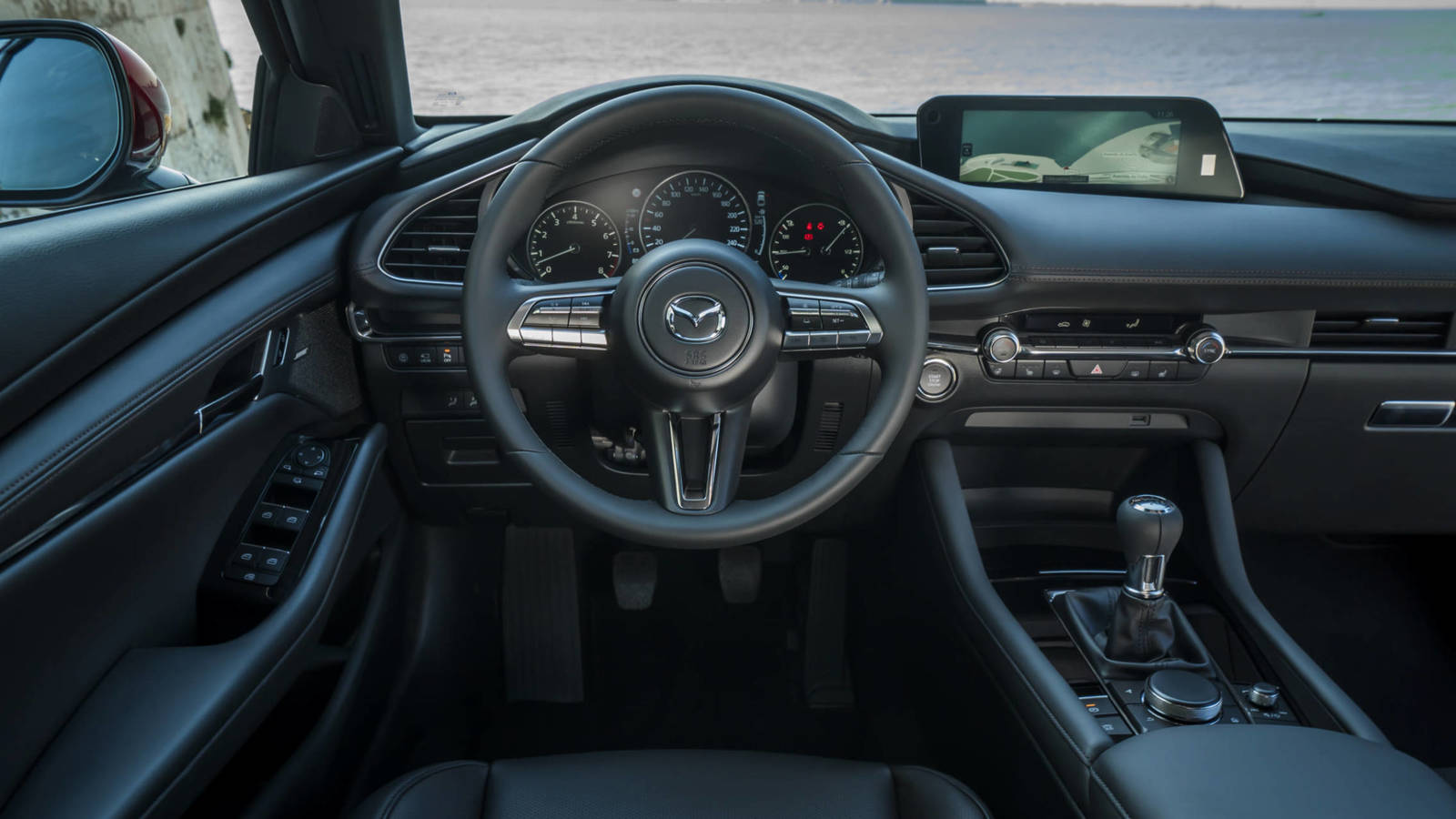
Safety is important for Mazda, so the Japanese brand has chosen to remove touchscreens and return to physical controls on the dashboard
For several years now, any new model reaching the market has had to feature a touchscreen. At least, because there are also models that use two or more screens to display all the vehicle’s information. On top of that, these screens are needed to operate all the on-board technology. According to several studies, this has become a problem that can lead to accidents. Because of touchscreens, attention to driving is lost and an accident can happen. So Mazda has taken a rather drastic decision and has opted to remove the touchscreens and return to analogue controls.
Mazda wants to increase driving safety and for that reason will reintroduce, on the models arriving within a few months, knobs and buttons that the driver can operate without taking their eyes off the road. The first model to fit this type of control is the Mazda 3, already available in our market for a few months.
The design of this model features a central screen, 8.8 inches in size, which is for information only, with no controls for operating the various applications. In addition, the screen is positioned away from the driver but within the field of vision, allowing them to see the information without having to take their eyes off the road. These controls are located around the gear lever and on the centre part of the dashboard. With these dials you can control the radio functions, the driving modes and the climate control.
Moreover, they are designed to work efficiently and can be operated without difficulty. In this way, the aim is to simplify the use of the car’s controls, while avoiding having to take your eyes off the road and, above all, to allow access to any function of the car quickly.
Will this decision mean a change of trend in the design and development of the way we communicate with the car? We don’t know yet, although if this trend is applied across all the models of Mazda, it would not be surprising if other brands followed suit in one way or another. Other technologies are being proposed, such as voice commands and gestures. However, voice recognition could fail, and making gestures means letting go of the steering wheel, so it is more than likely that safety will favour the “traditional method“.
Something that will also lower the cost of cars, which is not bad either. This decision to remove touchscreens may represent a trend within the automotive industry, although most manufacturers continue to bet on this system. Will any other brand follow in this direction? We will have to wait a little and see.


 Peugeot E-208 GTi: a battery-powered toy that revives the spirit of the 1980s sports cars
 New Lexus ES: luxury grows and goes electric
 First contact with the Dacia Sandero Hybrid 155: power and efficiency from €19,890
Deja un comentario