New Volvo XC90: update for the luxurious 7-seat SUV, which will remain a plug-in hybrid
 Antonio Roncero @roncero_antonio
5 September 2024
2 min.
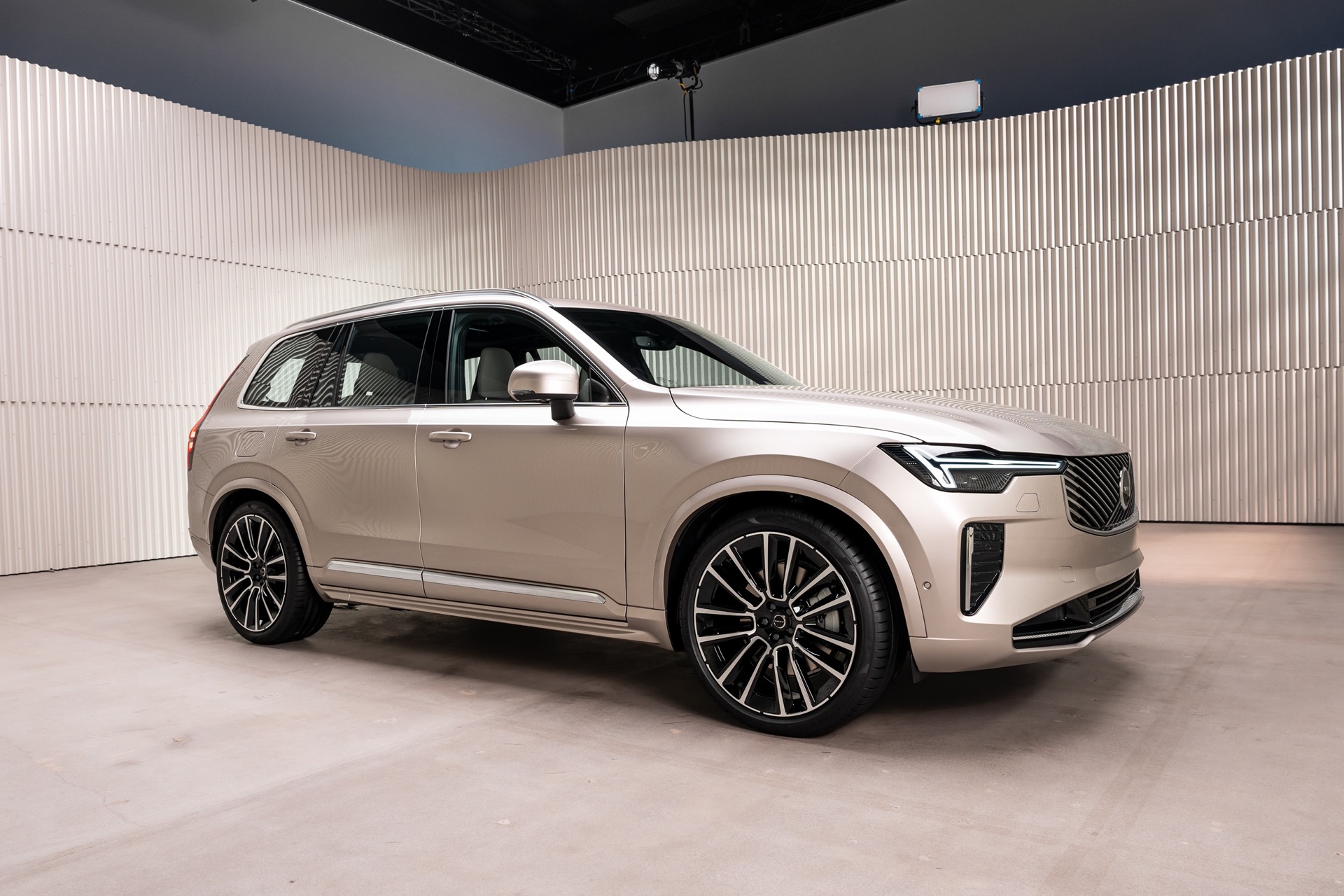
The Volvo XC90 receives an update focused on its exterior and interior design and on the infotainment system, which features a larger screen and the software used in the brand’s latest electric models.
It seems that Volvo is going to extend the life of some of its main models with conventional propulsion systems beyond what was initially planned, before moving definitively to fully electric mobility. And the renewal of the Volvo XC90 is a clear example. The Swedish brand has decided to continue with the second generation of its seven-seat SUV, which reached the market in 2014 and was updated in 2019, and it now receives improvements that mainly affect its design.
The changes are not very deep, either outside or inside. We can say it is a very light restyling, with which Volvo has taken the opportunity to further improve the interior of the luxury SUV by incorporating new materials -many of them recycled-, an improved ambient lighting system and additional storage spaces in the centre console. Furthermore, the wireless phone charger has been repositioned, now located behind the console, and special attention has been paid to the soundproofing of the cabin, which keeps the layout with three individual seats in the second row and the option of a third row with two additional seats.
Improved multimedia system with 11.2-inch screen
Beyond the new design elements, the most interesting novelty of the XC90 is the adoption of the infotainment system developed for the EX90 and EX30, thus improving what Volvo calls “the user experience”. This will not be exclusive to the new XC90, as the brand announces a wireless software update for all Volvo models with integrated Google.
In the case of the XC90, the improvements include the adoption of a larger multimedia screen, now 11.2 inches, with higher resolution. The menu configuration becomes like the one debuted in its latest electric models, simpler and more intuitive, with the menus for the most used functions always in the foreground. Another improvement is that, in the case of the plug-in hybrid versions, it will be possible to switch between the different driving modes from the same home screen, without having to navigate through different menus.
As for the mechanical range, for now the two versions are maintained: the B5 with the 4-cylinder 2.0 petrol engine and mild hybridisation -ECO label-, which delivers 250 CV; and the plug-in hybrid variant T8 -CERO label-, with a system power of 455 CV, which keeps the same battery and an electric-only range of 70 km, which is starting to look short compared with what plug-in hybrids from brands such as BMW and Mercedes-Benz already offer, exceeding 100 km.
Volvo XC90 – Image gallery
Technical specifications of this car
 Peugeot E-208 GTi: a battery-powered toy that revives the spirit of the 1980s sports cars
 New Lexus ES: luxury grows and goes electric
 First contact with the Dacia Sandero Hybrid 155: power and efficiency from €19,890
Deja un comentario