Official: the successor to the McLaren P1 will be an electrified hypercar
 Miguel Lorente
17 April 2020
4 min.
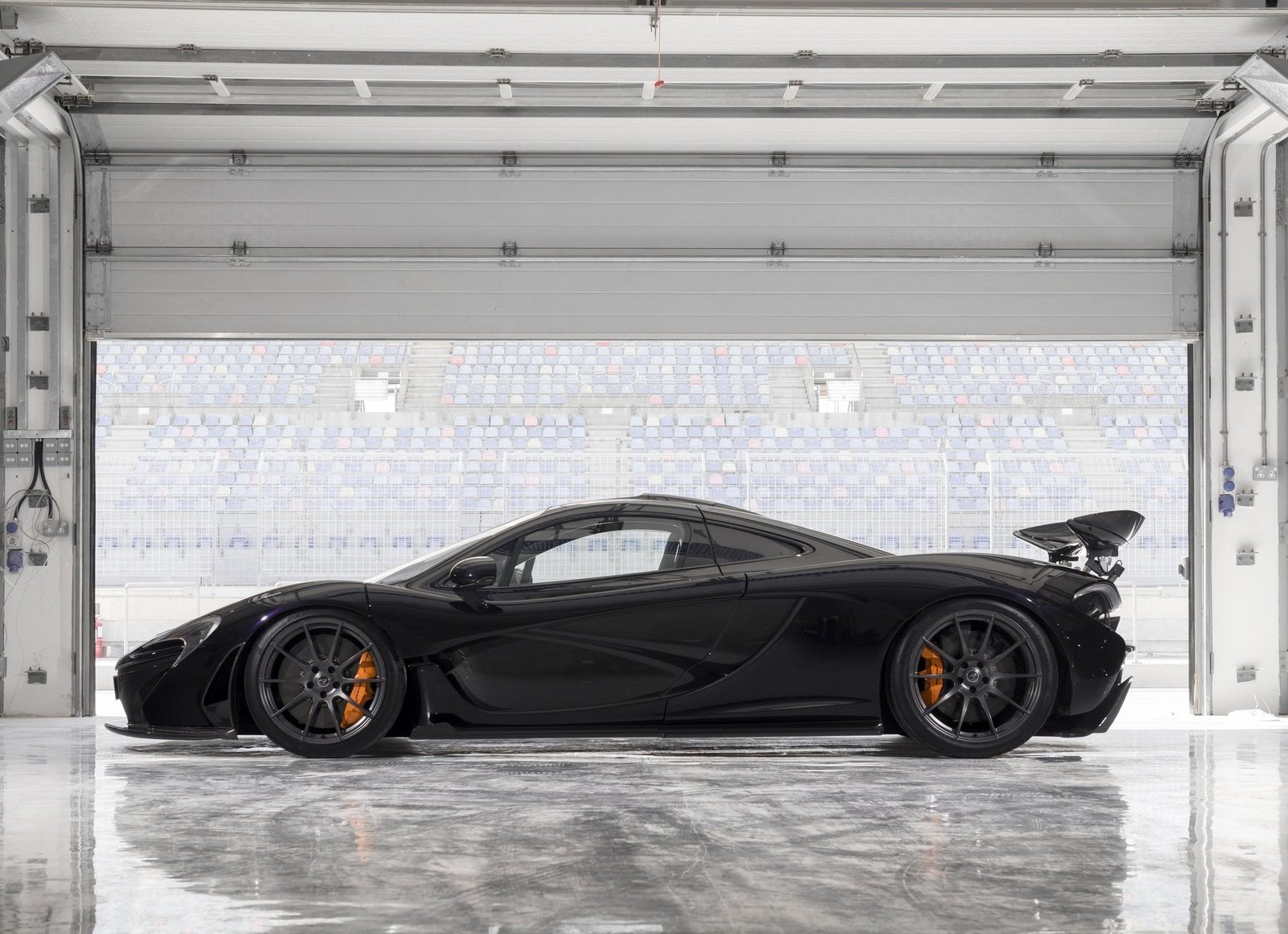
The British brand is already working on a new hypercar that will be the successor to the McLaren P1, at least into the 2020s
We won’t deny it: we have lost count of how many times we have talked about the “last” successor to the McLaren P1.
And it is that, unlike what happened with the McLaren F1, the Woking-based firm has indeed launched new models capable of stealing the show from the hypercar it presented, in what is now a distant past given the number of novelties the manufacturer has unveiled since 2013, when the world shook and vibrated in equal measure at the presentation of the McLaren P1.
The 2013 Geneva Motor Show had the honour and the pleasure of showing for the first time a spectacular hybrid car. A vehicle that introduced the brand to the electrified car sector, given that the addition of an electric assist unit to the V8 twin-turbo engine of 3.8 litres provided a total output of 916 CV for a car capable of catapulting its occupants from 0 to 100 km/h in just 2.8 seconds, reaching 200 in 6.8 and 300 in 16.5.
The electric system not only supplied energy to the main engine but could also act as the sole propulsion in certain situations, offering a range of 10 kilometres. Let us remember that this was a hypercar developed almost a decade ago, whose purpose was not daily use on ordinary roads but extreme use and enjoyment on tracks designed to handle a car of this calibre.
But technology has advanced and environmental requirements have too, to the point that, due to legislation that will come into force next year, 2021, vehicles sold in the European Union will not be able to exceed emissions of 95 grams of carbon dioxide per kilometre driven. The McLaren P1 was homologated at 200 grams per kilometre.
That is why models that only a few years ago could comply with the well-known Euro standards now suffer the effects of a context that protects the health of the atmosphere at all costs and is beginning to claim its first victims.
Therefore, it is obvious that for any high-performance car manufacturer, the adoption of electric systems is an imperative necessity. So much so that the CEO of McLaren, Mike Flewitt, speaking with our colleagues from the British publication Autocar, has given some very significant hints about what, according to the McLaren catalogue, will be the crowning jewel of the Ultimate Series, the crème de la crème of the sports cars of the firm founded by the great Bruce McLaren.
Electrified and before 2025
The head of the brand has declared his affinity for 100 percent electric cars, cars whose response to pressure on the accelerator pedal is immediate, a hallmark of the most exhilarating vehicles, but whose charging has been their Achilles’ heel.
For this reason, although he does not rule out that the successor to the McLaren could be fully electric, Flewitt has stated: “We have not announced the powertrain. Obviously, looking ahead, (this car) will be hybrid or electric.”
We have already discussed the new hybridisation of the McLaren based on a V6 block, the new hybrid unit that should be available from this same year to allow the sale of new cars leaving the British facilities in 2021.
The adaptation for the new McLaren hypercar could come from the distribution across axles of the contribution of each motor.
Thus, Autocar suggests a rear powertrain that would handle the work of the powerful petrol combustion engine, while the front would do the same with the propulsion unit that draws on electricity, even to allow purely electric driving, making Flewitt’s statement about a high-performance McLaren partly a claim: a hybrid car that could also run in electric-only mode.
In fact, given the expectations, the new McLaren models equipped with the new electrified V6 powertrain will have at least 30 kilometres of electric-only range.
Finally, the McLaren executive told our colleagues that the company he leads hopes to present the vehicle meant to succeed the McLaren P1, the definitive version, in 2024, though we do not know whether as a prototype or as a pre-production model.


 Peugeot E-208 GTi: a battery-powered toy that revives the spirit of the 1980s sports cars
 New Lexus ES: luxury grows and goes electric
 First contact with the Dacia Sandero Hybrid 155: power and efficiency from €19,890
Comentarios cerrados