Opinion and test Honda CR-V Plug-in Hybrid e:PHEV
 Diego G. Moreira
25 February 2026
5 min.
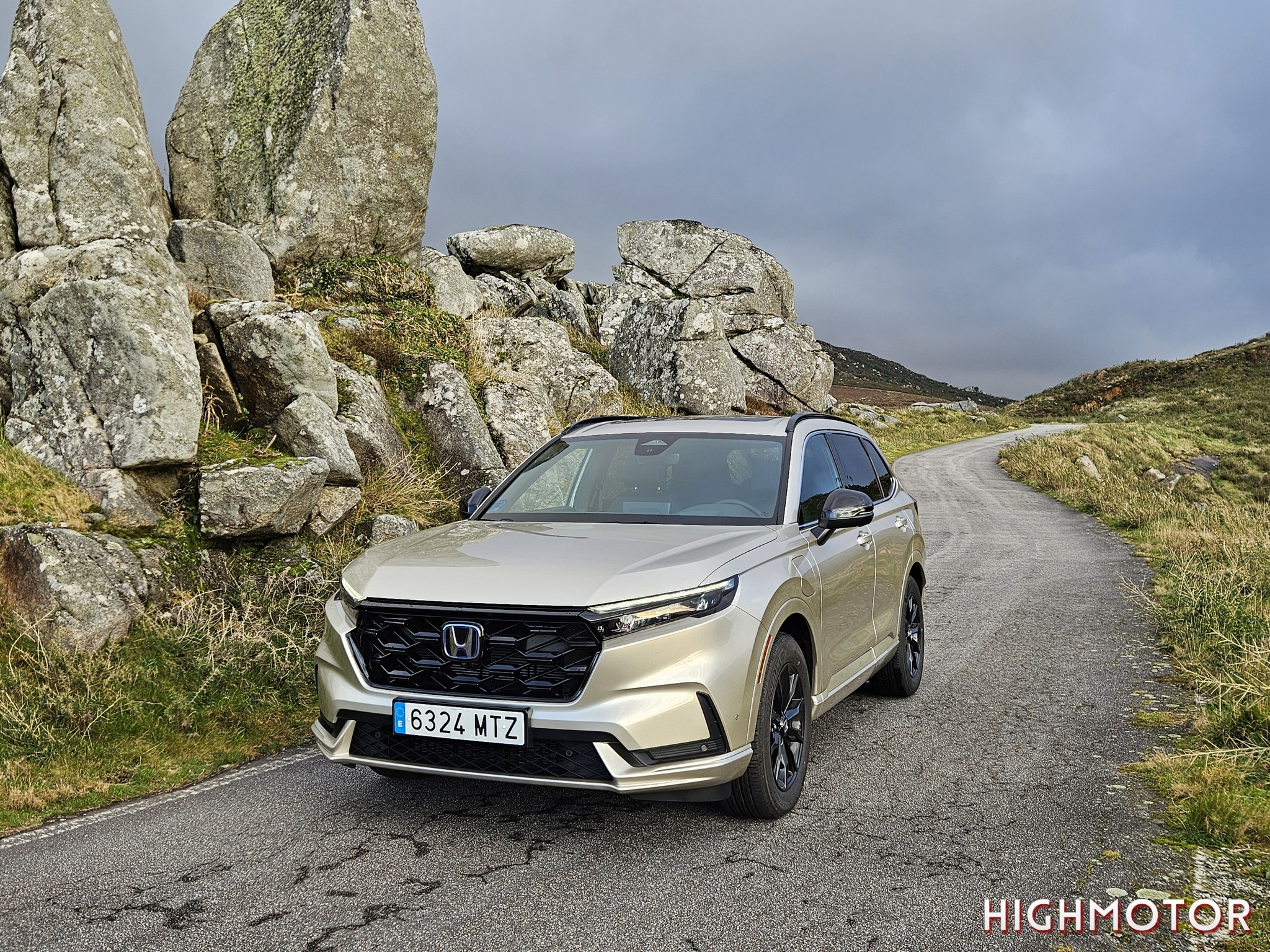
We get behind the wheel of the Honda CR-V e:PHEV to analyse, in five points, the pros and cons of this SUV that offers space and low consumption.
The updated Honda CR-V arrives with mechanical updates, standing out among them this plug-in hybrid version that we have tested: an SUV that offers plenty of space and an electric range of up to 50 km with reasonable consumption.
To get to know it better, we are going to analyse the five most important points of the Honda CR-V e:PHEV.
1. Robust and sporty design
The exterior of the new CR-V is robust, a large SUV with lines that seem aimed at the American market, a detail reinforced by the indicator located at the lower part of the side bumper (in American style).
The front is aggressive, with a grille that gives the sensation of having no upper frame, and bumpers more typical of a sports version than of an SUV seeking comfort on board. Another element that stood out on our unit is the combination of the exterior colour with the black elements (grille, mirrors, tinted glass and alloy wheels).
The rear is more typically Honda, with a design in which the LED lights outline the sides of the tailgate (electrically operated on this unit). The huge size of the doors also stands out, which allow very good access to the rear seats thanks to their wide opening angle.
2. Interior spaciousness and quality
Inside, the Honda CR-V stands out for the huge space it offers both in the front seats and in the rear seats, where three adults will travel comfortably (even in the middle seat). The driving position is slightly elevated—as is typical of an SUV—and comfortable, with everything within reach and physical controls for the climate system, which is very sensible.
The rear seats allow the backrest to be adjusted, but they do not slide longitudinally. The boot has a capacity of 635 litres, with a small false floor that offers just enough space to store the charging cables, warning triangles and other items.
The quality of the finishes is good, with well-fitted panels. The only thing that caught my attention was the finish of the front air vents, with a sort of plastic mesh that spoils an otherwise well-finished and high-quality ensemble. The best part is the physical controls for almost everything, leaving the touch area for the multimedia functions.
3. Plug-in hybrid engine with 184 very smooth CV
The maximum power of this plug-in hybrid (PHEV) SUV is 184 CV, based on a 2.0 four-cylinder petrol engine with 148 CV, which, combined with the hybrid system, reaches 184 CV and a maximum torque of 335 Nm. Figures that do not make it a sports car, but that move the CR-V without any problem.
To get the most out of this powertrain, it offers several driving modes ranging from the classic “Eco“, “Sport” and “Normal” to specific modes for snow (which improves traction) or for towing.
4. Smooth driving
The Honda CR-V e:PHEV offers very balanced dynamic behaviour thanks to a plug-in hybrid system that delivers power in a linear and silent way. The electric motor provides immediate response at low speed, while the transition to hybrid mode takes place without vibrations or noticeable changes for the driver.
On the motorway and on long journeys, the CR-V e:PHEV maintains a high level of comfort. The suspension effectively filters out potholes and irregularities without compromising body control, with a rather firm feel. The acoustic insulation noticeably reduces outside noise and that of the propulsion system, contributing to a relaxed drive.
It seeks comfort, and you notice it on every journey, being very smooth both with and without battery power. That said, it has one improvable but expected point: the CVT gearbox and its typical operation. When we need the full power of the engine, it raises the revs considerably and this can be noticed.
5. Consumption and electric range
Its
17 kWh battery allows a maximum of 50 kilometres in fully electric mode. To charge it we will need about 2.5 hours (charging at 6.8 kW) and around 8 hours (if we do it from a 2.3 kW domestic socket). A fast charge of around 50 kW for longer trips is missing.
Without battery, the average consumption on the motorway was 6.5 l/100 km, a really good figure. On country roads, the figure drops to 6 l/100 km.
If we can recharge on trips of at least 100 km, the average is reduced to around 5 l/100 km, as we verified on our road test routes of 260 and 110 km (both starting with a full charge).
Summary: who is it for and who might it not be right for, the Honda CR-V e:PHEV?
Ideal for:
Users who make daily urban journeys or short trips and can recharge at home or in a garage.
- Families looking for a spacious, efficient SUV with low emissions and a “0” label.
- Those who value the versatility of being able to make long journeys without worrying about electric range.
-
Perhaps not so much for:
Users who drive many kilometres every day without the possibility of overnight or regular recharging.
- Those seeking maximum sportiness or higher power.
- Buyers on a very tight budget who will not amortise the advantage of the plug-in hybrid system.
Photos |
Test team
Technical specifications of this car


 Peugeot E-208 GTi: a battery-powered toy that revives the spirit of the 1980s sports cars
 New Lexus ES: luxury grows and goes electric
 First contact with the Dacia Sandero Hybrid 155: power and efficiency from €19,890
Deja un comentario