Renault Sedans Sports Cars Photos Tests
Renault Laguna 2.0 dCi 180 CV GT 4Control, road test (Engine and performance)
 Diego G. Moreira
30 December 2011
4 min.
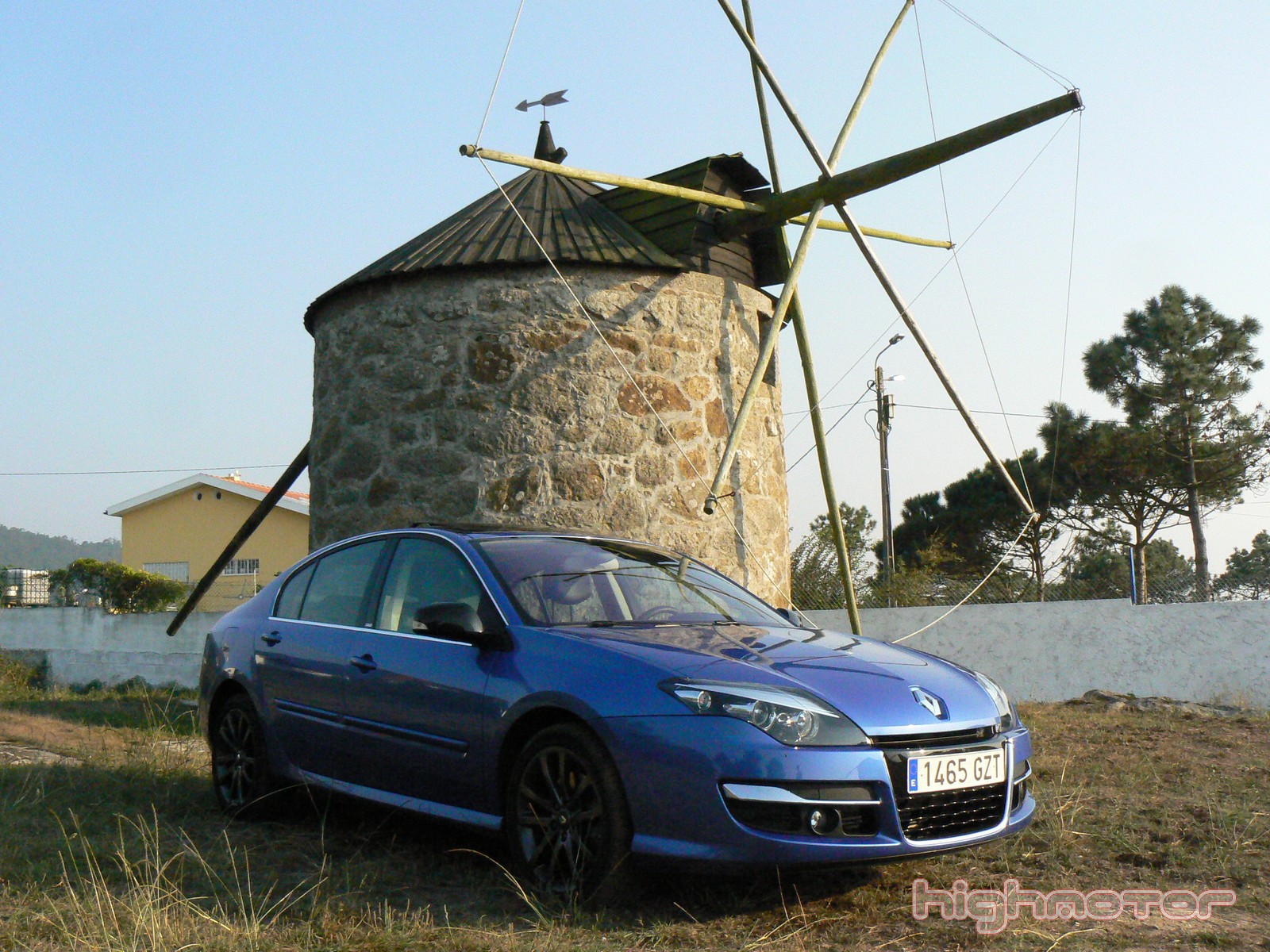
Blue is fashionable among sporty saloons, and that is the first thing that came to mind to start this test of the Renault Laguna equipped with the 2.0 dCi diesel engine producing 180 CV and GT trim (which gives the Laguna a different touch from the one we all know).
But one of the most important features of the Laguna we are testing today is the 4Control system, that is, the rear-wheel steering. And how does this affect steering and driving? Well, in a saloon close to five metres long, we get the agility of a compact on the road. If we add to that the powerful 180 CV engine, the end result is a very interesting Renault Laguna.
Engine and performance
The two-litre diesel engine reaches its maximum power with this 180 CV version (175 CV when paired with the automatic gearbox). It is only available with the GT trim, and it is an engine that stands out for its responsiveness and smoothness.
When we talk about responsiveness, from low revs at 1,500 rpm it starts pushing forcefully until it runs out of steam around 4,000 rpm. The strongest pull lies between 2,000 and 3,000 rpm, standing out for its progressiveness and smoothness.
It is an engine that is fun on the road and tackles any overtaking manoeuvre without the slightest problem, while we won’t need to work the six-speed manual gearbox too hard to get good response.
The six-ratio gearbox did have a feel that could be improved, more typical of a saloon without sporting pretensions than of this 180 CV Laguna. Nor did it have very long gear ratios, since in sixth at 120 km/h we were doing 2,200 rpm, and with a slightly longer sixth gear we would surely have reduced the Laguna’s motorway consumption.
Handling
In handling, the 4Control system will play an important role, which is basically the rear-wheel steering. Below 60 km/h the rear wheels turn in the opposite direction to the front ones to improve the car’s manoeuvrability, and above 60 km/h they turn in the same direction to improve agility and speed through corners.
In practice this translates into two different situations. In town it behaves like a city car, and manoeuvrability is simply excellent. It has a very good steering angle and is agile on urban streets.
On the road, we have a car with correct cornering and greater agility, because we have to turn the steering wheel less for the car to respond to our commands, so it is quicker to respond to steering inputs.
That said, it is a system you have to get used to. For example, on the motorway we need to turn the wheel very little to change lanes, so we have to adapt to the system, especially the first few times we drive a car with 4Control.
The steering adds to the sporty character with a rather firm feel, appropriate for the model’s positioning and never uncomfortable. Meanwhile the suspension is the only part that reminds us we are behind the wheel of a traditional saloon, with a setup geared towards comfort, but which still allows small sporting liberties on the road.
Finally, we have the braking system, which performed its function correctly, bringing the Renault Laguna to a halt with complete confidence.
Consumption
The 180 CV takes its toll on consumption, but above all a gearbox with fairly short ratios means that on the motorway the average consumption is 6.7 litres per 100 km, a fairly high figure for a diesel saloon.
On the road the lowest we achieved was 6.1 litres per 100 km, while normally consumption hovers around 7 litres per 100 km. Finally, in town consumption rises to 10 litres per 100 km.
Overall, this aspect could be improved, because nowadays there are similar engines that are far more frugal, especially on the motorway, where in our other tests the norm is around 6 litres, not almost seven as happened with the Renault Laguna.
Photos | David Taboada


 Peugeot E-208 GTi: a battery-powered toy that revives the spirit of the 1980s sports cars
 New Lexus ES: luxury grows and goes electric
 First contact with the Dacia Sandero Hybrid 155: power and efficiency from €19,890
Deja un comentario