SEAT Eventos Geneva Motor Show
SEAT announces four new models for 2012
 JL Arboledas
3 March 2011
2 min.
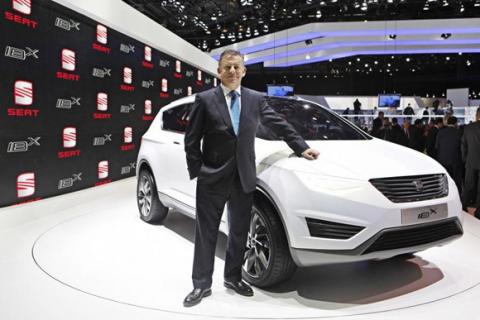
SEAT has undoubtedly gathered its courage, and at the Geneva Motor Show it is showing its full potential, something it should have done a long time ago in order to try to earn that “affection” and, at the same time, the respect of the VAG Group.
Well then, it is precisely at the Geneva Motor Show that the brand’s CEO, James Muir, has dared to announce no less than the launch of four new models on the market next year. Unfortunately, as with everything concerning the automotive industry, we are left hanging, since they have not specified which ones.
Now then, let’s be bold: one of the new models will undoubtedly be the new León, something we all knew in advance. Setting this one aside, there are still three vehicles left in the pipeline. However, following a clear statement from the CEO of the Spanish brand that SEAT will not build prototypes that do not preview something or have no place in the brand, he almost announced the production launch of the new IBX Concept.
Even so, two new models are still to come, and I bet they should be the successors to the Arosa and the Toledo. These models are long overdue for a change of image and, above all, a renewal, and surely by 2012 we will have their worthy successors on the road.
As for the brand itself, it must be acknowledged that since James Muir took over the leadership of SEAT, things are starting to change for the much better, especially when we talk about the aspirations of a brand that is not going through its best moments. For example, we only need to look at the SEAT factory in Martorell, which during the last year placed two thirds of its total production there, something unsustainable for a brand like SEAT.
Now then, if you work at SEAT Martorell you need not worry, because precisely with the arrival of these four new SEAT models and the production of the Audi Q3, the Catalan facilities will soon return to 100% of their capacity, that is, producing more than 500,000 vehicles per year.
Via |autoblog


 Peugeot E-208 GTi: a battery-powered toy that revives the spirit of the 1980s sports cars
 New Lexus ES: luxury grows and goes electric
 First contact with the Dacia Sandero Hybrid 155: power and efficiency from €19,890
Deja un comentario