Fiesta Ford Hybrid Cars Compact
The Ford Fiesta adds the EcoBoost Hybrid engine and updates its equipment
 David Lopez @espacionblanco
9 June 2020
3 min.
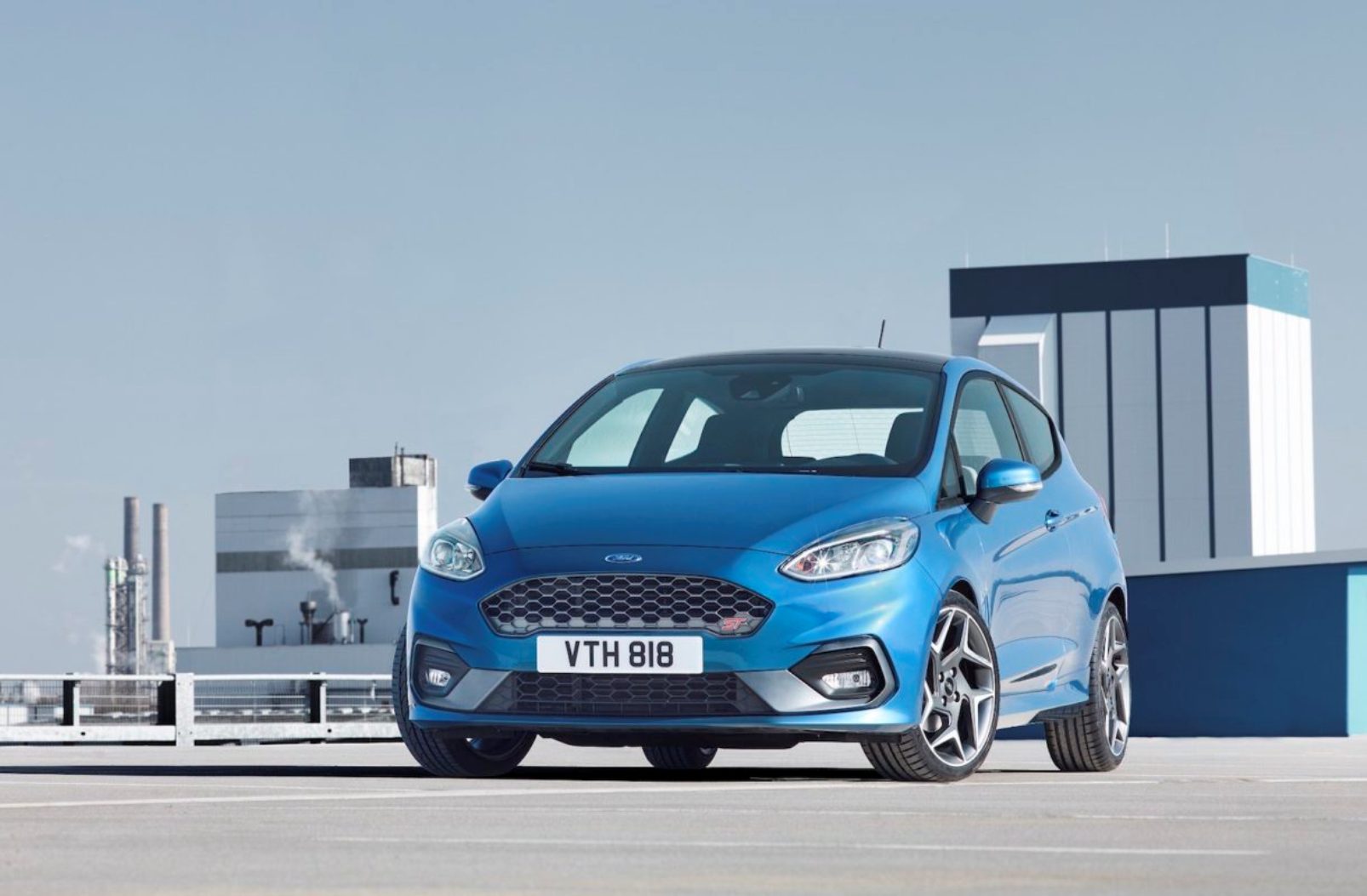
Ford continues advancing on the path to electrification, now turning to the popular Fiesta, which is already available with mild-hybrid technology
Ford has the clear goal of offering at least hybrid versions of all the models it launches in Europe, so that the catalogue of the American brand contains 18 models with an electric version by the end of 2021. This is how we saw the new Ford Puma become the first model of the brand to include mild-hybrid technology, something that now reaches one of its most popular models, the Fiesta.
In fact, the mild-hybrid technology now adopted by the Ford Fiesta will be similar to that of the new Puma, based on the 1,000 cc EcoBoost petrol engine, offered with outputs of 125 and 155 CV. As you know, mild-hybrid technology uses a belt-driven starter-generator which Ford calls BSIG, allowing the energy produced during braking or deceleration to be recovered and stored in a 48 V battery. The use of the BSIG has improved the Start/Stop system by allowing it to operate more widely, but it has also made it possible to reduce the compression ratio of the EcoBoost engine, fit a larger turbo and eliminate its lag.
The Ford Fiesta’s mild-hybrid system works at all times monitoring how we use the vehicle in order to know when and how intensely the 48 V battery should be recharged, as well as when it should use the stored energy. To do so it relies on two scenarios: torque substitution, providing 24 Nm of engine torque through the electric motor, thereby reducing the effort of the combustion engine and consequently its consumption and emissions; and torque supplement, increasing engine torque by 20 Nm to reach 240 Nm in the 155 CV version, which translates into 50% more torque at a lower number of revolutions.
As I was saying, the Ford Fiesta with mild-hybrid technology uses the 1,000 cc EcoBoost petrol engine, available with 125 CV or 155 CV, both paired with a six-speed manual gearbox. In the first, combined fuel consumption is 5 l/100 km along with CO2 emissions of 112 g/km; while in the more powerful version combined fuel consumption is the same and CO2 emissions rise slightly to 114 g/km, all figures measured under the WLTP test cycle.
Taking advantage of the arrival of these new versions of the Fiesta, Ford has also used the opportunity to update some of the technologies that form part of its equipment:
- The Cross-Traffic Alert now comes with Active Brake, which can apply the brakes automatically when reversing to avoid or reduce the consequences of a possible collision with other vehicles or objects.
- The Fiesta Active version will include new driving modes to help even more when tackling surfaces with compromised grip.
- The B&O sound system now places the subwoofer in the wheel well, freeing up more boot space and allowing it to be combined with a spare wheel.
- The SYNC 3 infotainment system features a new interface that is easier and more intuitive to use thanks to new buttons.
The new Ford Fiesta MHEV is already available at the brand’s Spanish dealerships, with starting prices set as follows:
| ENGINE | TRIM | PRICE |
|---|---|---|
| EcoBoost 125 CV | Trend | 19,240 euros |
| EcoBoost 125 CV | ST Line | 20,770 euros |
| EcoBoost 155 CV | ST Line | 21,220 euros |
| EcoBoost 125 CV | Active | 21,020 euros |
| EcoBoost 125 CV | Vignale | 25,315 euros |


 Peugeot E-208 GTi: a battery-powered toy that revives the spirit of the 1980s sports cars
 New Lexus ES: luxury grows and goes electric
 First contact with the Dacia Sandero Hybrid 155: power and efficiency from €19,890
Deja un comentario